
DBX 1231 Dual 31-Band EQ: The Rack Unit That Actually Shapes Your Sound
DBX 1231 Dual 31-Band Equalizer: Complete Australian Buyer's Guide
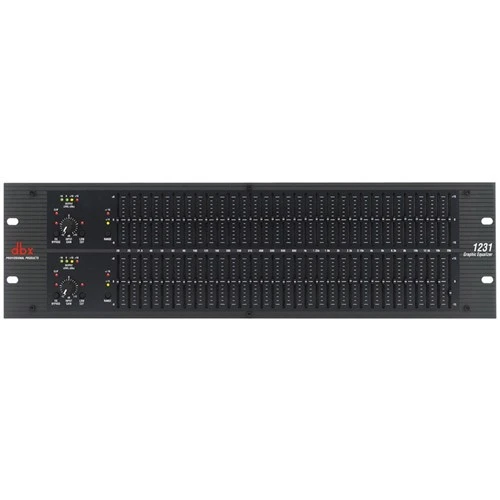
Look, if you've been chasing that perfect room correction or trying to tame a problematic venue, you already know how frustrating it gets. Generic EQ plugins? They're fine for studio work. But live sound? That's a different beast entirely. And that's exactly where the DBX 1231 comes into its own.
This dual-channel 31-band graphic equalizer has been a workhorse in Australian venues for years. There's a reason it keeps showing up on riders and in permanent installs from Sydney pubs to Perth conference centres. But is it right for your setup? Let's dig in.
What Makes the DBX 1231 Worth Your Attention?
So what's the deal with this unit? The DBX 1231 gives you two independent channels of 31-band ISO graphic equalization. Each band operates at standard 1/3-octave centres from 20Hz right up to 20kHz. That's heaps of control—way more than you'd get from a typical 15-band unit.
But here's what I reckon sets it apart: the constant-Q design. What does that mean in practice? Your bandwidth stays consistent regardless of how much boost or cut you apply. Cheap EQs get wider as you push them harder. Not this one.
Key specifications worth noting:
- Dual channel operation (stereo or dual mono)
- 31 bands per channel at ISO centres
- ±6dB or ±12dB range selector
- Constant-Q filters for precise control
- Switchable low-cut filter (40Hz)
- XLR and 1/4" TRS connectivity
- Front panel bypass switches
The build quality? Solid. We're talking proper rack-mount construction that'll survive years of touring abuse. DBX doesn't mess around with flimsy components.
Who Actually Needs a 31-Band Graphic EQ in 2025?
Fair question. With digital processing everywhere, why bother with analogue sliders?
Here's the thing—there's something genuinely intuitive about grabbing physical faders. You can see your curve at a glance. No menu diving. No scrolling through parameters. Just look, grab, adjust. Done.
The DBX 1231 makes sense for:
- Permanent venue installations (pubs, clubs, churches)
- Monitor engineers who need fast, visual EQ adjustment
- PA system tuning and room correction
- Insert processing on mixing consoles
- Anyone who prefers analogue workflow reliability
Live sound techs—you'll appreciate having a dedicated hardware EQ that just works. No latency worries. No software crashes mid-gig. It's there when you need it.
Practical Applications That Actually Matter
Let's get specific. Say you're dealing with a boomy venue—that nasty 125Hz buildup that makes everything muddy. With the 1231, you identify the problem frequency, pull that fader down, and you're sorted. Takes seconds.
Or maybe you're running monitors and the guitarist is getting hammered by feedback around 2.5kHz. Notch it out on their channel. Problem solved. No laptops required.
Want this level of control for your rig? Check out the DBX 1231 at Music on Stage with fast shipping across Australia.
Honest Pros and Cons
I'm not going to pretend this unit is perfect for everyone. Here's the straight truth:
What's genuinely great:
- Rock-solid reliability (DBX quality control is no joke)
- Intuitive visual feedback—see your EQ curve instantly
- Constant-Q design maintains precision at all boost/cut levels
- Flexible range switching between ±6dB and ±12dB
- Clean signal path with low noise floor
What might give you pause:
- Requires 2U rack space (consider your rack real estate)
- No digital recall—you'll need to photo your settings
- Overkill for simple studio monitoring
Honestly? The lack of preset recall is the main limitation. But plenty of engineers actually prefer this—what you see is exactly what you get. No wondering if someone changed your saved preset.
Buying the DBX 1231 in Australia
Right, let's talk about getting one. Australian authorised dealers mean you're covered for warranty support without international shipping hassles. That matters when you're investing in professional gear.
You'll want to consider:
- Warranty coverage — Australian consumer law protections apply
- Power requirements — The 1231 runs on standard Australian voltage
- Shipping — Professional audio dealers typically offer insured freight
Price-wise, the DBX 1231 sits in that sweet spot between budget gear that'll disappoint you and top-tier units that cost a fortune. You're getting proper professional specs without the premium brand tax.
Frequently Asked Questions
Can I use the DBX 1231 for recording studio work?
Absolutely. Works brilliantly on mix buses or for shaping monitoring. Some engineers swear by hardware EQ for that analogue character.
What's the difference between the 1231 and the 2231?
The 2231 adds a limiter section per channel. If you don't need limiting, the 1231 gives you the same EQ quality at a lower price point.
Does it work with active PA systems?
Yep. Insert it between your mixer output and powered speakers. Standard practice for system tuning.
Is 31-band overkill for most applications?
Some reckon 15-band is enough. But that extra resolution helps with surgical feedback control and precise room correction. Once you've used 31-band, hard to go back.
Final Verdict: Should You Buy It?
Here's my take. If you're running live sound—whether that's a pub residency, touring with bands, or managing a venue—the DBX 1231 delivers exactly what you need. Reliable. Precise. Visual. No nonsense.
Studio folks might want digital recall. But for live applications? This unit just works. And in this industry, that counts for everything.
Ready to sort your EQ situation once and for all? Order your DBX 1231 from Music on Stage today—authorised Australian dealer, genuine warranty, and fast delivery to Sydney, Melbourne, Brisbane, Perth, and everywhere in between.