
dBTechnologies VIO X205 Explained: Beginner's Guide to Point Source Speakers 2026
dBTechnologies VIO X205 Explained: A Beginner's Guide to Point Source Speakers in 2026
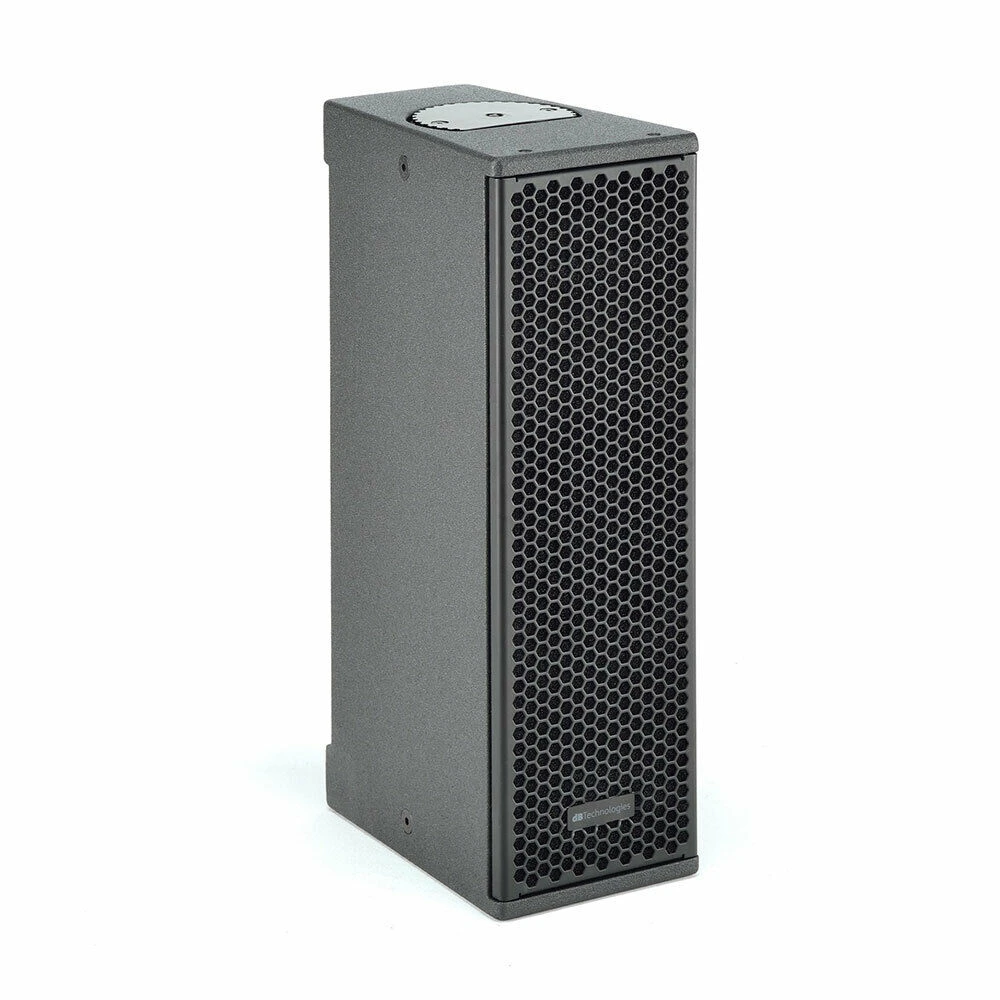
If you're stepping into the world of professional audio for the first time — whether you're setting up a venue, outfitting a house of worship, planning a corporate AV solution, or just trying to understand what "point source" actually means — you've come to the right place. This guide breaks down the dBTechnologies VIO X205 in plain language, explains the technology behind it, and helps you figure out whether it's the right speaker for your needs.
We'll start with the basics and work our way up, so even if you've never bought a professional loudspeaker before, you'll walk away feeling confident about what you're looking at.
What Is a Point Source Speaker? (And Why Should You Care?)
Before we get into the VIO X205 itself, let's clear up some terminology that trips up beginners.
A point source speaker is a loudspeaker designed to project sound from a single, focused source point. Think of it like a torch beam — it sends sound in a controlled, predictable pattern from one location. This is different from a line array, which uses multiple speakers stacked vertically to throw sound over greater distances (like what you see hanging at large concerts).
Why does this matter? Point source speakers are generally simpler to set up, more versatile for smaller to medium spaces, and don't require the complex rigging and system engineering that line arrays demand. For many real-world applications in Australia — pubs, cafes, conference rooms, houses of worship, small live venues — a quality point source speaker is exactly what you need.
Active vs Passive Speakers: A Quick Primer
You'll see speakers described as either active or passive. Here's the difference:
- Active (powered) speakers have built-in amplifiers and processing. You plug in your audio source, connect power, and you're good to go.
- Passive speakers need an external amplifier to drive them. More components, more cables, more complexity.
The VIO X205 is an active speaker, which means everything you need — amplification, crossover, and DSP processing — is built right in. For beginners especially, this is a major advantage because it removes the guesswork of matching amplifiers to speakers.
Meet the dBTechnologies VIO X205: What Makes It Special
The VIO X205 sits within dBTechnologies' premium VIO product family — a series designed by the Italian manufacturer for professional installations and multipurpose applications. Let's break down what's inside and why each element matters.
The Driver Configuration: 2 x 5" Woofers + Compression Driver
The "205" in the name gives you a clue — it features two 5-inch neodymium woofers paired with a 1-inch exit compression driver on a rotatable horn. Here's what that means in plain English:
- Dual 5" woofers: Two smaller drivers working together deliver punchy, controlled low-mid and mid-range frequencies. Using two smaller drivers instead of one larger one gives you better power handling in a compact enclosure while maintaining clarity.
- 1" compression driver: This handles the high frequencies (treble). Compression drivers are more efficient than standard tweeters and project high frequencies further and more evenly — crucial in professional settings.
- Neodymium magnets: These are significantly lighter than traditional ferrite magnets while being equally powerful. The result? A speaker that's impressively light for what it delivers.
Built-In Class-D Amplification
The VIO X205 uses Class-D digital amplification, which is the modern standard for powered professional speakers. Class-D amps are highly efficient — they generate less heat, waste less energy, and can deliver serious power from compact modules. The onboard amplification is purpose-matched to the drivers, meaning the speaker always operates within its optimal performance window.
For beginners, the practical benefit is straightforward: you get powerful, clean sound without needing external amp racks. Just connect your audio source and mains power.
Onboard DSP (Digital Signal Processing)
This is where the VIO X205 really separates itself from basic powered speakers. DSP is essentially a built-in computer that processes the audio signal in real time. Here's what it does for you:
- Crossover management: Automatically splits the audio signal, sending low frequencies to the woofers and highs to the compression driver at the optimal crossover point.
- EQ presets: Factory-tuned equalisation settings optimised for different use cases (wall-mounted, pole-mounted, floor monitor, etc.).
- Protection algorithms: Smart limiters that prevent the speaker from being driven into distortion or damage. Your investment protects itself.
- Phase and time alignment: Ensures all drivers work together in perfect sync for coherent, natural-sounding audio.
Why this matters for beginners: The DSP does a lot of the acoustic engineering work for you. Instead of needing a separate processor rack and expertise to tune a system, the VIO X205 arrives pre-optimised. Select the appropriate preset for your mounting scenario, and the speaker adjusts its behaviour automatically.
Rotatable Horn for Flexible Mounting
One of the cleverer design features is the rotatable waveguide (horn). The high-frequency horn can be physically rotated to maintain correct horizontal and vertical dispersion regardless of how you mount the speaker — horizontally, vertically, or at an angle. This is essential for installations where the speaker might be wall-mounted sideways or used in an unusual orientation.
Dispersion refers to how widely the speaker spreads its sound. The VIO X205 offers controlled, consistent coverage, which means your audience hears even, clear audio whether they're directly in front of the speaker or off to the side — within the designed coverage angle.
What Is the VIO X205 Actually Used For?
This is a genuinely multipurpose speaker, and that's not just marketing speak. Here are the real-world applications where the VIO X205 excels:
Installed Sound
- Hospitality venues: Pubs, bars, restaurants, and cafes across Australia that need reliable, great-sounding background or foreground music.
- Houses of worship: Churches and community halls where clear speech intelligibility and musical reproduction are equally important.
- Corporate AV: Conference rooms, boardrooms, and presentation spaces that need articulate voice reproduction.
- Retail and exhibition spaces: Where compact, visually unobtrusive speakers are needed without compromising audio quality.
Portable and Live Sound
- Small to medium live performances: Solo artists, duos, and small bands in intimate venues.
- Floor monitors: The compact form factor works beautifully as a stage monitor for performers.
- Fill speakers: Used alongside larger main PA systems to fill coverage gaps or provide near-field reinforcement.
- Corporate events: Presentations, seminars, and functions where portability and quick setup matter.
The key advantage is versatility. Many speakers do one thing well — the VIO X205 is engineered to do several things at a high level.
Understanding Key Specs: What the Numbers Actually Mean
Product spec sheets can be intimidating if you're new to pro audio. Let's decode the most important specifications you'll encounter:
Frequency Response
This tells you the range of sounds the speaker can reproduce, measured in Hertz (Hz). Human hearing ranges from roughly 20 Hz (deep bass) to 20,000 Hz (20 kHz — very high treble). The VIO X205's frequency response covers the critical range needed for full, rich sound reproduction in its intended applications. Lower numbers mean deeper bass capability; higher numbers mean more extended, airy treble.
Beginner tip: For a compact speaker like this, don't expect earth-shaking sub-bass. If you need deep low-end (below about 60 Hz), you'll want to pair it with a dedicated subwoofer — which dBTechnologies also offers in the VIO series.
Maximum SPL
SPL stands for Sound Pressure Level — essentially, how loud the speaker can get, measured in decibels (dB). The VIO X205 delivers impressive maximum SPL for its compact size. For context, a normal conversation is around 60 dB, a busy restaurant might hit 80 dB, and a rock concert typically sits around 110-120 dB.
Weight and Dimensions
The VIO X205 is notably compact and lightweight thanks to those neodymium magnets and efficient Class-D amplification. This matters enormously for both installations (less structural load on walls and ceilings) and portable use (easier to transport and set up).
Connectivity
Professional speakers use different connectors than consumer audio gear. The VIO X205 features professional-grade input connections suitable for integration into pro audio signal chains. You'll typically find combo XLR/jack inputs that accept balanced audio signals — the professional standard that rejects interference and noise over long cable runs.
Beginner's Buying Guide: Is the VIO X205 Right for You?
Choose the VIO X205 If:
- You need a versatile, do-it-all speaker — one that works for installed sound today and portable use tomorrow.
- You value build quality and reliability — dBTechnologies' Italian engineering is built for professional duty cycles, not occasional home use.
- Compact size matters — whether for aesthetic reasons in a venue or practical reasons for transport.
- You want plug-and-play simplicity — the onboard DSP and active design mean less external gear and less complexity.
- You're investing in a permanent or semi-permanent installation — the multiple rigging and mounting options make it installation-friendly.
Consider Alternatives If:
- You need massive bass on its own — any compact 2 x 5" speaker will benefit from a subwoofer for full-range applications. Budget for one if low-end is critical.
- You're covering very large spaces — for big outdoor events or large venues, you may need larger format speakers or a line array system.
- Budget is extremely tight — the VIO series is a premium product line. If you're after a basic speaker for casual use, there are more affordable options (though you will notice the quality difference).
Common Beginner Mistakes to Avoid
Here are the pitfalls we see first-time buyers fall into:
- Buying on watts alone: Wattage doesn't tell the whole story. A well-designed 500W speaker can easily outperform a poorly designed 1000W speaker in real-world volume and clarity. Focus on overall system design, SPL ratings, and sound quality.
- Ignoring the room: The best speaker in the world sounds terrible in a poorly treated room. Consider your acoustic environment — hard surfaces reflect sound and create problems. The VIO X205's DSP presets help, but room acoustics always matter.
- Skipping the subwoofer: Compact speakers need sub support for full-range sound. Budget for a sub from the start rather than being disappointed by a lack of bass.
- Overcomplicating the setup: One of the VIO X205's strengths is simplicity. Don't add unnecessary processors or EQ between your source and the speaker — the onboard DSP is already optimised.
- Not planning cable runs: For installations, plan your cabling properly. You'll need both audio signal cables (XLR) and power. Think about cable management before you mount anything.
Why dBTechnologies? Understanding the Brand
If you're new to pro audio, you might not have come across dBTechnologies before. Here's what you should know:
- Italian-designed and engineered: Based in Bologna, Italy, dBTechnologies (part of the AEB Industriale group) has been designing professional audio equipment since the 1990s.
- Innovation track record: They were early pioneers of digitally-powered active speakers and have consistently pushed the boundaries of compact, high-performance audio.
- The VIO family: The VIO X205 sits within a broader VIO ecosystem that includes larger point source speakers and subwoofers. This means you can start with the X205 and expand your system over time with perfectly matched components.
- Professional pedigree: Used by touring sound companies, installed in venues, and trusted by audio professionals worldwide. This isn't consumer gear dressed up as pro equipment.
Setting Up Your VIO X205: What to Expect
If you've never set up a professional active speaker before, here's a realistic overview of what's involved:
For Portable Use
- Positioning: Place the speaker on a speaker stand (35mm pole mount) or use it as a floor monitor angled upward. Aim it at your audience's ear level when possible.
- Power: Connect to mains power (standard Australian 240V). The speaker has its own power supply built in.
- Audio: Run a balanced XLR cable from your mixer, audio interface, or source device to the speaker's input.
- DSP preset: Select the appropriate preset on the rear panel for your use case (e.g., "monitor" mode if using as a floor wedge).
- Level: Start with the volume low, play audio, and gradually increase to your desired level.
Total setup time for a beginner: About 10-15 minutes. Once you've done it twice, you'll have it down to five.
For Permanent Installation
Installation is more involved and may require a qualified installer, especially for wall or ceiling mounting. The VIO X205 supports multiple rigging hardware options — brackets, yokes, and other mounting accessories designed specifically for the cabinet. For overhead installations in Australia, you'll want to ensure compliance with relevant safety standards and local regulations.
Beginner tip: If you're planning a permanent install, it's worth engaging a professional AV integrator for the mounting and wiring, even if you handle the audio setup yourself. Safety first — a speaker falling from a wall bracket is not something you want to experience.
Frequently Asked Questions from Beginners
"Do I need two speakers or will one do?"
It depends on your application. For background music in a small space, one might suffice. For any live sound application, speech reinforcement in a larger room, or stereo music playback, you'll want a pair. Most professional applications use speakers in pairs as a minimum.
"Can I use this as my main PA speaker for gigs?"
For solo performers, duos, acoustic acts, and small ensembles in intimate venues — absolutely. For louder bands or larger spaces, you'd likely use these as monitors or fills alongside a larger main system.
"Do I need a subwoofer?"
For speech-only applications (presentations, lectures), probably not. For music playback or live music, a subwoofer will dramatically improve the low-end fullness. The VIO series includes matched subwoofers that integrate seamlessly.
"What mixer or source do I need?"
Any device with a balanced (XLR or TRS) line-level output will work. This includes mixing consoles, audio interfaces, media players with pro outputs, and many DJ controllers. If your source only has unbalanced (RCA) outputs, you'll need a DI box or signal converter.
"How does it compare to cheaper powered speakers?"
You'll hear the difference. The VIO X205's onboard DSP, premium drivers, and purpose-built enclosure deliver noticeably clearer, more controlled sound compared to budget alternatives. In professional audio, you genuinely get what you pay for — and the reliability factor alone can save you money long-term.
Ready to Get Started?
The dBTechnologies VIO X205 is a premium, compact active loudspeaker that punches well above its size class. It's ideal for Australian venues, installers, and audio professionals who need a versatile, reliable speaker that sounds great across a wide range of applications.
Whether you're outfitting a cafe in Melbourne, upgrading a church PA in Brisbane, or building a portable rig for corporate events in Sydney, the VIO X205 gives you Italian-engineered audio quality with the simplicity of an all-in-one active design.
View the dBTechnologies VIO X205 at MusiconStage to check current Australian pricing and availability.
Got questions about whether the VIO X205 is the right fit for your setup? The team at MusiconStage can help you match the right speakers to your specific needs — don't hesitate to reach out for expert advice.
Your Next Steps
- Define your primary use case — installation, portable, or both?
- Assess your space — how large is the area you need to cover?
- Budget for the full system — speakers, subwoofer (if needed), cables, stands or mounting hardware.
- Consider future expansion — the VIO ecosystem means you can grow your system with matched components.
- Check out the VIO X205 at MusiconStage and start your pro audio journey with confidence.