
dB Technologies VIO X205 Specs Decoded: Point Source 2026
dB Technologies VIO X205 Technical Deep Dive: Point Source Performance Decoded for 2026
Compact active loudspeakers are the most misunderstood category in professional audio. Every brand claims "big sound from a small box", every spec sheet quotes a peak SPL figure that looks impressive in isolation, and almost nobody explains what those numbers mean when you are actually standing in a room trying to cover 120 people at a corporate dinner. The dB Technologies VIO X205 sits right in the middle of that confusion — a genuinely small, genuinely capable point source cabinet from a range that was originally engineered as a touring line array system.
This guide breaks down what the X205 actually is at an engineering level: the transducers, the amplifier topology, the DSP behaviour, the dispersion pattern, and — most importantly — how those specifications translate into predictable results on an Australian stage, in a bar, on a delay stand, or bolted to a wall in a fitness studio.
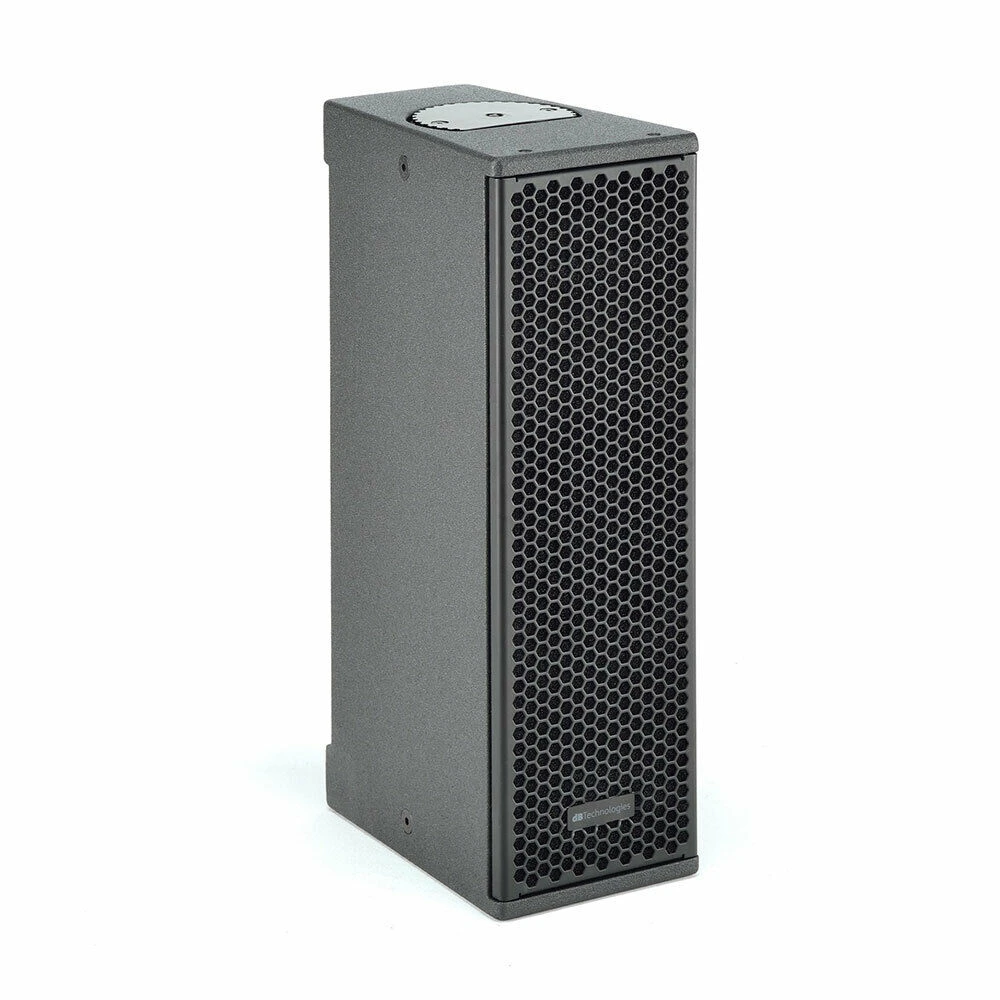
The Technical Overview: What You Are Buying
The VIO X205 is a two-way, bi-amplified, DSP-managed point source enclosure designed as a multipurpose tool. dB Technologies positions the VIO X family as the point source companion to its VIO line array series, and that lineage matters — the voicing, the horn design philosophy and the amplifier platform all trickle down from a system built for rider-grade touring work rather than from an entry-level PA line.
In plain terms: this is a small format box intended to be used as a front-of-house main for small rooms, as stage monitoring, as fill and delay coverage in larger systems, and as a permanent install speaker where visual footprint matters as much as output.
Core Specifications at a Glance
| Specification | Detail | What It Means in Practice |
|---|---|---|
| Configuration | 2-way active point source, bi-amplified | Separate amp channels for LF and HF — cleaner crossover behaviour than passive designs |
| Low frequency driver | 5" woofer, neodymium magnet assembly | Fast transient response, low moving mass, keeps overall weight down |
| High frequency driver | 1" compression driver on a rotatable horn | Controlled directivity rather than uncontrolled dome-tweeter spray |
| Amplification | DIGIPRO Class-D switching amplifier with SMPS | High efficiency, low idle heat, consistent output across mains voltage swings |
| Coverage pattern | Nominal 90° x 60°, rotatable horn | Can be flipped for horizontal or vertical deployment |
| DSP | Onboard processing with factory presets, limiting and EQ contours | Driver protection and voicing handled internally |
| Connectivity | Combo XLR/jack input with balanced XLR link out | Daisy-chaining multiple boxes without an external splitter |
| Rigging | Multiple M-thread fly points, 35mm pole socket, bracket compatible | Genuine install flexibility, not just pole-mount |
| Enclosure | Impact-resistant composite housing, metal front grille | Survives repeated load-ins; lighter than plywood equivalents |
An important honesty note: manufacturers periodically revise published figures for peak SPL, amplifier rating and frequency response as measurement standards change. Always cross-check the current datasheet for the exact revision you are buying. You can review the current listing and full specification set for the dB Technologies VIO X205 at MusiconStage before you commit.
"Point Source" Is a Design Decision, Not Marketing Language
This is the specification most buyers skim past, and it is the one that determines whether the box will work for your application.
A point source cabinet is engineered so that the acoustic output behaves as though it radiates from a single origin, with the LF and HF sections time-aligned and the horn defining a predictable coverage angle. Sound pressure then falls off according to the inverse square law — roughly 6 dB of level loss every time you double the distance from the box.
A line array behaves differently. Within its near field, coupled elements produce closer to 3 dB of loss per doubling of distance, which is why arrays win over long throws in big rooms. But arrays only behave that way when you hang enough boxes to form a coherent source, and they are dramatically less useful in the 8–20 metre spaces most Australian gigs actually happen in.
For a small room, a point source is not a compromise — it is the technically correct choice. You get:
- Predictable pattern control. The horn defines where energy goes. What is outside the pattern gets meaningfully less high-frequency energy, which is how you keep sound off reflective back walls and out of microphones.
- Simpler system design. No array prediction software required, no complex splay angle calculations, no hanging structure to certify.
- Consistent tonality across the coverage area. A single source does not suffer the comb filtering that happens when two poorly-positioned full-range boxes overlap.
The Amplifier Platform: Why DIGIPRO Class-D Matters
dB Technologies has been building its own amplifier modules for decades, and the DIGIPRO platform is a Class-D design paired with a switch-mode power supply. There is a lot of engineering substance behind that pairing that is worth understanding.
Efficiency and thermal behaviour
Class-D output stages typically run at 85–95% efficiency, compared to roughly 50–65% for a well-designed Class-AB amplifier at similar output. The practical consequence is that far less input power is dissipated as heat. In a sealed compact enclosure with limited surface area for convection, that difference is the line between a box that runs all night at a summer wedding in Queensland and one that goes into thermal protection during the second set.
Switch-mode supply and mains tolerance
Australian venue power is not always the clean 230V it claims to be. Long extension runs, overloaded distribution boards and generator supply at outdoor events all produce voltage sag. A regulated switch-mode supply maintains consistent rail voltage across a wide input range, which means your headroom does not quietly disappear when someone plugs a coffee machine into the same circuit. Linear supplies sag with the mains and take your maximum SPL down with them.
Bi-amplification and active crossover
Because the LF and HF drivers have dedicated amplifier channels fed by an active crossover in the DSP domain, several things improve at once:
- No passive crossover components sitting between amplifier and driver, so damping factor at the woofer stays high and cone control improves
- Crossover slopes, phase alignment and driver-specific EQ can be implemented precisely rather than approximated with inductors and capacitors
- Independent limiting per driver — the compression driver can be protected against the specific failure mode that kills it (excess long-term thermal power) without needlessly limiting the woofer
Coverage Pattern: The 90° x 60° Rotatable Horn
A rotatable horn is a small feature with a large impact on deployment flexibility. In its standard orientation the X205 throws a wide horizontal pattern and a narrower vertical one — the correct arrangement for a cabinet on a pole covering an audience that is wider than it is deep.
Rotate the horn 90 degrees and the pattern flips. Now you have narrow horizontal and wide vertical coverage, which is exactly what you want when the box is:
- Mounted on a wall covering a long, narrow room
- Deployed on its side as a low-profile under-balcony fill
- Flown at height and needing to cover from the front row to the back wall without spraying the ceiling
Doing the coverage maths
The geometry is straightforward and worth calculating before you buy. Coverage width at a given distance for a 90° pattern is approximately 2 × distance × tan(45°) = 2 × distance. So a single X205 at 8 metres covers roughly 16 metres of width at the -6 dB points. At 5 metres, about 10 metres of width.
That is a genuinely useful number. It tells you that a stereo pair of X205s positioned 6–8 metres from the back of a function room will comfortably cover a typical 100–150 person seated audience — and it tells you that if you are trying to cover a 40-metre-wide outdoor site, you are looking at the wrong product.
Realistic Performance Expectations: SPL, Headroom and Distance
Here is where technical honesty separates useful advice from sales copy. Peak SPL figures on any spec sheet are measured in ideal conditions, typically with a short burst signal, at one metre, on axis. Real programme material behaves very differently.
The crest factor problem
Live music has a crest factor — the ratio between peak and average level — typically between 12 and 20 dB depending on genre and how heavily the source is compressed. A speaker rated at, say, 124 dB peak will deliver a sustained, undistorted average of roughly 106–112 dB SPL at one metre. That is the number that actually matters for your audience.
Working the distance calculation
| Distance from box | Level loss (inverse square) | Approximate continuous SPL at listener |
|---|---|---|
| 1 m | Reference | ~108 dB |
| 2 m | -6 dB | ~102 dB |
| 4 m | -12 dB | ~96 dB |
| 8 m | -18 dB | ~90 dB |
| 16 m | -24 dB | ~84 dB |
Context for those figures: a comfortable background music level is 70–80 dB, a well-mixed acoustic act sits around 90–95 dB, and a full band in a pub runs 100–105 dB. Australian workplace noise regulations set an 85 dB LAeq exposure standard over eight hours, and most state guidelines for entertainment venues sit around 100 dB LAeq for shorter durations.
The practical read: a pair of X205s handles speech, DJ background music, acoustic duos, corporate presentations and small function work with genuine headroom to spare at typical throw distances. Add subwoofers and they will handle a full band in a small room. Ask them to be the entire system for a loud rock band in a 300-capacity venue and you are pushing past their intended design envelope.
Frequency Response and Why the Sub Question Is Not Optional
Physics does not negotiate. A 5-inch driver in a compact enclosure has a finite amount of air it can move, and low-frequency output is fundamentally a function of cone area multiplied by excursion. No amount of DSP boost changes that — it just uses up amplifier headroom and excursion budget faster.
Expect meaningful, usable output from around 75–85 Hz upward. That covers:
- The full vocal range, including male fundamentals down to about 85 Hz
- Acoustic guitar, brass, strings, and most of the piano's musically important range
- Speech intelligibility bands entirely
What it does not cover is kick drum weight (50–80 Hz), bass guitar fundamentals (41 Hz for a low E), and the sub-bass content that defines modern electronic music. If your programme material includes any of those, a subwoofer is not an upgrade — it is a required system component.
Crossover strategy
With a compact top box like this, a crossover point of 100–120 Hz is generally the technically sound choice rather than the more conventional 80 Hz. Crossing higher relieves the 5" driver of excursion-demanding low content, which reduces intermodulation distortion in the midrange — the audible result is clearer vocals at high levels, not just more bass.
dB Technologies' own compact subwoofers in the VIO and SUB series are the natural pairing, since their DSP presets are designed around matched phase behaviour at the crossover. Mixing brands works, but expect to spend time with a measurement system getting the phase alignment right. The team at MusiconStage can advise on matched sub options for the VIO X205 if you are specifying a complete system.
Technical Comparison: Where the X205 Sits
| Consideration | dB Technologies VIO X205 | Typical 8" compact active | Typical 12" active PA box |
|---|---|---|---|
| LF driver | 5" | 8" | 12" |
| Practical LF extension | ~75–85 Hz | ~60–70 Hz | ~50–55 Hz |
| Standalone continuous SPL | Moderate | Higher | Highest |
| Visual footprint | Minimal | Noticeable | Dominant |
| Install/fill suitability | Excellent | Good | Poor |
| Weight per box | Very light | Moderate | Heavy (18–22 kg) |
| Requires sub for music | Yes | Usually | Often not |
| One-person deployment | Easy | Manageable | Awkward |
The comparison makes the trade-off explicit. If raw standalone SPL per dollar is your only metric, a 12" active box wins every time. The X205 is competing on a different axis: pattern control, visual discretion, deployment flexibility and system-grade voicing. It is a system component designed to be used intelligently, not a one-box solution.
Where it genuinely outperforms bigger boxes
- Distributed systems. Four X205s spread through a venue at low individual levels produce far better intelligibility and far more even coverage than two loud boxes at the front.
- Delay and fill positions. Small, controlled pattern, easy to fly or bracket, sonically consistent with the mains.
- Speech-critical applications. Conference rooms, houses of worship, lecture spaces — where the pattern control keeps energy off reflective surfaces and preserves consonant clarity.
- Venues with aesthetic constraints. Heritage buildings, upmarket restaurants, boutique hotels where the AV brief includes "you shouldn't see the speakers".
Specifications That Actually Matter When Comparing Compact Boxes
If you are evaluating the X205 against competitors, these are the technical criteria that separate serious products from spec-sheet exercises.
- Continuous vs peak power ratings. Peak figures are marketing-friendly and largely meaningless. Ask for continuous or RMS ratings and the measurement standard used. A brand quoting only peak numbers is telling you something.
- Whether coverage is specified with a frequency range. "90° x 60°" without qualification could mean anything. Reputable manufacturers state the frequency band over which that pattern holds, because every horn loses control below a certain frequency.
- Neodymium vs ferrite magnets. Neodymium cuts driver mass substantially. In a box you will lift onto poles repeatedly, that is a genuine ergonomic and reliability advantage, not just a spec-sheet flourish.
- Limiter sophistication. A single brickwall limiter across the whole signal protects the box but sounds obvious when engaged. Multi-band, driver-specific limiting with thermal modelling degrades far more gracefully.
- Rigging point count and rating. Count the M-threads. A box with two fly points is pole-mount hardware with pretensions; a box with multiple properly-rated points is genuinely install-capable.
- Availability of local parts and service. Drivers fail eventually. A brand with established Australian distribution means a replacement compression driver arrives in days, not from an overseas warehouse in six weeks.
The Honest Limitations
No product review is worth reading if it will not name the constraints.
- It is not a standalone music system. Budget for subwoofers from day one, or you will be disappointed and blame the tops.
- Output ceiling is real. A 5" driver reaches its excursion limit at a defined point. The limiter will protect the box, but it will also audibly compress your mix if you keep pushing.
- Premium pricing for the size. You are paying for engineering lineage, amplifier quality and pattern control, not for cone area. Buyers who evaluate purely on watts-per-dollar will find cheaper boxes on paper.
- Long throws are outside its remit. Past roughly 15–20 metres you are asking a small box to do a large box's job.
- Coverage planning is required. The pattern control that makes it excellent is only an advantage if you aim it properly. Point it at a back wall and you will get the reflections you deserve.
Technical FAQ
Can I use the X205 as a stage monitor?
Yes, and the pattern control works in your favour — a defined 90° x 60° horn keeps energy off open microphones far better than an uncontrolled wide-dispersion box. Check the cabinet geometry for a suitable wedge angle, or use a floor stand. Applying a high-pass filter around 100 Hz will substantially improve gain before feedback in monitor duty.
How many can I daisy-chain from one source?
The balanced XLR link output is a buffered pass-through. Practically, chaining three to four boxes from one console output is safe. Beyond that, cable capacitance and cumulative loading can begin to affect high-frequency response over long runs, and you should consider an active distribution amplifier.
Is it suitable for outdoor Australian events?
For dry-weather outdoor use with adequate coverage from above, yes. Composite enclosures handle heat and UV better than painted plywood. But no standard active loudspeaker should be exposed to rain or coastal salt spray without proper weather protection — check the specific IP rating on the current datasheet before specifying it for any permanent exterior install.
Does it need an external processor or system controller?
No. The onboard DSP handles crossover, driver protection, time alignment and voicing. An external processor adds value only if you are integrating the X205 into a larger multi-zone or delay-compensated system that needs global control.
What amplifier headroom should I plan for?
None — it is a self-powered box. What you should plan for is electrical capacity. Compact active speakers draw modest current individually, but a system of six to eight boxes plus subs on a single 10A circuit is a real risk. Distribute your power properly.
The Verdict: Who Should Buy This
The dB Technologies VIO X205 is a specialist tool that happens to be versatile — which is a different thing from being a generalist.
It is the right technical choice if you are: an installer specifying discreet, high-intelligibility coverage in restaurants, gyms, conference rooms or worship spaces; a production company building a scalable system where fills and delays need to match the mains tonally; a mobile operator working corporate and function gigs where visual presentation and speech clarity matter more than raw volume; or an engineer who already understands coverage planning and wants a box that responds predictably to good system design.
Look elsewhere if: you need one pair of boxes to do everything including loud bands with no subs; your budget is genuinely constrained and cone area per dollar is the priority; or your typical throw distance exceeds 20 metres.
Judged on the criteria that matter for its intended role — pattern control, amplifier quality, DSP sophistication, deployment flexibility and the sonic consistency that comes from a properly engineered point source design — it delivers exactly what the specification suggests. Which, in an industry full of inflated numbers, is genuinely worth something.
Ready to spec it in? Check current pricing, stock and full manufacturer specifications for the dB Technologies VIO X205 active loudspeaker at MusiconStage, with Australian warranty support and expert advice on matching subwoofers and mounting hardware for your specific application.