
Audio-Technica ATH-M70x vs Rivals: Aussie Studio Guide 2026
Audio-Technica ATH-M70x vs Rivals: Aussie Studio Guide 2026
Buying professional monitor headphones looks simple until you actually start comparing them. Every model claims "accurate", "reference-grade" and "studio-ready" sound, the spec sheets all list impressive frequency ranges, and the price gap between the entry-level pair and the flagship can be three or four hundred dollars. So what are you actually paying for, and does the top of the range genuinely serve you better than the mid-tier favourite everyone already owns?
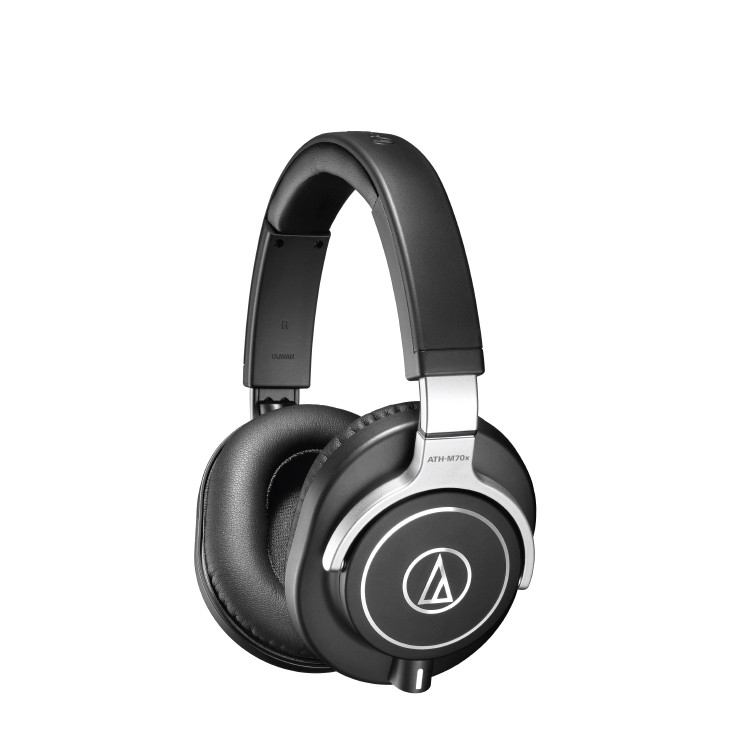
The Audio-Technica ATH-M70x sits at the top of Audio-Technica's long-running M-Series, above the hugely popular M50x and the budget M40x. It is aimed squarely at tracking, mixing and critical listening rather than casual enjoyment, and that focus shapes everything about how it sounds. This guide compares it fairly against the alternatives Australian engineers, producers and content creators actually shortlist, explains where each one wins, and gives you a framework for picking the right pair rather than the most expensive pair.
Understanding the closed-back monitoring market
Closed-back studio headphones exist to solve two problems at once: they need to isolate the wearer from what is happening in the room, and they need to leak as little sound as possible back into a microphone. That is why they dominate tracking booths, podcast desks, live broadcast positions and any home studio where you cannot record in silence.
The trade-off is that closed enclosures are harder to make sound natural. A sealed cup creates internal reflections and resonances that open-back designs simply do not have, so manufacturers have to tune around them. Different brands make different choices in that tuning, and those choices are what you are really comparing when you shortlist headphones — not the numbers on the box.
Broadly, the Australian market breaks into three tiers:
- Entry tier (roughly $150–$250): Sony MDR-7506, Sennheiser HD 280 Pro, Audio-Technica ATH-M40x. Honest, functional, built for utility.
- Core tier (roughly $250–$350): Audio-Technica ATH-M50x, Beyerdynamic DT 770 Pro, AKG K371. The workhorses most studios own.
- Flagship tier (roughly $400–$600): Audio-Technica ATH-M70x, Beyerdynamic DT 700 Pro X. More resolution, more refined tuning, higher expectations.
Moving up a tier does not automatically mean "better for you". It means a different balance of resolution, comfort, tonality and durability — and for some jobs the cheaper option is genuinely the smarter buy.
Specification comparison at a glance
Here is how the ATH-M70x lines up against the models it most often gets compared with. Prices are indicative Australian retail figures and move with stock and exchange rates, so treat them as a guide rather than a quote.
| Model | Driver | Frequency response | Impedance | Weight (no cable) | Approx. AU price |
|---|---|---|---|---|---|
| Audio-Technica ATH-M70x | 45 mm | 5–40,000 Hz | 35 Ω | 280 g | $500–$600 |
| Audio-Technica ATH-M50x | 45 mm | 15–28,000 Hz | 38 Ω | 285 g | $260–$300 |
| Audio-Technica ATH-M40x | 40 mm | 15–24,000 Hz | 35 Ω | 240 g | $170–$210 |
| Beyerdynamic DT 770 Pro (80 Ω) | 45 mm | 5–35,000 Hz | 80 Ω | 270 g | $250–$310 |
| Beyerdynamic DT 700 Pro X | 45 mm | 5–40,000 Hz | 48 Ω | ~350 g | $430–$500 |
| Sony MDR-7506 | 40 mm | 10–20,000 Hz | 63 Ω | 230 g | $190–$230 |
| AKG K371 | 50 mm | 5–40,000 Hz | 32 Ω | 255 g | $220–$270 |
A word of caution on spec sheets. Frequency response figures quoted without a tolerance (±3 dB, for example) tell you almost nothing about tonal balance — a headphone can reach 40 kHz and still sound wrong at 3 kHz. Sensitivity is also quoted inconsistently across brands: some publish dB per milliwatt, others dB per volt, and the two are not directly comparable. Use the table for physical facts like weight, impedance and driver size, and use listening impressions and tuning descriptions for everything else.
What the ATH-M70x actually does differently
The M70x uses 45 mm large-aperture drivers with rare-earth magnets and copper-clad aluminium wire voice coils, and it is rated to handle up to 2,000 mW of input power — a genuinely high figure that speaks to how the drivers are built rather than to how loud you should ever listen. At 35 ohms it is easy to drive, which matters more than people expect: it will run properly from an interface headphone output, a portable recorder, a mixer's phones jack or a laptop, without needing a dedicated amplifier to come alive.
Tonally, the M70x is the analytical member of the family. Where the M50x has a deliberately exciting low end and a forward treble that flatters finished music, the M70x pulls the bass back toward neutral and puts its energy into midrange clarity and upper-frequency detail. The practical effect is that problems are easier to hear — sibilance on a vocal, a cymbal that is too hot, a room reflection on an acoustic guitar, a slightly late edit. That is exactly what you want when tracking and editing.
It is also the reason some people do not get on with it. If you listen to music for pleasure on the same pair, the M70x can sound bright and unforgiving, particularly on poorly mastered material. That is not a flaw in the headphone; it is the design brief being honest with you. But it is a real consideration if you only want to buy one pair for both work and listening.
Practical features worth noting
- Three detachable cables included: a 1.2 m coiled cable that stretches to 3 m, a 3 m straight cable, and a 1.2 m straight cable. Cable failure is the number one killer of studio headphones, and having a locking detachable connector plus spares in the box is genuinely valuable.
- 90-degree swivelling earcups for single-ear monitoring — essential for DJs, broadcast operators and anyone cueing while listening to a room.
- Collapsible design with a carry pouch, which matters if the headphones live in a gig bag rather than on a hook.
- Screw-on 6.3 mm adapter over a gold-plated 3.5 mm jack, so it works with both studio and consumer gear.
ATH-M70x pros and cons
| Strengths | Trade-offs |
|---|---|
| Detailed, revealing midrange and treble that exposes problems early | Bright presentation can be fatiguing over very long sessions |
| Excellent isolation for tracking and loud environments | Clamping force is firm out of the box and needs breaking in |
| Easy to drive at 35 Ω — no amp required | Not a flattering headphone for casual music listening |
| Three detachable cables and replaceable earpads | Roughly double the price of the M50x |
| Lightweight at 280 g relative to its class | Bass is accurate rather than impressive — a downside for some genres |
Head-to-head: the comparisons that actually matter
ATH-M70x vs ATH-M50x
This is the decision most buyers are really making. The M50x is the best-selling studio headphone of the last decade for good reason: it is durable, comfortable, works everywhere, and its slightly V-shaped tuning makes almost everything sound engaging. It is a fine tracking headphone and a great all-rounder.
The M70x is more accurate but less forgiving. It resolves more fine detail, has a flatter and tighter low end, and gives you a clearer view into a busy mix. If your work involves making judgement calls on tone and cleanliness — comping vocals, editing dialogue, checking takes before a client hears them — that extra resolution earns its keep. If you mostly need reliable, comfortable cans for capturing performances and casual reference, the M50x is the better value and the money saved goes further elsewhere in your rig.
Verdict: M50x for all-round versatility and value; M70x when accuracy is the job.
ATH-M70x vs Beyerdynamic DT 770 Pro
The DT 770 Pro is the comfort champion of the category — velour pads, a soft headband and a loose fit that many engineers wear for eight hours without complaint. It has a big, warm low end and a distinctive treble lift, and it isolates well.
The differences are meaningful. The DT 770 Pro's bass is more elevated than the M70x's, which makes it enjoyable but less trustworthy for low-end decisions. Its treble peak is sharper and more specific, where the M70x spreads its detail more evenly. Impedance also matters here: the 80-ohm version is the sensible studio choice and drives fine from most interfaces, but the 250-ohm version really does want a proper headphone amp. The DT 770 Pro also uses a fixed cable, which is a genuine long-term durability concern compared with the M70x's detachable design.
Verdict: DT 770 Pro (80 Ω) for marathon comfort and warmth; M70x for cable serviceability, portability and a flatter low end.
ATH-M70x vs Beyerdynamic DT 700 Pro X
This is the closest fight at the flagship level. The DT 700 Pro X is a modern redesign with a 48-ohm STELLAR.45 driver, detachable mini-XLR cable and a noticeably more neutral tuning than the older DT 770. It is comfortable, well built and easy to drive.
Choose between them on presentation and weight. The DT 700 Pro X is smoother and slightly warmer, with more low-end weight; the M70x is leaner, brighter and more forensic up top. The Beyerdynamic is also around 70 g heavier, which you will feel by hour four. Neither is objectively better — they are two credible readings of the same brief.
Verdict: DT 700 Pro X if you want flagship detail with a gentler top end; M70x if you want maximum insight into the upper mids and treble in a lighter, foldable package.
ATH-M70x vs Sony MDR-7506
The MDR-7506 is a studio institution — cheap, light, instantly familiar to every engineer over 40, and brutally revealing of sibilance. It remains an excellent tracking and location-sound headphone.
But it is a 1991 design. Its frequency response tops out at 20 kHz, its build uses a fixed coiled cable, and its infamous crumbling pleather earpads are a running joke for a reason. The M70x is more resolving, better isolating, more comfortable and far more serviceable. The 7506 wins on price and on the fact that losing one at a gig does not hurt.
Verdict: MDR-7506 as a cheap, disposable field workhorse; M70x as a primary studio reference.
ATH-M70x vs AKG K371
The K371 is the value pick for anyone who cares about measured neutrality — it was tuned to a research-derived target curve and is one of the most "correct" sounding closed-backs at its price. It is comfortable, folds flat and includes three detachable cables.
Where the M70x pulls ahead is isolation, build robustness and treble resolution. Where the K371 pulls ahead is bass accuracy at a much lower price, and a more relaxed tuning that suits long mixing sessions. If your budget stops around $250 and mixing is your main activity, the K371 is a genuinely strong alternative and it would be unfair not to say so.
Situation-specific recommendations
| Your situation | Best choice | Why |
|---|---|---|
| Professional tracking and vocal comping | ATH-M70x | Isolation plus upper-mid detail catches sibilance and noise before the mix stage |
| First serious studio headphone, tight budget | ATH-M40x | Flat enough to learn on at a genuinely accessible price |
| One pair for work and listening | ATH-M50x | Engaging tuning that stays usable for both roles |
| Eight-hour editing days | DT 770 Pro (80 Ω) or DT 700 Pro X | Velour pads and lighter clamp reduce fatigue |
| Location recording and field work | ATH-M70x or Sony MDR-7506 | Strong isolation; M70x folds and has replaceable cables |
| Mixing on a mid-range budget | AKG K371 | Research-target tuning gives reliable tonal decisions for the money |
| DJ and broadcast cueing | ATH-M70x | 90-degree swivel cups and high power handling |
Price versus value: is the flagship worth it?
Here is the honest arithmetic. Going from the M40x to the M50x roughly doubles your spend and delivers a clear, audible improvement in bass control, soundstage and build. Going from the M50x to the M70x roughly doubles it again, and the improvement is real but smaller in magnitude and narrower in scope. You are paying for resolution in the top two octaves and a flatter low end — refinements that matter enormously if your income depends on hearing them, and barely at all if it does not.
The value case for the M70x is strongest when:
- You are making paid decisions about recordings, so a missed problem costs you time or a re-record.
- You track in a room you cannot treat or silence, and isolation is doing real work.
- Your headphones are your primary monitoring source rather than a check against speakers.
- You need gear that survives transport, with cables you can replace rather than resolder.
The value case is weakest when you already own a competent pair, mix mostly on monitors, or listen for pleasure as much as you work. In that case the sensible upgrade path is acoustic treatment or a better interface, not another set of headphones. Check current ATH-M70x pricing and availability before committing, and weigh it against what else the same money would fix in your setup.
A simple decision framework
Work through these in order and the shortlist usually collapses to one or two options.
- What is the primary job? Tracking and isolation, or mixing and tonal judgement? Isolation-first pushes you toward the M70x; mixing-first opens up the K371 and DT 700 Pro X.
- How many hours per session? Under three hours, clamping force barely matters. Over five, comfort outweighs a small resolution advantage.
- What will drive them? If it is a laptop or a basic interface, stay at or below about 50 ohms. Only consider 250-ohm models if you have a real headphone amp.
- Do you travel with them? Folding designs with detachable cables survive gig bags. Fixed-cable models do not, over time.
- Are you buying accuracy or enjoyment? Be honest. Buying a reference headphone and then wishing it had more bass is the most common regret in this category.
- What is the total cost of ownership? Factor in replacement earpads every 12–24 months of heavy use. Models with widely available spares stay in service far longer.
Common mistakes to avoid
- Buying on frequency-response numbers. A quoted 5–40,000 Hz range without a tolerance figure is marketing, not measurement.
- Assuming higher impedance means better quality. It means different amplification requirements, nothing more.
- Judging in the first hour. New pads are stiff and clamp hard; most closed-backs need 20–30 hours of wear before the fit settles.
- Expecting headphones to replace monitors. Even excellent headphones misrepresent stereo width and low-end room interaction. Cross-check your work.
- Ignoring earpad condition. Compressed or split pads change frequency response measurably. Replacing them restores performance far more cheaply than replacing headphones.
- Overbuying for the room. Flagship resolution in an untreated bedroom is a solvable problem attacked from the wrong end.
Frequently asked questions
Do the ATH-M70x need a headphone amplifier?
No. At 35 ohms they reach usable levels from audio interfaces, mixers, portable recorders and laptops. A quality amp may tighten things slightly, but it is not a requirement.
Are they good for mixing as well as tracking?
Yes, with the usual caveat that any closed-back headphone should be cross-referenced against speakers or a second pair. Their brightness means you may under-EQ the top end if you trust them exclusively — check your mixes elsewhere before signing off.
How do they compare with open-back headphones for mixing?
Open-backs generally offer a more natural soundstage and less internal resonance, so many engineers prefer them for mixing. They also leak sound badly, making them useless for tracking. If you can only own one pair and you record, closed-back is the practical answer.
Can I replace the earpads?
Yes. Genuine Audio-Technica replacement pads are available and swapping them is a straightforward job. Doing it every year or two under heavy use keeps both comfort and tonal balance consistent.
Are they suitable for DJing?
They work well for it — the 90-degree swivelling cups, strong isolation and high power handling all suit booth use. Dedicated DJ headphones may offer more bass emphasis, but the M70x is more accurate.
The honest final recommendation
The ATH-M70x is not the right headphone for everyone, and any guide that tells you otherwise is selling rather than advising. If you want one comfortable pair for work and listening, the M50x remains the smarter buy. If you edit for eight hours at a stretch, Beyerdynamic's velour-padded models will treat your ears better. If your budget caps at $250 and mixing is your focus, the AKG K371 is excellent value.
But if your job is to hear what is actually on the recording — every breath, every edit point, every reflection off an untreated wall — the M70x does that better than anything else in Audio-Technica's range and holds its own against far more expensive competition. Combine that with an easy 35-ohm load, three included cables, replaceable pads and a folding design that survives real-world transport, and you have a tool built to stay in service for years rather than seasons.
For Australian engineers, producers and creators who need accuracy above flattery, it is a well-judged flagship at a fair price. View the Audio-Technica ATH-M70x at MusiconStage for current Australian pricing, stock and delivery options.