
Audio Technica ATH-M70x vs M50x: Which Monitor Headphones Win in 2026?
Audio Technica ATH-M70x vs the Competition: Complete Australian Buyer's Guide 2026
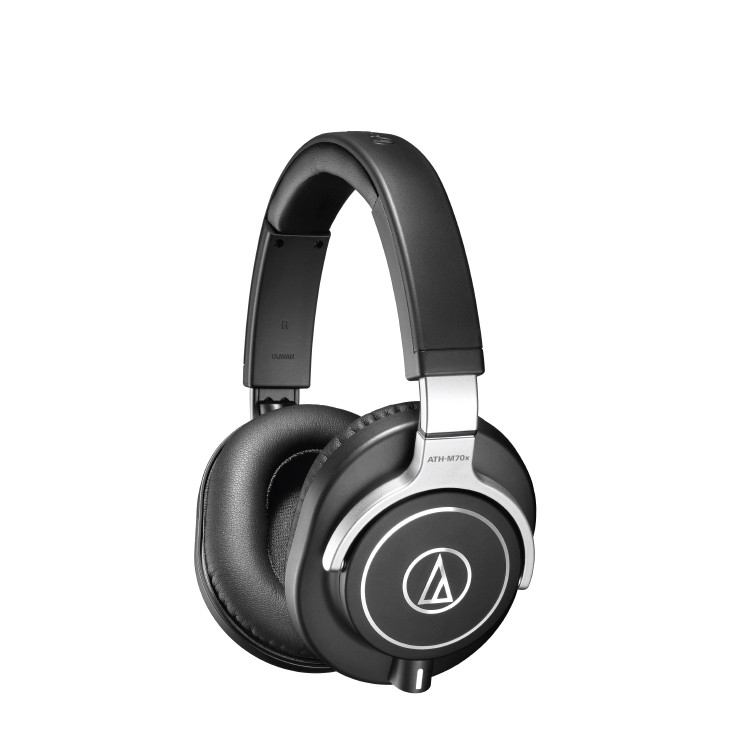
If you've spent any time in Australian studios, broadcast rooms, or mastering suites, you've seen Audio Technica's M-Series headphones on nearly every desk. The ATH-M70x sits at the top of that lineup, and it's a headphone that divides opinion in the best possible way. Some engineers swear by its surgical accuracy. Others find it too revealing for casual listening. That tension is exactly what makes it worth a proper deep dive.
This guide breaks down everything you need to know about the ATH-M70x — what it does brilliantly, where it falls short, how it stacks up against its siblings and competitors, and most importantly, whether it's the right choice for your workflow and budget.
What Makes the ATH-M70x Different from Every Other M-Series Headphone
Audio Technica's M-Series has become the de facto standard for closed-back monitoring in Australia. You'll find M50x headphones in everything from bedroom studios to ABC broadcast suites. But the M70x isn't just a more expensive version of the M50x — it's a fundamentally different tool designed for a different job.
The ATH-M70x was engineered specifically for critical listening and analytical monitoring. While the M50x aims to be a versatile all-rounder (and succeeds brilliantly at that), the M70x sacrifices some of that crowd-pleasing warmth for a flatter, more honest frequency response. It's the difference between a mirror that's slightly flattering and one that shows you every detail — including the ones you'd rather not see.
Key Specifications at a Glance
| Specification | ATH-M70x | ATH-M50x | ATH-M60x |
|---|---|---|---|
| Driver Size | 45mm | 45mm | 45mm |
| Frequency Response | 5 – 40,000 Hz | 15 – 28,000 Hz | 15 – 28,000 Hz |
| Impedance | 35 ohms | 38 ohms | 38 ohms |
| Sensitivity | 97 dB/mW | 99 dB/mW | 99 dB/mW |
| Maximum Input Power | 2,000 mW | 1,600 mW | 1,600 mW |
| Weight (without cable) | 280g | 285g | 220g |
| Design | Circumaural, closed-back | Circumaural, closed-back | On-ear, closed-back |
| Detachable Cables | 3 included | 3 included | 1 included |
| Ear Cushion Type | Leather-padded | Leather-padded | Leather-padded |
| Target Use | Critical monitoring, mastering | Mixing, tracking, general use | On-the-go monitoring |
That frequency response figure is the headline number: 5 Hz to 40,000 Hz. The M50x tops out at 28,000 Hz. Now, you can't hear above roughly 20,000 Hz (and that's if you're young and haven't been standing next to drum kits for decades). But that extended range tells you something important about the driver design — it's built for accuracy across the entire audible spectrum and beyond, which translates to cleaner transient response and better detail retrieval within the frequencies you can hear.
Sound Signature: Honest to a Fault
Here's where the M70x earns both its praise and its criticism. The sound signature is remarkably flat — genuinely one of the flattest closed-back headphones available at any price point. For monitoring work, that's exactly what you want. Every frequency gets equal treatment, so you're hearing your mix rather than the headphone's interpretation of your mix.
What You'll Notice Immediately
- Treble clarity that's almost startling — The upper frequencies are extended and detailed. You'll hear sibilance, high-hat bleed, and vocal breath sounds with surgical precision. If there's a problem in your high end, the M70x won't let you miss it.
- Midrange transparency — Vocals, guitars, and synths sit exactly where they should. There's no mid-forward push or scoop. What you recorded is what you hear.
- Bass that's tight and controlled — This is where casual listeners sometimes feel let down. The bass is accurate, not enhanced. It won't thump or rumble the way consumer headphones do. But for monitoring, that precision is invaluable — you can hear exactly what your low end is doing without guesswork.
- Imaging and separation — Individual elements in a mix remain distinct and placeable. The stereo field is well-defined without being artificially wide.
If you're coming from boosted consumer headphones or even the slightly warmer M50x, the M70x can initially sound thin or bright. Give it a few sessions. Once your ears calibrate, you start hearing into mixes in a way that cheaper headphones simply don't allow.
Build Quality and Comfort: Made for Long Sessions
Audio Technica has been refining the M-Series design for years, and the M70x benefits from all that iteration. The build is robust without being heavy — at 280g without cable, it's actually 5 grams lighter than the M50x despite feeling more substantial in the hand.
The circumaural (over-ear) design fully encloses your ears, which serves two purposes: better isolation from external noise and significantly more comfort during extended sessions. The leather-padded cushions are firm enough to maintain a good seal but soft enough that you can wear them for hours without fatigue.
The headband distributes pressure evenly, and there's enough swivel in the ear cups to accommodate different head shapes. Audio engineers and podcasters pulling 8-hour days will appreciate that these don't create pressure points the way some competing headphones do.
Three Cables Included
Audio Technica includes three detachable cables with the M70x, covering essentially every scenario:
- 1.2m straight cable — Perfect for portable use or short desk runs
- 3.0m straight cable — Studio standard length for rack-mounted gear
- 1.2m coiled cable (extends to 3.0m) — Ideal for tracking when you need some freedom to move
All three use a proprietary locking mechanism at the headphone end, which prevents accidental disconnection during sessions. It's a small detail that matters enormously when you're mid-take and someone trips over your cable.
ATH-M70x vs ATH-M50x: The Comparison Everyone Asks About
This is the big question for most Australian buyers: is the M70x worth the premium over the wildly popular M50x? The answer depends entirely on what you're using them for.
| Category | ATH-M70x | ATH-M50x | Winner |
|---|---|---|---|
| Frequency Accuracy | Extremely flat, reference-grade | Slight bass/treble emphasis | M70x |
| Detail Retrieval | Exceptional — reveals flaws | Very good for the price | M70x |
| Enjoyable Casual Listening | Can feel clinical | Fun, engaging sound | M50x |
| Mixing Suitability | Excellent for critical decisions | Very capable, more forgiving | M70x (slight edge) |
| Tracking/Recording | Great, though detail can distract | Perfect for performers | M50x |
| Mastering | Designed for this | Not ideal | M70x |
| Portability | Folds flat, includes carry pouch | Folds flat, includes carry pouch | Tie |
| Build Durability | Premium construction | Solid, time-tested | M70x (slightly) |
| Value for Money | Justified for professionals | Outstanding value | Depends on use |
The bottom line: If you're making critical mix decisions, mastering, or doing quality control work, the M70x's accuracy is worth every extra dollar. If you want one pair of headphones for mixing, tracking, and occasional listening, the M50x remains the smarter buy. Many working engineers own both — M70x for critical listening, M50x for tracking and everyday use.
How It Stacks Up Against the Wider Market
The M70x doesn't exist in a vacuum. At this price point, Australian buyers have several compelling alternatives worth considering.
vs Beyerdynamic DT 770 Pro
The DT 770 is the other heavyweight in closed-back monitoring. It's comfortable (legendarily so), well-built, and has a slightly warmer tonality than the M70x. However, it uses a fixed cable — a genuine drawback for studio use where cables get damaged. The M70x is more analytically accurate; the DT 770 is slightly more forgiving and comfortable for marathon sessions. Both are excellent, but the M70x edges ahead for precision work.
vs Sony MDR-7506
The venerable 7506 has been a broadcast and studio staple for decades. It's significantly cheaper, lighter, and has proven reliability. But it's also showing its age — the frequency response doesn't compete with the M70x, the pads wear quickly, and it lacks detachable cables. If budget is tight, the 7506 remains a solid choice. If you need the best accuracy a closed-back can offer, the M70x is a clear upgrade.
vs Sennheiser HD 280 Pro
Sennheiser's entry offers excellent isolation (32 dB) and a comfortable fit at a lower price point. Sonically, it's competent but not in the same league as the M70x for detail and accuracy. The HD 280 Pro is a great tracking headphone; the M70x is a monitoring and mastering tool.
Who Should Buy the ATH-M70x?
It's Perfect For:
- Mastering engineers who need to hear exactly what's in the file, no embellishment
- Mixing engineers who want a reliable headphone reference alongside their monitors
- Broadcast professionals doing quality control on audio content
- Podcasters and voice artists who need to catch mouth clicks, room noise, and sibilance
- Audio educators teaching critical listening skills
- Hi-fi enthusiasts who genuinely prefer accuracy over colouration
You Might Want Something Else If:
- You primarily listen to music for enjoyment — the flat response can feel unexciting with genres that rely on bass impact or treble sparkle
- You're buying your first studio headphones — the M50x offers 85% of the performance at a significantly lower price and is more forgiving while you develop your ears
- You only do tracking — performers generally prefer headphones with a bit more low-end presence for feel and energy
- You need open-back headphones — if isolation isn't required, open-backs like the ATH-R70x or Sennheiser HD 600 offer a more natural soundstage for mixing
Common Questions Australian Buyers Ask
Do I need a headphone amplifier?
At 35 ohms impedance, the M70x is reasonably efficient and will work adequately from most audio interfaces and even phones. However, a dedicated headphone amp (even a modest one) will improve dynamics and control, particularly in the bass. If you're using these professionally, pair them with your interface's headphone output at minimum — it'll be running them properly.
How's the isolation?
Very good for a closed-back design. You won't get as much isolation as some competitors (the Sennheiser HD 280 Pro wins that battle), but it's more than adequate for studio use and commuting. Enough to block out a reasonably noisy office or studio environment.
Are replacement parts available in Australia?
Yes — ear pads, headband cushions, and cables are all available as replacement parts through authorised Australian dealers. This is a genuine advantage over some competitors where replacement parts need to be sourced internationally. The detachable cable design also means the most common point of failure (the cable itself) is the cheapest and easiest component to replace.
How long do they last?
Audio Technica's M-Series headphones are known for longevity. The metal construction on the M70x is built to handle daily professional use. Ear pads typically need replacement every 12-18 months with heavy use, but the headphones themselves will last years. Many Australian studios are still running M-Series headphones that are 5+ years old with nothing more than pad replacements.
Making Your Decision: A Framework
Before pulling the trigger on the M70x (or any monitoring headphone), ask yourself these questions:
- What's my primary use case? If it's critical listening, mastering, or quality control — the M70x is purpose-built for you. If it's general mixing and tracking, the M50x might serve you better overall.
- Do I already have monitoring speakers? The M70x works brilliantly as a complement to monitors, giving you a second reference point. As your only monitoring tool, it's excellent but consider whether you'd benefit from an open-back alternative for extended mix sessions.
- Am I ready for this much honesty? Genuinely — the M70x will reveal problems in your recordings and mixes that you didn't know existed. That's its job, and it does it superbly. But if your room treatment and recording chain aren't at a level where that detail is actionable, you might be paying for resolution you can't yet fully utilise.
- Is my budget firm? If stretching to the M70x means compromising elsewhere in your signal chain, you're better off with the M50x and spending the difference on room treatment or a better microphone. The M70x performs best as part of a quality chain — it won't compensate for weaknesses upstream.
Value Analysis: What You're Actually Paying For
The M70x commands a premium over the M50x, and here's where that money goes:
- Extended frequency range (5-40kHz vs 15-28kHz) — better driver technology that translates to improved transient response and detail across the audible spectrum
- Higher power handling (2,000mW vs 1,600mW) — greater dynamic headroom, particularly useful when monitoring at higher levels
- Flatter frequency response — less colouration means more accurate monitoring decisions
- Premium construction — subtle but real improvements in materials and finish
For hobbyists, that premium is hard to justify. For working professionals making mix and mastering decisions that affect client outcomes, it's a straightforward investment in accuracy. The M70x pays for itself the first time it catches a problem that would have required a revision.
Final Verdict
The Audio Technica ATH-M70x is a seriously capable monitoring headphone that does exactly what it promises: delivers flat, accurate, detailed sound reproduction for critical listening. It's not trying to be everything to everyone, and that focused design philosophy is precisely what makes it excellent at its intended job.
For Australian audio professionals who need a reliable closed-back reference — whether you're mastering in a Sydney studio, doing broadcast QC in Melbourne, or running a professional podcast setup in Brisbane — the M70x belongs on your shortlist. It's honest, well-built, and backed by Audio Technica's excellent local support network.
If you're after a do-everything headphone, the M50x remains king. But if you want the most accurate closed-back monitoring tool in Audio Technica's lineup, the M70x is genuinely hard to beat at its price point.
Ready to hear your mixes as they truly are? Check the current Australian price on the ATH-M70x at MusiconStage — they ship across Australia with local warranty support.
Already narrowing down your choice? Browse Audio Technica's full headphone range at MusiconStage to compare models side by side.