
Audio-Technica ATH-M70x vs M-Series: Aussie Buyer's Guide 2026
Audio-Technica ATH-M70x vs the M-Series: Complete Australian Buyer's Guide 2026
Choosing a pair of professional monitor headphones is one of those decisions that sits quietly at the centre of your whole workflow. Get it right and you'll mix with confidence for years; get it wrong and you'll second-guess every master you bounce. The Audio-Technica ATH-M70x sits at the top of Audio-Technica's hugely popular M-Series, and it's frequently cross-shopped against its own siblings (the M50x and M60x) as well as long-standing studio staples from Sony, Beyerdynamic and Sennheiser.
This guide cuts through the marketing to help you work out whether the M70x is genuinely the right tool for your needs, or whether your money is better spent elsewhere in the range. We'll look at the M70x on its own terms, compare it directly to the alternatives, and finish with situation-specific recommendations so you can buy once and buy well.
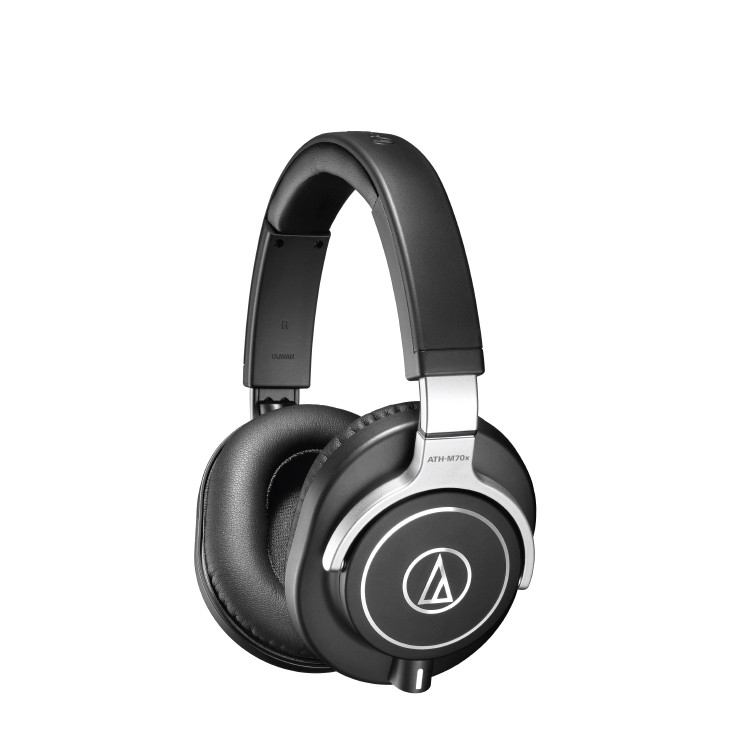
Where the ATH-M70x Sits in the Market
Audio-Technica's M-Series has become something of a default recommendation for home studios and project studios across Australia, largely on the back of the legendary M50x. The M70x is the flagship of that line — a closed-back, over-ear monitoring headphone designed specifically for tracking, mixing and critical listening rather than casual enjoyment.
That distinction matters. The M70x is deliberately voiced for accuracy and detail retrieval, with an extended high-frequency response (up to 40kHz) and a flatter, more analytical tuning than its bass-forward sibling, the M50x. It's the kind of headphone that shows you exactly what's in your mix — flaws and all — which is precisely what you want when you're making decisions that need to translate to other systems.
In the Australian market you'll typically find the M70x positioned as a premium-tier monitor, sitting above the mass-market M40x and M50x but below boutique reference cans. Understanding that positioning is key to deciding whether it's the right fit, because the "best" headphone genuinely depends on what you're doing with it.
The M-Series at a Glance
Before comparing the M70x to outside competitors, it's worth understanding how it differs from its own family. Many buyers assume the most expensive model is automatically the best choice for them — but the M-Series models are tuned for genuinely different purposes.
| Model | Best For | Sound Signature | Frequency Response | Impedance |
|---|---|---|---|---|
| ATH-M40x | Budget tracking & mixing | Flat, neutral | 15Hz – 24kHz | 35 ohms |
| ATH-M50x | All-rounder, tracking, enjoyment | Punchy, slightly bass-forward | 15Hz – 28kHz | 38 ohms |
| ATH-M60x | On-ear portability, editing | Balanced, detailed | 15Hz – 28kHz | 38 ohms |
| ATH-M70x | Critical mixing & mastering | Flat, analytical, extended highs | 5Hz – 40kHz | 35 ohms |
The headline takeaway: the M70x is the most revealing and reference-oriented model in the family. Its wider frequency range and flatter tuning make it the natural pick for detailed mix work, while the M50x remains the better all-rounder if you also want a headphone that's enjoyable for everyday listening.
ATH-M70x vs ATH-M50x: The Key Decision
This is the comparison most buyers actually agonise over, so let's give it proper attention. Both are excellent, but they're tuned for different listeners.
Sound character
The M50x has a more exciting, consumer-friendly presentation — tighter low-end emphasis and a forward treble that makes everything sound immediately impressive. It's brilliant for tracking and genuinely fun to listen to. The M70x, by contrast, pulls back that excitement in favour of honesty. Bass is leaner and tighter, mids are more present, and the top end extends further with more air and microdetail. The first time you A/B them, the M50x often sounds "better" — but the M70x is showing you more truth.
Who should pick which
- Choose the M50x if you want one versatile headphone for tracking, casual listening and general production, and you prefer a punchy, engaging sound.
- Choose the M70x if your priority is mixing and mastering decisions that translate, and you're comfortable with a flatter, less flattering sound that exposes problems.
Pros and cons
| ATH-M70x | ATH-M50x | |
|---|---|---|
| Strengths | Reference-flat tuning, extended highs, superb detail, excellent isolation, three detachable cables | Engaging punchy sound, great value, proven reliability, fun for everyday use, detachable cable |
| Trade-offs | Higher price, can sound clinical, less forgiving of harsh sources | Bass emphasis can mask mix issues, treble can be fatiguing for some |
If your work is genuinely mix-critical — preparing masters, making EQ and compression decisions that have to hold up everywhere — the M70x earns its premium. If you're tracking bands, recording podcasts or want a do-everything pair, the M50x remains outstanding value and many pros never feel the need to upgrade.
Check current ATH-M70x pricing and availability at MusiconStage →
How the M70x Compares to the Wider Field
Audio-Technica doesn't operate in a vacuum. The closed-back studio monitor space has several iconic options, and a fair guide has to put the M70x next to them honestly.
| Headphone | Type | Signature | Best Use | Notable Trait |
|---|---|---|---|---|
| Audio-Technica ATH-M70x | Closed-back | Flat, extended, analytical | Mixing, mastering, critical listening | 40kHz extension, strong isolation |
| Sony MDR-7506 | Closed-back | Bright, mid-forward | Tracking, broadcast, field | Industry standard, very affordable |
| Beyerdynamic DT 770 Pro | Closed-back | V-shaped, airy treble | Tracking, gaming, mixing | Renowned comfort, multiple impedances |
| Sennheiser HD 280 Pro | Closed-back | Neutral, slightly dark | Tracking, monitoring | Class-leading isolation |
Against the Sony MDR-7506
The 7506 is the cheaper, lighter, more portable option and a genuine broadcast workhorse. But it's brighter and less refined than the M70x, with noticeably less low-end extension and a more dated build. The M70x is the more capable mixing tool and the more comfortable long-session headphone; the Sony wins purely on price and ubiquity.
Against the Beyerdynamic DT 770 Pro
This is the M70x's most serious rival. The DT 770 Pro is famously comfortable (velour pads, plush headband) and has a sparkly, spacious sound many engineers adore. However, its V-shaped tuning is less neutral than the M70x, and its open-feeling treble can overstate detail. The M70x is the flatter, more reference-accurate choice; the Beyer is arguably more enjoyable and comfier for marathon sessions. Genuinely a personal-preference call.
Against the Sennheiser HD 280 Pro
The HD 280 Pro is the budget isolation king and a reliable tracking headphone, but it's a clear step below the M70x in resolution, soundstage and overall refinement. If your budget stretches to the M70x, it's the more capable instrument by a comfortable margin.
Build Quality, Comfort and Practical Considerations
For headphones you may wear for hours at a time, the practical details matter as much as the sound.
- Build: The M70x feels reassuringly solid, with 90-degree swivelling earcups for single-ear monitoring and a robust, professional finish built for daily studio abuse.
- Isolation: Excellent passive isolation makes it ideal for tracking vocals or instruments without bleed, and for editing in noisier rooms.
- Cables: Audio-Technica includes three detachable cables (a coiled cable plus straight cables of differing lengths) with a locking connector — a genuinely useful, often-overlooked advantage over rivals that ship with one fixed lead.
- Comfort: Comfortable for most, though the clamping force is firmer than the plush Beyerdynamic DT 770. Listeners who wear glasses or do very long sessions should factor this in.
- Drive-ability: At 35 ohms the M70x is easy to drive from interfaces and most sources, though it scales nicely with a clean headphone amp.
Price vs Value: Where Does the M70x Make Sense?
The honest question with any flagship is whether the top model is worth the step up — and the answer depends entirely on your use case.
- For dedicated mixing/mastering: The M70x delivers the accuracy that justifies its price. The detail and flat response directly improve your decisions, making it a sound investment.
- For tracking and general production: The M50x captures most of the value at a lower price. The M70x is a refinement, not a necessity.
- For tight budgets: The M40x or Sony MDR-7506 deliver a remarkable amount of capability for far less, and many great records have been made on both.
Value isn't about buying the most expensive option — it's about matching the tool to the job. The M70x is excellent value for critical work and overkill for casual use.
A Simple Decision Framework
To avoid the most common buying mistakes, ask yourself these questions before you commit:
- What's the primary job? Critical mixing leans M70x; tracking and all-round use leans M50x.
- Do I prefer honesty or excitement? A flat, revealing sound (M70x) or a punchy, engaging one (M50x / DT 770)?
- How long are my sessions? Marathon sessions may favour the plusher Beyerdynamic for comfort.
- How much isolation do I need? Heavy tracking or noisy rooms reward the M70x's strong isolation.
- What's my realistic budget? Don't over-buy — but don't under-buy a tool you'll use daily for years.
Common mistake to avoid: buying the flatter, more analytical M70x and then being disappointed that it doesn't sound "exciting." That's a feature, not a fault — reference headphones are supposed to be honest, and you'll learn to trust them over time.
Final Recommendation
The Audio-Technica ATH-M70x is a genuinely excellent professional monitor headphone and the most accurate, detailed model in the M-Series. If your work hinges on mix and master decisions that need to translate across systems, it's a clear, confident recommendation — its flat tuning, extended highs, strong isolation and triple-cable package make it a serious studio tool.
That said, fairness demands the caveat: not everyone needs it. The M50x is the smarter buy for tracking and all-round use, the M40x and Sony MDR-7506 are superb on a budget, and the Beyerdynamic DT 770 Pro is the comfier, more enjoyable alternative for long sessions. The "best" headphone is the one matched to your job.
If accuracy is your priority and you want a reference-grade closed-back monitor that will sharpen your mixing for years, the M70x is well worth the investment.
View the Audio-Technica ATH-M70x at MusiconStage →
Whichever way you lean, buying from a specialist Australian retailer means local warranty support, genuine stock and expert advice — so you can order with confidence and get back to making music. Order the ATH-M70x today →