
Audio-Technica ATH-M70x Technical Deep Dive: Pro Monitor Specs 2026
Audio-Technica ATH-M70x Technical Deep Dive: Pro Monitor Specs 2026
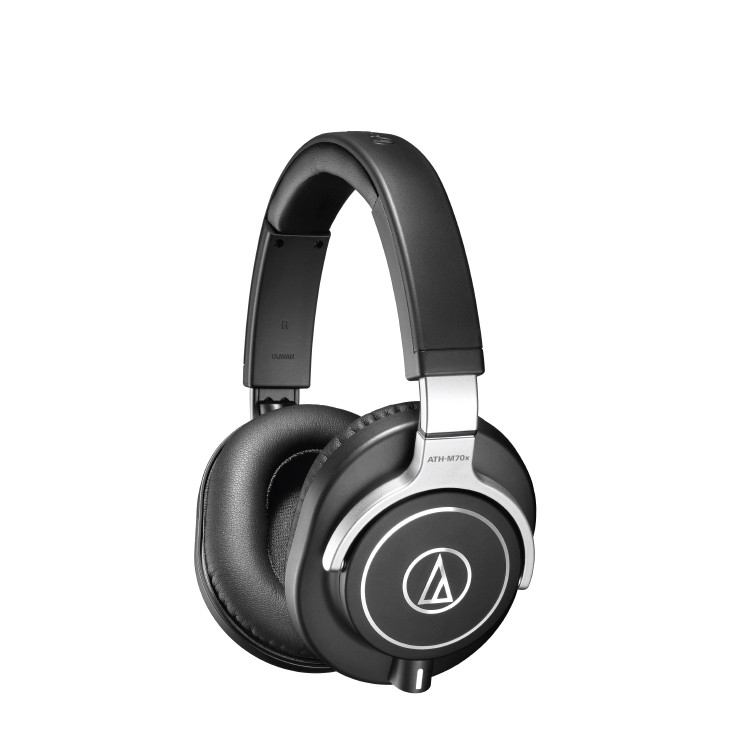
The Audio-Technica ATH-M70x sits at the apex of the M-Series — a flagship closed-back monitor designed for engineers who need a flat, uncoloured reference across the full audible spectrum. Whilst the M50x has become the de facto standard in project studios across Australia, the M70x targets a different brief entirely: critical mixing, mastering reference work, and broadcast monitoring where colouration is the enemy. This technical breakdown unpacks every specification that matters, explains the engineering choices behind them, and helps you decide whether the M70x's reference-grade tuning justifies its position in Audio-Technica's professional lineup.
Technical Overview & Headline Specifications
Before we dive deep, here's the complete technical specification sheet — the numbers that define what this headphone can and cannot do:
| Specification | Value |
|---|---|
| Driver Type | 45mm dynamic, proprietary large-aperture |
| Voice Coil | CCAW (Copper-Clad Aluminium Wire) |
| Magnet | Neodymium |
| Frequency Response | 5 Hz – 40,000 Hz |
| Impedance | 35 ohms |
| Maximum Input Power | 2,000 mW at 1 kHz |
| Sensitivity | 97 dB/mW |
| Weight (without cable) | 284 g |
| Cable Connection | Detachable, locking 3.5mm at cup |
| Included Cables | 3.0m straight, 1.2m straight, 1.2–3.0m coiled |
| Included Accessories | Carrying pouch, 6.3mm screw-on adapter |
| Form Factor | Over-ear (circumaural), closed-back |
What the headline numbers actually mean: The 5 Hz to 40 kHz frequency response extends well beyond audible limits — this isn't marketing fluff. Extended response above 20 kHz reduces phase distortion within the audible band, which is why high-resolution monitoring headphones routinely specify ultrasonic extension. The 35-ohm impedance and 97 dB/mW sensitivity make the M70x easy to drive from any modern interface, laptop output, or portable recorder without requiring a dedicated headphone amplifier — though as we'll discuss, a good amp still extracts more from the driver.
Driver Engineering: What Makes the M70x Different
The M70x uses a 45mm proprietary large-aperture driver — the same diameter as the M50x but with substantially different tuning, materials, and damping characteristics. Three engineering decisions define the M70x's sound signature:
CCAW Voice Coil Construction
The Copper-Clad Aluminium Wire voice coil is the heart of the M70x's transient response. CCAW gives you the conductivity of copper at the surface (where current flows due to skin effect) with the lightweight properties of an aluminium core. The result is a lower-mass voice coil that accelerates and decelerates faster than equivalent pure-copper designs. In monitoring terms, this translates to tighter transient definition — kick drum attack, snare crack, and percussion edges resolve with notably more precision than mid-tier closed-backs.
Neodymium Magnet System
The neodymium magnet structure delivers a high flux density in a small, light package. Higher flux density means the driver can respond to smaller signal variations — which is what you want when you're trying to hear a -60 dBFS reverb tail or a subtle compressor pump. It also contributes to the M70x's ability to handle the 2,000 mW peak input rating without distortion, giving you genuine SPL headroom for transient-rich material.
Tuning Philosophy: Reference Over Excitement
This is where the M70x diverges sharply from the M50x. The M50x has a deliberately consumer-friendly low-end emphasis around 80–100 Hz that flatters bass-heavy material. The M70x flattens this response significantly, presenting bass that's tight, articulate, and proportionally accurate rather than enhanced. For mixing engineers, this is the difference between a headphone you can mix on and a headphone you can mix through — meaning your decisions translate accurately to other playback systems.
Frequency Response Analysis
Manufacturer-quoted frequency response numbers tell you almost nothing about how a headphone actually sounds. What matters is the shape of the response curve across the audible range. Here's how the M70x performs in each band:
Sub-Bass (20–60 Hz)
Closed-back over-ears with good seal can extend genuinely flat to around 30 Hz. The M70x achieves this with controlled, defined sub-bass that lets you hear low-end issues — sub-frequency mud, kick drum/bass guitar conflicts, room rumble bleeding into recordings — without the masking effect of bass-boosted designs. Critical for hip-hop, electronic, and cinematic mixing where sub-bass management is everything.
Mid-Bass to Lower Midrange (60–500 Hz)
This is the M70x's reference zone. The response is notably flatter than most closed-backs in this critical region, where instrument body, vocal warmth, and mix "weight" live. You'll hear muddy build-up around 200–300 Hz that other headphones obscure, which makes corrective EQ decisions far more confident.
Midrange (500 Hz–2 kHz)
Vocal intelligibility, snare body, and guitar character all sit here. The M70x presents this range with neutral honesty — not pulled forward like some "vocal-friendly" tunings, but not recessed either. This is the band where reference-grade monitors earn their keep, and the M70x delivers.
Upper Midrange to Presence (2–8 kHz)
The M70x has a measured presence lift in the 4–6 kHz region — a deliberate choice that aids detail retrieval without becoming fatiguing. Cymbal articulation, vocal sibilance management, and stereo imaging cues all benefit from this tuning.
Treble & Air (8–20 kHz+)
Extended treble extension into ultrasonic territory keeps the audible top-end clean and phase-coherent. The M70x avoids the harsh peaks above 8 kHz that plague many closed-backs, giving you a treble presentation that's detailed but listenable across long sessions.
If this technical profile matches what you need for critical work, the Audio-Technica ATH-M70x is available from MusiconStage with full Australian warranty support.
Impedance, Sensitivity & Real-World Drive Requirements
The 35-ohm impedance is intentionally chosen for compatibility. Higher-impedance studio headphones (250+ ohms) require dedicated amplification and were originally designed for studios feeding many headphones from a single high-voltage source. At 35 ohms with 97 dB/mW sensitivity, the M70x reaches genuinely loud monitoring levels from any of the following sources:
- Audio interfaces: Focusrite Scarlett, UA Apollo, RME Babyface — all drive the M70x with significant headroom
- Portable recorders: Zoom H6, Tascam Portacapture, Sound Devices MixPre — full output without strain
- Laptop headphone outputs: Adequate for tracking and casual reference, though dedicated amplification reveals more detail
- Dedicated headphone amps: Where the driver really opens up — tighter bass control and better dynamic snap
Technical note on damping factor: Lower-impedance headphones benefit more from amplifiers with low output impedance. A source with output impedance under 4 ohms (the rule of eighths) will preserve the M70x's frequency response and transient control. Most modern interfaces meet this comfortably.
Build Quality & Materials Analysis
The M70x's 284-gram weight reflects a deliberate balance between durability and long-session comfort. Key construction details engineers should understand:
- Headband: Reinforced polymer with metal slider mechanism — no creaking or flex under normal handling
- Cup pivots: 90-degree swivel with positive detent for single-ear monitoring (essential for tracking)
- Earpads: Memory foam with leatherette covering, replaceable user-serviceable design
- Cable connector: Locking 3.5mm at left cup — superior to permanently attached cables for road durability
- Folding mechanism: Collapsible design fits in supplied carry pouch for transport
The replaceable earpad design matters for long-term ownership. Studio headphones see thousands of hours of use, and earpads compress and degrade. Audio-Technica's pad replacement system means your investment lasts a decade or more, not three years until the leatherette cracks.
Cable System: Why Three Cables Matters
The M70x ships with three detachable cables, all using locking 3.5mm connectors at the headphone end:
| Cable | Length | Best Use Case |
|---|---|---|
| Coiled | 1.2m to 3.0m stretched | Tracking sessions, mobile recording |
| Straight (long) | 3.0m | Studio mixing at console distance |
| Straight (short) | 1.2m | Portable monitoring, mobile devices |
The locking connector design is genuinely important. Standard 3.5mm jacks pull free under cable stress — at best annoying, at worst it can yank the headphone off your head during tracking. The M70x's locking mechanism eliminates this entirely.
Performance in Real-World Scenarios
Mixing & Mastering Reference
The M70x's reference tuning makes it genuinely useful as a mixing tool, not just a tracking headphone. Bass decisions translate accurately, midrange clarity reveals masking issues, and the controlled treble lets you make confident high-frequency decisions. Caveat: any closed-back headphone has narrower stereo imaging than open-backs or studio monitors, and the M70x is no exception. Use it as one of multiple reference points, not your sole monitoring source.
Tracking & Studio Recording
Closed-back isolation is essential for tracking — you can't have headphone bleed contaminating microphone signals. The M70x's isolation is excellent, and the high SPL handling means you can give performers loud cue mixes without distortion. The replaceable earpads handle daily session abuse well.
Broadcast & Post-Production
For dialogue editing, ADR work, and broadcast monitoring, the M70x's neutral midrange is invaluable. You hear sibilance, plosives, room tone issues, and cuts that need smoothing — exactly what post engineers need to spot. The 90-degree swivel design also allows single-ear monitoring against a control room speaker.
Live Sound & Stage Monitoring
Whilst designed primarily for studio use, the M70x's high SPL handling and excellent isolation make it credible for FOH reference and stage monitoring applications where in-ear monitors aren't appropriate.
Technical Comparison: M70x vs Industry Alternatives
| Specification | ATH-M70x | ATH-M50x | Beyerdynamic DT 770 PRO 80Ω | Sony MDR-7506 |
|---|---|---|---|---|
| Driver | 45mm large-aperture | 45mm | 45mm dynamic | 40mm |
| Frequency Response | 5–40,000 Hz | 15–28,000 Hz | 5–35,000 Hz | 10–20,000 Hz |
| Impedance | 35 ohms | 38 ohms | 80 ohms | 63 ohms |
| Sensitivity | 97 dB/mW | 99 dB/mW | 96 dB | 106 dB |
| Weight | 284 g | 285 g | 270 g | 230 g |
| Tuning Profile | Reference flat | Bass-emphasised | V-shaped | Bright-leaning |
| Detachable Cable | Yes (locking) | Yes | No | No |
M70x vs M50x: The M50x is a tracking and casual reference headphone with consumer-pleasing bass emphasis. The M70x is the mixing tool. If you mostly track and want a versatile, exciting-sounding closed-back, the M50x is the better value. If you need a reference for mix decisions, the M70x is the correct choice.
M70x vs Beyerdynamic DT 770 PRO: The DT 770 has a distinctive V-shaped tuning that flatters most music but obscures midrange decisions. The M70x is more honest — better for mixing, less immediately impressive on consumer playback.
M70x vs Sony MDR-7506: The MDR-7506 remains a broadcast/film industry standard for excellent reasons — it reveals problems mercilessly. The M70x offers similar honesty with extended frequency response, more comfortable long-session wear, and a detachable cable system.
What Specifications Actually Matter When Buying
Headphone marketing throws a lot of numbers at buyers. Here's what genuinely matters and what doesn't:
Specifications That Matter
- Frequency response shape (not just range): The audible curve matters more than 5–40 kHz claims
- Total harmonic distortion at typical listening levels: Lower is better; the M70x performs excellently here
- Impedance vs your source's output impedance: Match these intelligently
- Build quality and serviceability: Replaceable cables and pads dramatically extend lifespan
- Isolation rating: Critical for tracking applications
Specifications That Mostly Don't Matter
- Frequency range extremes (above 30 kHz): Useful for phase coherence but not directly audible
- Maximum SPL claims without distortion context: Meaningless without THD figures
- Sensitivity beyond the "easy to drive" threshold: 97 dB/mW is more than enough
For Australian buyers comparing options, the M70x is available at MusiconStage with the spec sheet, accessories, and warranty all clearly documented.
Technical Limitations & Honest Compromises
No monitoring tool is universal. Honest limitations of the M70x:
- Closed-back imaging: Stereo width is narrower than open-back designs like the AKG K702 or Sennheiser HD 600. For final mix imaging decisions, cross-reference with open-backs or monitors.
- Initial reference learning curve: Coming from M50x or consumer-tuned headphones, the M70x can sound "thin" until your ears recalibrate to flat reference. This is correct behaviour, not a flaw.
- Long-session weight: 284 grams is reasonable but not light. Six-hour mixing sessions reveal headband pressure on some head shapes.
- Pad replacement schedule: Heavy users should expect to replace earpads every 12–18 months for consistent acoustic performance.
Future-Proofing: Will the M70x Still Be Relevant in 2030?
Reference monitoring tools age well because the underlying acoustic engineering doesn't go obsolete. The M70x's neutral tuning, replaceable parts, and standard 3.5mm/6.3mm connectivity will remain compatible with whatever audio interfaces and amplifiers replace today's gear. Compare this to wireless headphones with proprietary protocols and non-replaceable batteries — those are 3-year tools, not decade-long investments.
Frequently Asked Technical Questions
Do I need a headphone amplifier for the M70x?
No, but you'll get better performance with one. The 35-ohm impedance and 97 dB sensitivity mean any modern interface drives them adequately. A dedicated headphone amp with low output impedance (<4 ohms) extracts tighter bass control and better dynamic response.
How does the M70x compare to open-back reference headphones?
Open-backs typically have wider stereo imaging and a more "speaker-like" presentation, but they leak sound and let in environmental noise. The M70x is the closed-back equivalent — best for tracking and noisy environments where open-backs aren't viable.
Can the M70x handle high-resolution audio formats?
Yes. The extended frequency response to 40 kHz comfortably handles 24-bit/96 kHz and 192 kHz material. The driver's transient response also resolves the increased temporal detail in high-resolution recordings.
Are the earpads and cables genuinely user-replaceable?
Yes — Audio-Technica sells genuine replacement earpads and cables, and third-party options exist. The locking 3.5mm cable connector means swapping cables takes seconds. Earpad replacement requires careful work but no tools.
Is the M70x suitable for live mixing on stage?
It's better suited to FOH reference and broadcast applications than active stage monitoring. For stage use, in-ear monitors offer better isolation and lower profile. The M70x excels in studio, broadcast, and post-production environments.
Expert Recommendation
The Audio-Technica ATH-M70x earns its position as a flagship professional monitor through deliberate engineering choices: a CCAW voice coil for transient accuracy, neodymium magnetics for sensitivity and SPL handling, reference tuning that prioritises mix translation over consumer excitement, and serviceable construction that keeps the headphone working for a decade. It's not the right tool for casual listening, gaming, or tracking-only use — the M50x suits those applications better at lower cost. But for engineers who need a closed-back reference for mixing, mastering, broadcast, and post-production, the M70x is one of the most accurate tools available at its price point in the Australian market.
If your work demands honesty over flattery and your monitoring chain requires a reference-grade closed-back, the Audio-Technica ATH-M70x is available now at MusiconStage with full Australian warranty and the complete accessory package — three cables, locking connectors, carry pouch, and 6.3mm adapter included.