
Audio-Technica ATH-M70x Review: Pro Monitor Specs 2026
Audio-Technica ATH-M70x Review: Pro Monitor Specs 2026
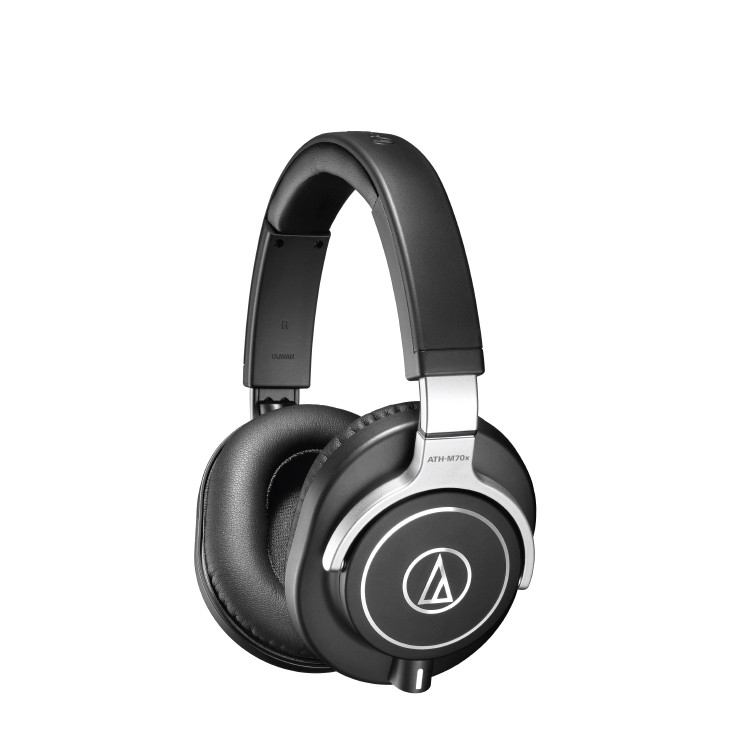
The Audio-Technica ATH-M70x sits at the very top of the company's celebrated M-Series, a lineup that has become a fixture in studios, edit suites and broadcast facilities across Australia. Where the wildly popular ATH-M50x aims for an engaging, slightly hyped presentation that flatters music, the M70x takes a deliberately different path: it chases neutrality and detail retrieval for people whose job depends on hearing exactly what is on the recording. This is a headphone built for critical listening, tracking, editing and reference mixing rather than casual enjoyment.
In this technical deep-dive we'll unpack the M70x's driver technology, decode its published specifications, explain what its tuning actually means in real-world sessions, and compare it against the alternatives you're most likely to be weighing up. If you're an audio professional or serious enthusiast trying to work out whether the M70x earns its place at the top of the range, this guide is written for you.
Technical Overview: Key Specifications at a Glance
Before we get into interpretation, here are the core published specifications. Understanding what each figure means in practice is where the real value lies, and we'll break that down in the sections that follow.
| Specification | Audio-Technica ATH-M70x |
|---|---|
| Driver type | 45mm large-aperture dynamic drivers |
| Magnet | Rare-earth (neodymium) |
| Voice coil | Copper-clad aluminium wire (CCAW) |
| Frequency response | 5 Hz – 40,000 Hz |
| Impedance | 35 ohms |
| Sensitivity | 97 dB (mW) |
| Maximum input power | 2,000 mW at 1 kHz |
| Design | Closed-back, circumaural (over-ear) |
| Weight | Approx. 280 g (without cable) |
| Earcup articulation | 90° swivel, collapsible for transport |
| Cables included | 1.2 m straight, 3.0 m straight, 1.2–3.0 m coiled (all detachable) |
| Connector | Locking 2.5 mm to 3.5 mm, with 6.3 mm screw-on adapter |
Driver Technology: Why the 45mm Design Matters
At the heart of the M70x are 45mm large-aperture dynamic drivers, the same physical diameter used across the flagship M-Series but tuned specifically for this model. Driver size isn't a marketing number for its own sake; a larger diaphragm can move more air with less excursion, which generally translates to lower distortion at the frequency extremes and a more effortless sense of dynamics. Audio-Technica pairs the diaphragm with rare-earth neodymium magnets for a strong, controlled magnetic field and copper-clad aluminium wire (CCAW) voice coils, which reduce moving mass so the driver can respond quickly to transients.
The practical upshot is transient accuracy. When you're editing dialogue, checking drum hits for phase issues, or listening for the leading edge of a plucked string, a driver that starts and stops cleanly reveals timing information that a slower, heavier assembly can smear. The M70x is engineered around exactly this kind of forensic listening.
Decoding the Frequency Response: 5 Hz to 40,000 Hz
A quoted range of 5 Hz to 40,000 Hz looks dramatic on a spec sheet, and it's worth being honest about what it does and doesn't tell you. Human hearing tops out around 20,000 Hz and typically less for adults, so the extended top end isn't about hearing 40 kHz tones directly. Rather, a driver capable of reproducing well beyond the audible band tends to behave more linearly within it, with fewer resonant peaks colouring the treble. The extended low-end reach to 5 Hz means genuine sub-bass information is present rather than rolled off early.
What the raw range doesn't capture is tuning, and this is where the M70x distinguishes itself from its siblings. Its response is deliberately flatter and more neutral than the M50x, with less of the elevated bass and treble that make the M50x so exciting for consumer listening. The M70x pushes its detail into the upper midrange and lower treble, giving it a revealing, sometimes clinical character. That analytical honesty is a feature, not a flaw, for its intended audience: it exposes sibilance, harshness, reverb tails and background noise that softer-tuned headphones politely hide.
Impedance and Sensitivity: Will It Drive Properly?
One of the most common technical questions buyers get wrong is whether a headphone needs a dedicated amplifier. The M70x's numbers make this refreshingly straightforward.
- 35 ohms impedance is low enough that the M70x will reach usable listening levels from a laptop, audio interface headphone output, portable recorder or even a phone with a compatible adapter.
- 97 dB sensitivity means it converts electrical power into volume efficiently, so you don't need enormous drive to get loud.
- 2,000 mW maximum input power indicates real headroom, so the drivers won't complain when fed a strong signal from a proper interface or headphone amp.
In practice, the M70x scales nicely. It's perfectly listenable straight from a modest source, but a clean, low-impedance headphone output on a quality interface will tighten the bass and let the driver's transient speed shine. For most Australian home and project studios running something like a Focusrite, Universal Audio or SSL interface, no separate headphone amp is required.
Ready to add a genuine reference tool to your kit? You can view current pricing and availability on the ATH-M70x here.
Build Quality, Comfort and Practical Design
Weighing in at roughly 280 g without cable, the M70x is substantial but not fatiguing over long sessions, thanks to well-distributed clamp force and generous circumaural earpads that fully enclose the ears. The closed-back, circumaural design is central to its purpose in two ways. First, isolation: the closed enclosure blocks a meaningful amount of ambient noise, which matters when you're editing in an untreated room or tracking vocals where headphone bleed into a live mic must be minimised. Second, the sealed acoustic chamber supports that extended, controlled low-end response.
Audio-Technica has retained the M-Series' road-ready practicality. The earcups swivel 90 degrees for single-ear monitoring, which engineers rely on when checking a mix against the room. The cups also collapse inward for transport and storage. Perhaps the standout practical feature is the detachable, locking cable system with three cables in the box: a 1.2 m straight cable for portable use, a 3.0 m straight cable for the studio, and a 1.2–3.0 m coiled cable for a workstation. A cable is the single most common failure point on any headphone, and being able to swap one in seconds — rather than binning the whole unit — is a genuine long-term ownership advantage.
Real-World Performance: What to Expect in the Session
Specifications only matter insofar as they translate to how the headphone performs when you're actually working. Here's how the M70x behaves across common professional scenarios.
Mixing and reference listening
The M70x's flatter tuning makes it a trustworthy reference. Because it doesn't flatter the low end, bass decisions you make on the M70x tend to translate well to other systems, and its forward upper-mids make it easy to spot masking, harsh consonants and reverb decay. The trade-off is that it can be an unforgiving listen — a poorly balanced mix will sound poor, which is precisely the point.
Tracking and recording
Strong isolation and quick transients make the M70x excellent for capturing takes. Vocalists get a clear, detailed cue mix, and the closed design keeps click and backing tracks from spilling into the microphone.
Editing, mastering checks and post-production
This is where the M70x's analytical character earns its keep. Micro-detail, edit points, mouth noise, digital artefacts and low-level noise floors are all laid bare. For dialogue editing and podcast/broadcast post, that transparency is invaluable.
Where it's less at home
If you want a warm, relaxing headphone for commuting and casual playlists, the M70x's honesty can feel fatiguing on bright or badly mastered tracks. That's a mismatch of intent, not a defect — the M50x or a consumer model is the better call there.
How the M70x Compares to the Alternatives
Positioning matters. The table below places the M70x against the two comparisons buyers most often raise: its own sibling, the M50x, and the wider class of professional reference headphones.
| Consideration | ATH-M70x | ATH-M50x | Typical open-back reference |
|---|---|---|---|
| Tuning character | Flat, neutral, analytical | Fun, elevated bass & treble | Neutral, spacious |
| Frequency response | 5 Hz – 40 kHz | 15 Hz – 28 kHz | Varies (often wide) |
| Isolation | Strong (closed-back) | Strong (closed-back) | Minimal (open-back) |
| Best use | Critical editing, tracking, reference | Tracking, monitoring, everyday | Final mix & mastering in quiet rooms |
| Detachable cables | Three, locking | Three | Varies |
The key distinction between the M70x and M50x is intent. The M50x is a brilliant all-rounder that happens to work in the studio; the M70x is a specialist reference tool that trades excitement for accuracy. Against open-back reference headphones, the M70x sacrifices some soundstage width and airiness but gains isolation, making it far more usable in shared or untreated spaces and during tracking — situations where open-backs simply leak too much.
What Specifications Actually Matter — And Red Flags to Watch
When you're comparing professional monitor headphones, not every number deserves equal weight. Here's how to read a spec sheet like an engineer:
- Tuning over raw frequency range. A wide range means little without a flat, well-controlled response. Prioritise reviews and measurements that describe the tonal balance, not just the extremes.
- Impedance matched to your source. The M70x's 35 ohms is source-friendly. Be wary of very high-impedance models (250+ ohms) if you only have laptop or phone outputs — they'll be too quiet without an amp.
- Serviceability. Detachable cables and available replacement pads dramatically extend usable life. Sealed, non-serviceable designs are a red flag for a working tool.
- Isolation vs soundstage. Closed-back (like the M70x) favours isolation for tracking and noisy rooms; open-back favours soundstage for quiet final-mix work. Choose to match your primary task.
- Consistency and pedigree. A model that's been a studio standard for years is a safer bet than an unproven newcomer — parts availability and predictable behaviour matter for professional workflows.
Technical FAQs
Does the ATH-M70x need a headphone amplifier?
No. With 35-ohm impedance and 97 dB sensitivity it drives comfortably from interfaces, laptops and portable recorders. A quality low-impedance output will improve control and clarity, but a dedicated amp isn't a requirement.
Is the M70x better than the M50x?
"Better" depends on the job. The M70x is more neutral and revealing, which is superior for critical editing and reference work. The M50x is more enjoyable for everyday listening and general monitoring. They serve different priorities.
Is the extended treble fatiguing?
The M70x is a forward, detailed headphone. On well-mastered material it's simply transparent; on harsh recordings it will expose that harshness. That honesty is the reason to buy it, but it's worth knowing before you commit.
Can I replace the earpads and cable?
Yes. Cables are detachable and locking (three are supplied), and replacement earpads are available, so the M70x is built to be maintained rather than discarded.
The Verdict: Who Should Buy the ATH-M70x?
The Audio-Technica ATH-M70x is a purpose-built reference headphone that rewards a specific kind of user. If your work involves critical listening — mixing, tracking, editing, mastering checks or broadcast post — its flat tuning, fast 45mm drivers, strong isolation and genuinely serviceable design make it a dependable, honest monitor that translates well to other systems. It's the M-Series flagship for good reason.
If you primarily want a headphone for enjoyment, or you find analytical treble tiring, the M50x or a consumer alternative will suit you better. But for the engineer, producer or serious enthusiast who needs to hear the truth of a recording, the M70x delivers exactly the kind of transparent, uncoloured performance the job demands.
For Australian buyers after a professional-grade reference tool backed by one of the most trusted names in monitoring, the M70x is an easy recommendation. Check the latest ATH-M70x price and stock at MusiconStage and add a genuine studio reference to your setup.