
Allen & Heath Qu-7D: Dante-Enabled Digital Mixer for Serious Australian Productions 2025
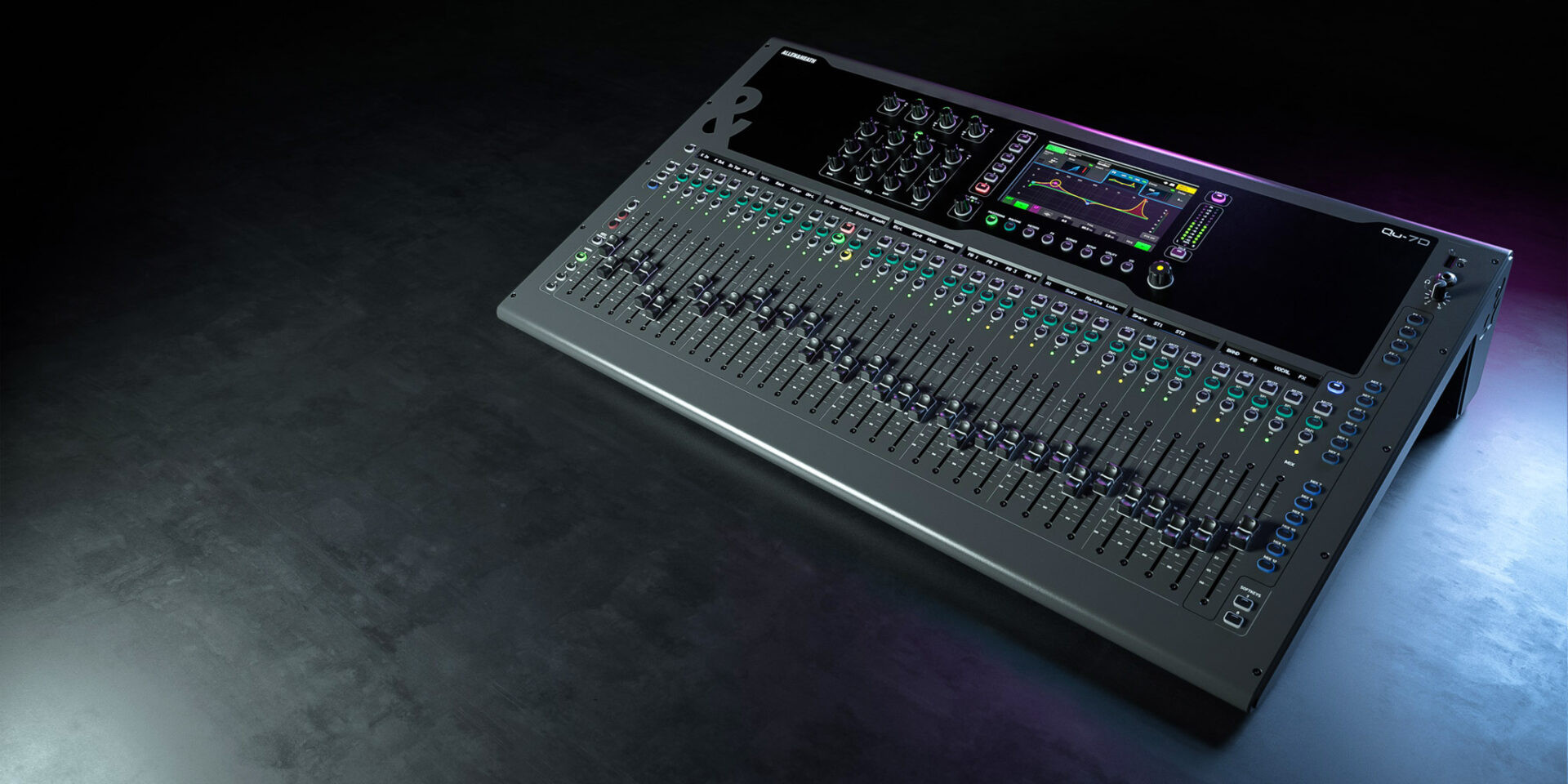
Allen & Heath Qu-7D: Dante-Enabled Digital Mixer for Serious Australian Productions 2025
If you've been running sound long enough in Australia, you've probably had that moment where your analogue desk or entry-level digital mixer just couldn't keep up. Maybe it was a corporate event where the client suddenly needed 12 more wireless mics. Perhaps a festival gig where your snake run looked like spaghetti and you spent half the bump-in troubleshooting earth loops. Or maybe you're finally ready to step into networked audio but don't want to remortgage the house for a flagship console.
The Allen & Heath Qu-7D sits in that sweet spot where serious capability meets practical reality. With 38 inputs, 24 outputs, 33 physical faders, and—crucially—built-in Dante networking, this mixer handles the kind of work that separates weekend warriors from working professionals. But is it right for your specific situation? Let's dig into how this desk actually performs across different real-world applications.
Understanding the Qu-7D's Place in the Allen & Heath Lineup
Before we get into applications, it helps to understand what you're actually getting with the Qu-7D compared to other options. This isn't the entry point to the Qu series—that's the Qu-16. And it's not trying to compete with the SQ series' XCVI processing power. The Qu-7D occupies the top tier of the Qu range, giving you the most I/O and physical control surface in the series, with Dante connectivity that the standard Qu-7 lacks.
The 96kHz processing isn't just a spec sheet number here. Running at double the sample rate of many competitors in this price bracket means your dynamics processing and EQ respond more naturally, particularly on transient-heavy sources like drums and percussion. You'll notice it most when you're pushing compression hard or making surgical EQ cuts—there's less of that 'digital' character that plagues some 48kHz desks.
The 33 faders might seem excessive until you're mixing a 28-piece big band or a conference with 20 panellists plus playback and effects returns. Having dedicated faders for your masters and mixes alongside your inputs means less layer-switching during critical moments.
Real-World Application: Corporate and Conference Work
Let's start with where this mixer absolutely excels—corporate audio-visual work. If you're running sound for conferences, AGMs, product launches, or hybrid events, the Qu-7D addresses several pain points that drive AV technicians mad.
The Dante Advantage for Corporate Venues
Dante connectivity isn't just convenient—it's becoming mandatory for serious corporate work. More venues across Australia are wired with Dante infrastructure, meaning you can patch directly into house systems without analogue snakes or converter boxes. For installed systems in conference centres, hotels, and convention spaces, the Qu-7D becomes part of a larger ecosystem rather than an isolated island.
Practical scenario: You're mixing a three-day conference at a major Sydney hotel. The venue has Dante-equipped ceiling speakers, lectern mics, and recording infrastructure. With the Qu-7D, you patch your stage inputs locally, but route program audio, recording feeds, and overflow room distribution via Dante over a single Cat6 cable. No ground loops. No analogue signal degradation across long runs. No separate recording rig needed—the venue's Dante-equipped recorder captures your mix directly from the network.
The 38 inputs handle complex corporate setups without breaking a sweat. A typical large conference might need:
- 8-12 wireless lapel and handheld mics for presenters
- 4-6 podium mics for panel discussions
- Playback inputs for videos and presentations
- Teleconference hybrid audio (increasingly common post-2020)
- Background music and walk-in/walk-out cues
- Spare inputs for last-minute additions
That easily consumes 25+ inputs on a busy day. The Qu-7D handles it without expansion hardware.
Scene Recall for Multi-Session Events
Corporate work often involves multiple sessions with different presenters and setups throughout a single day. The Qu-7D's scene memory lets you recall complete console states—including channel assignments, processing, and mix settings—with a single button press. Save your keynote setup, your panel discussion layout, and your breakout session configuration as separate scenes. Between sessions, recall and go. Your assistant can handle transitions while you're grabbing a coffee.
Live Music: Pubs, Clubs, and Mid-Sized Venues
Now let's talk about what many Aussie sound engineers care about most—live music. The Qu-7D is genuinely capable here, though it occupies a specific niche that's worth understanding.
Where This Mixer Shines for Live Music
For venue installations or production companies running 200-800 capacity rooms, the Qu-7D delivers serious capability. You've got enough inputs for a full band with extensive microphone technique—separate kick in and out, multiple toms, stereo overheads, bass DI and mic, multiple guitar amps, keys, percussion, and a typical five-piece vocal setup. That's 20+ inputs before you add playback or effects returns.
The 24 outputs mean you can run:
- Stereo front-of-house mains
- Stereo fills or delays
- Subwoofer feeds (mono or stereo)
- 6-8 monitor mixes for stage
- Recording outputs
- Broadcast or streaming feeds
All simultaneously, without compromise or clever workarounds.
The FX engines deserve mention here. Allen & Heath's iLive-derived effects are genuinely usable—the reverbs, particularly the EMT plate emulation, sit in a mix without that harsh, metallic quality that cheap digital reverbs exhibit. For many pub and club gigs, you won't need external processing at all.
Touring Considerations
For touring acts and production companies, Dante changes the game. Paired with an Allen & Heath AR2412 or AB168 remote stagebox, you can run a single Cat6 cable from stage to FOH position instead of a heavy multicore snake. For one-nighters in different venues, this dramatically reduces bump-in time.
The offline editor software means you can prep shows on your laptop before arriving at the venue. Build your channel list, set initial gain structures based on the rider, configure your effects—then load it into the desk when you arrive. For touring engineers supporting multiple acts, you can maintain separate show files for each artist and recall their complete setup in seconds.
Honest Limitations for Live Music
The Qu-7D does have limitations you should understand. The processing power, while solid, isn't in the same league as the SQ series. If you're running extremely complex festival stages with 48+ inputs and need extensive parallel compression, sidechain routing, and multiple reverb engines simultaneously, you'll feel the constraints.
The preamps are good—genuinely good—but they're not the same quality as what you'll find in an SQ or dLive. For most live applications, this doesn't matter. But if you're doing critical recording simultaneously with live mixing, you might want external preamps on your most important sources.
Houses of Worship: Where the Qu-7D Makes Practical Sense
Churches, temples, and other worship spaces have unique requirements that the Qu-7D addresses well. These installations typically need:
- Extensive input counts for bands, choirs, and speaking positions
- Multiple output zones for different congregation areas
- Recording capability for services
- Simple enough operation for volunteer operators
- Reliable, set-and-forget stability
The Volunteer Operator Challenge
Here's where the Qu-7D offers genuine practical advantage over some competitors. The touchscreen interface is intuitive enough that trained volunteers can handle regular services without professional supervision. The scene recall means your experienced technician can set up multiple 'looks'—standard service, choir-heavy service, youth band configuration—that volunteers simply recall and run.
The iPad app (Qu-You for musicians, Qu-Pad for engineers) lets your worship leader adjust their own monitor mix without bothering the operator. This alone can justify the purchase for many churches—no more mid-service hand signals asking for 'more keys in the wedge.'
Dante for Multi-Room Distribution
Modern worship facilities often need audio distributed to multiple spaces—main sanctuary, overflow rooms, cry rooms, fellowship halls. Dante networking makes this straightforward. Run Cat6 to each zone, install Dante-enabled amplifiers or processors, and route audio from the Qu-7D to wherever it's needed. The flexibility is remarkable compared to traditional analogue distribution systems.
Broadcast and Streaming Applications
The post-2020 reality is that almost everyone streams now. The Qu-7D handles broadcast requirements better than you might expect for a desk at this price point.
Dedicated Broadcast Mixes
With 24 outputs, you can maintain completely separate mixes for front-of-house and broadcast without compromise. Your stream mix might need less drums and more vocals compared to the room mix. The Qu-7D lets you build that broadcast mix independently on its own outputs.
Dante connectivity means your streaming encoder can sit anywhere on the network—in a separate control room, a mobile production truck, or across the building. No analogue cable runs, no signal degradation, no ground loop issues that plague many streaming setups.
Recording Integration
The built-in USB recording captures 32 channels simultaneously to a laptop or external drive. For podcasters, content creators, and houses of worship archiving services, this eliminates the need for separate recording interfaces. Multitrack everything, then mix in post if needed.
Practical Comparison: When to Choose the Qu-7D Over Alternatives
Let's be direct about how this compares to other options you might be considering.
Qu-7D vs Standard Qu-7
If you're sure you'll never need Dante, the standard Qu-7 saves money. But Dante is increasingly becoming standard infrastructure for Australian venues and production companies. The price difference is minor compared to adding Dante capability later through expansion cards or external converters. Unless budget is absolutely critical, the Qu-7D is the smarter long-term investment.
Qu-7D vs Allen & Heath SQ-6
The SQ-6 has the newer XCVI core with more processing power, better preamps, and more flexible routing. If you need those capabilities, spend the extra. But the Qu-7D has 33 faders versus the SQ-6's 24, and more physical I/O built in. For applications where fader count matters—large bands, complex corporate events—the Qu-7D might actually be more practical despite being the 'older' platform.
Qu-7D vs Yamaha TF5
Yamaha's TF series is a genuine competitor. The TF5 has a similar channel count and Dante capability. Yamaha's TouchFlow interface is excellent for operators who prefer touchscreen-first workflow. Allen & Heath's approach gives you more physical faders and a more traditional mixing experience. Neither is objectively better—it's about your preferred working style and existing ecosystem.
Qu-7D vs Midas M32
The M32 offers similar capability at a competitive price. The Midas preamps have a slightly different character—some engineers prefer them for rock and heavier music. The Qu-7D's Dante connectivity is more mature than the M32's AES50 ecosystem if you're integrating with Dante infrastructure. Again, both are capable—your choice might come down to which ecosystem you're already invested in.
Getting the Most from Your Qu-7D: Practical Tips
If you do purchase this desk, here's how to maximise its capability:
Build Your Template Shows Properly
Don't just save random scenes. Create proper template shows for your common applications. A 'rock band' template with your standard channel layout, dynamics settings, and effects. A 'corporate' template with speech-optimised EQ and minimal effects. A 'worship' template with your regular vocal processing. Starting from these templates rather than blank shows saves hours over a year.
Learn the Channel Library Function
The Qu-7D lets you save channel processing settings and recall them to any channel. If you've dialled in perfect settings for a particular vocalist or instrument, save it to the library. Next time that act plays your venue, recall their settings instantly rather than rebuilding from scratch.
Invest in Proper Dante Infrastructure
If you're buying the Qu-7D specifically for Dante, don't cheap out on your network infrastructure. Quality switches, proper cable runs, and correct network configuration make the difference between rock-solid reliability and frustrating dropouts. Budget for managed switches and proper network training if Dante is new to you.
Use the Offline Editor
The Qu-Pad and Offline Editor software are free. Use them. Prep shows before gigs, experiment with routing without tying up the physical desk, train new operators on a laptop before they touch the real console. These tools dramatically increase your efficiency with the platform.
Australian-Specific Considerations
For Australian buyers, a few practical notes:
Power requirements: The Qu-7D runs happily on Australian 240V mains. No transformer needed, no special considerations.
Humidity and temperature: If you're running this desk in tropical Queensland or outback conditions, ventilation matters. The console has internal cooling, but don't block the vents or operate in direct sun during outdoor events.
Local support: Allen & Heath's Australian distributor provides solid warranty support and service. This isn't a grey import risk situation—buy from authorised dealers like MusicOnStage and you're covered.
Training: Allen & Heath runs training sessions in Australian capital cities periodically. If you're new to the platform, these are worth attending. Check their events calendar for upcoming sessions.
Who Should Buy the Allen & Heath Qu-7D?
After working through all these applications, here's the bottom line on who this mixer suits:
Ideal buyers:
- Production companies needing a capable touring desk with Dante connectivity
- Venues installing permanent front-of-house systems in 200-1000 capacity rooms
- Corporate AV providers who need serious I/O and networked audio
- Houses of worship with complex audio requirements and volunteer operators
- Broadcast and streaming facilities integrating with Dante infrastructure
Less suitable for:
- Small venues or pub gigs where a Qu-16 or Qu-24 would suffice
- Engineers needing cutting-edge processing (look at the SQ series instead)
- Budget-constrained buyers who don't need the full I/O count
- Applications where Dante networking adds no value
Frequently Asked Questions
Can I expand the Qu-7D's input count beyond 38 channels?
Yes, via additional stageboxes like the AB168 or AR2412 connected through the dSNAKE port or Dante network. This lets you place inputs at stage level while the console sits at FOH.
Does the Qu-7D work with third-party Dante devices?
It works with any Dante-certified equipment—speakers, recorders, other consoles, and processors from any manufacturer following the Dante standard.
How reliable is the Qu-7D for critical applications?
Allen & Heath's reliability record is excellent. The Qu series has been in production since 2014 and runs countless professional events annually. Standard IT practices apply—use quality power, maintain firmware updates, and keep proper backups of your show files.
Can I control the Qu-7D remotely?
Yes, via iOS apps. Qu-Pad provides full mixing control for engineers; Qu-You offers simplified personal monitor mixing for musicians. Both work over standard WiFi networks.
Is the Qu-7D suitable for recording applications?
It handles live recording well via USB or Dante multitrack capture. For critical studio recording as a primary interface, you might want higher-end preamps, but for capturing live performances or creating quality demos, it's more than capable.
Ready to Step Up Your Production Capability?
The Allen & Heath Qu-7D represents serious capability for Australian production companies, venues, and engineers ready for Dante-networked audio. It's not the cheapest option, nor the most powerful—but it hits a practical sweet spot of capability, usability, and value that makes sense for many professional applications.
View the Allen & Heath Qu-7D at MusicOnStage to check current Australian pricing and availability.
If you're upgrading from an analogue desk or entry-level digital mixer, the Qu-7D will feel like a revelation. If you're already working at this level and considering whether to upgrade to SQ series, the decision depends on whether you need the additional processing power or whether the Qu-7D's fader count and proven reliability better suits your workflow.
For Australian buyers ready to invest in serious digital mixing capability with future-proof Dante networking, the Qu-7D deserves serious consideration.