
Allen & Heath Qu-6D: Dante-Networked Digital Mixer for Australian Venues 2025
Allen & Heath Qu-6D: Dante-Networked Digital Mixer for Australian Venues 2025
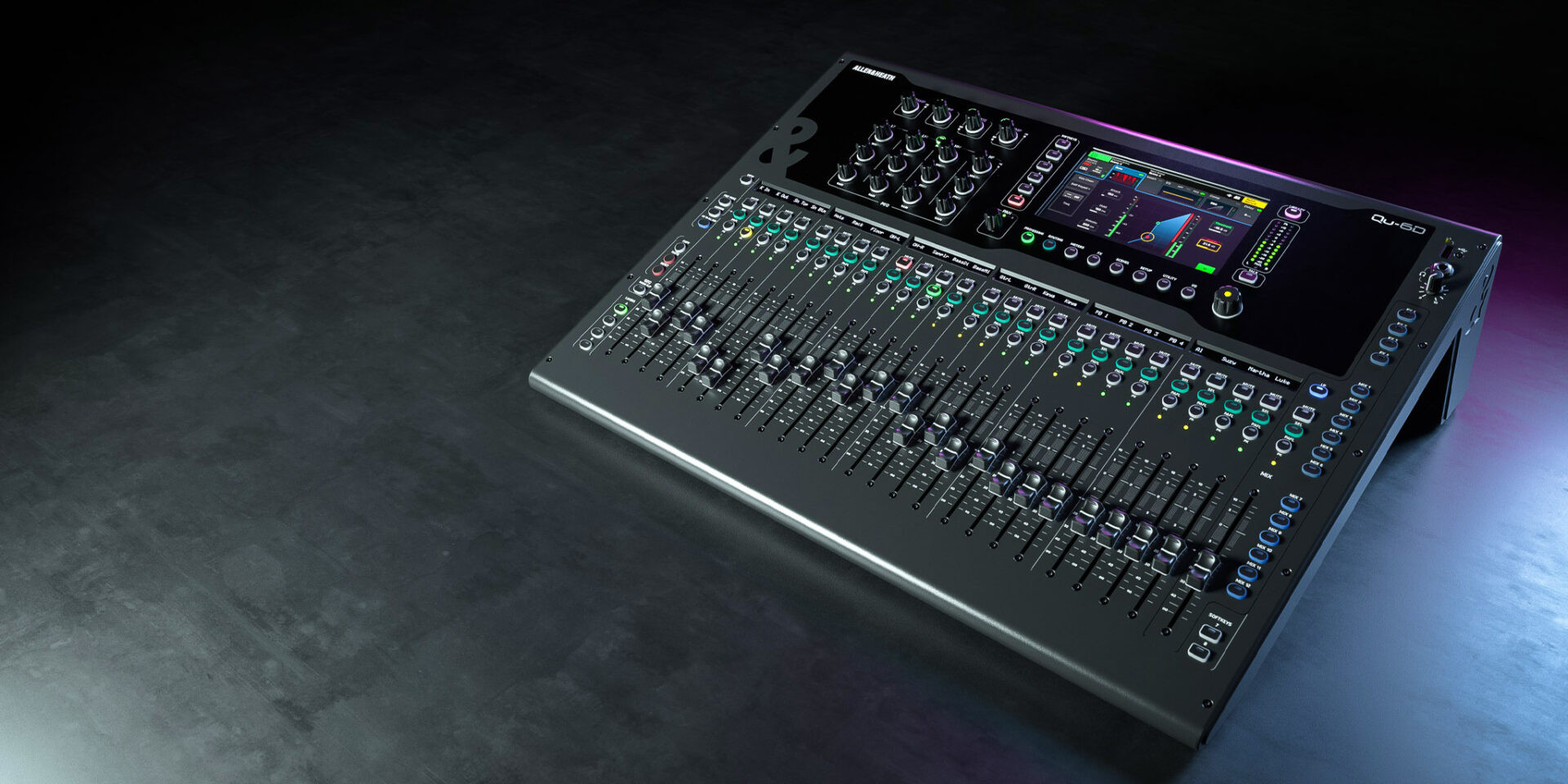
When Allen & Heath released the original Qu series, they changed what smaller venues and production companies could expect from a digital mixer at that price point. The Qu-6D takes that foundation and adds something that's becoming increasingly non-negotiable in professional audio: native Dante networking. For Australian sound engineers dealing with complex installations, multi-room venues, or touring rigs that need to integrate with existing Dante infrastructure, this mixer solves problems that would otherwise require expensive outboard solutions.
But here's the thing—Dante capability alone doesn't make a mixer worth your investment. The Qu-6D needs to deliver on mixing performance, reliability, and practical workflow advantages to justify its position in the Allen & Heath lineup. This guide breaks down exactly what you're getting, who this mixer actually suits, and whether it makes sense for your specific applications in the Australian market.
Looking for detailed specifications? View the Allen & Heath Qu-6D with full technical details and current Australian pricing.
Understanding the Qu-6D's Position in Allen & Heath's Lineup
The Qu-6D sits in an interesting spot. It's essentially the Qu-16's mixing engine and processing power packaged with a more compact physical footprint and, critically, built-in Dante connectivity. Where the standard Qu series requires you to add a Dante card (the M-Dante card) as an optional extra, the Qu-6D comes with 16x16 Dante I/O integrated from the factory.
This matters more than you might initially think. Adding Dante to a standard Qu mixer means additional cost, potential compatibility concerns, and another point of configuration. The Qu-6D treats Dante as a first-class citizen, with the networking audio routed directly through the console's architecture at 96kHz. You're not bolting on Dante capability—it's fundamental to how this mixer operates.
The "6" in Qu-6D refers to the physical fader count in the main layer, but don't let that fool you into thinking this is a limited console. You're working with a full 32-channel mixing architecture, 25 total faders across layers, and the same AnalogiQ preamps that earned the Qu series its reputation for clean, musical gain staging.
Core Specifications That Actually Matter
Let's cut through the marketing and focus on the specifications that affect real-world performance:
Channel Count and I/O Configuration
The Qu-6D provides 32 input channels to the mix, with 24 local mic/line inputs and 16 inputs available via Dante. The local I/O breaks down as 16 mono inputs and 4 stereo channels. Each mono input features Allen & Heath's AnalogiQ preamps with a gain range of 0 to +60dB—plenty of headroom for everything from hot line-level sources to quiet ribbon microphones.
On the output side, you've got 16 local outputs plus 16 Dante outputs. The mix architecture includes 12 mono mixes, 3 stereo mixes, 4 stereo FX sends, and the main LR bus. For most small to medium venues, corporate events, or houses of worship, this covers typical monitoring and front-of-house requirements comfortably.
Processing at 96kHz
The entire signal path operates at 96kHz, which isn't just a spec sheet bragging point. Higher sample rates mean lower latency through the digital domain and more headroom in the processing. The Qu-6D's quoted latency from analogue in to analogue out is less than 1ms—imperceptible for performers and crucial for applications like in-ear monitoring where latency creates disorientation.
Each input channel gets a full processing chain: trim, polarity, HPF (swept from 20Hz to 400Hz), 4-band parametric EQ, gate, compressor, and delay. The EQ is genuinely musical—Allen & Heath didn't cut corners here. The gate and compressor are straightforward but effective, with enough parameter control to handle most sources without needing external processing.
Effects Processing
Six stereo effects engines give you dedicated processing without eating into your mix buses. The FX library includes iLive-derived algorithms for reverbs, delays, modulation effects, and more. Four dedicated FX sends mean you can run separate reverbs for vocals and drums, a delay for lead instruments, and still have processing available for special moments.
The reverb quality is notably better than what you'd find in competing mixers at this price point. If you've worked with iLive or dLive reverbs, you'll recognise the character—dense, smooth, and genuinely usable without extensive tweaking.
Dante Integration: What It Actually Enables
Dante has become the de facto standard for networked audio in professional installations, and for good reason. But if you're not already working with Dante infrastructure, you might wonder whether it's worth the premium over a standard Qu mixer.
Practical Dante Applications
The 16x16 Dante I/O on the Qu-6D opens up several workflow possibilities:
- Remote stage boxes: Connect Dante-enabled stage boxes anywhere on your network. Run a single Cat6 cable instead of heavy multicore snakes. For venues with fixed installations, this dramatically simplifies infrastructure.
- Recording integration: Send 16 channels directly to a DAW via Dante Virtual Soundcard. No additional interface needed—your computer just becomes another device on the network.
- Multi-console setups: Share channels between FOH and monitor positions without analogue splits. Both engineers get pristine copies of every source.
- Broadcast feeds: Send isolated feeds to broadcast or streaming setups elsewhere in the venue. Dante handles the distribution without degradation.
- Existing infrastructure integration: If your venue already has Dante-networked amps, processors, or playback systems, the Qu-6D drops straight into that ecosystem.
Redundancy and Reliability
The Qu-6D supports Dante redundancy, meaning you can run primary and secondary network connections. In mission-critical applications—live broadcasts, high-profile events, permanent installations—this failover capability provides peace of mind. If your primary network path fails, audio continues uninterrupted on the secondary.
For Australian touring companies working across multiple venues with varying infrastructure, Dante's interoperability means you can adapt to whatever networking gear is already in place rather than imposing your own system.
Physical Layout and Workflow
The Qu-6D uses a layered fader approach common to compact digital mixers. You've got physical access to your most important channels at any moment, with layer buttons switching between input channels, mix outputs, and custom configurations. The 25 faders across all layers give you tactile control without the console becoming unwieldy.
Allen & Heath's SuperStrip provides dedicated controls for the currently selected channel—EQ, dynamics, routing—laid out in a logical flow. Once you've spent an hour with the Qu-6D, muscle memory takes over. You're not hunting through menus for basic operations.
Touchscreen Interface
The 800x480 colour touchscreen handles deeper configuration and provides visual feedback on processing. It's responsive and well-organised, though it's worth noting that the screen size means you're working with one or two parameters at a time rather than seeing everything simultaneously. For detailed EQ work, you might prefer the iPad app—more on that shortly.
Remote Control via Qu-You and Qu-Pad
Allen & Heath's mobile apps extend the Qu-6D's control surface to iOS and Android devices. Qu-You lets musicians control their own monitor mixes from their phones—a genuine time-saver during soundcheck. Qu-Pad gives engineers full mixing control from anywhere in the venue.
For Australian venues where the FOH position isn't ideal, Qu-Pad lets you mix from the audience. You're hearing what they hear, making EQ decisions that translate rather than guessing from a compromised position near the back wall.
Ready to streamline your venue's audio? Check out the Qu-6D at MusiconStage with free shipping Australia-wide.
Who Should Consider the Qu-6D?
Not every application needs Dante, and not every budget accommodates it. Here's an honest assessment of who benefits most from the Qu-6D:
Ideal Applications
Houses of worship with multiple spaces: Churches, synagogues, and mosques increasingly need to distribute audio between main sanctuaries, overflow rooms, and streaming setups. Dante makes this straightforward without quality loss.
Corporate AV companies: If you're servicing conference centres, hotels, or corporate events, Dante compatibility means you can integrate with venue infrastructure rather than working around it. The Qu-6D's compact footprint also means easier transport and setup.
Small to medium live music venues: Pubs, clubs, and theatres with permanent installations benefit from Dante's cabling simplicity. One network run to the stage replaces expensive multicore installations.
Regional touring acts: Australian bands covering regional circuits face varied venue setups. A Dante-enabled mixer adapts to whatever networking infrastructure exists while the local I/O handles venues with no network audio at all.
Schools and universities: Educational institutions increasingly specify Dante for new installations. The Qu-6D provides professional mixing capability while integrating with campus-wide audio networks.
When Another Option Makes More Sense
If you're working in a single small venue with no plans to expand, and you don't need to integrate with existing Dante infrastructure, the standard Qu-16 or Qu-24 might serve you equally well at a lower price point. The Dante capability is valuable, but only if you'll actually use it.
Similarly, if your primary need is raw channel count over networking, the SQ series offers more processing power and expandability, though at a higher price. The Qu-6D's 32 channels cover most applications, but high-input-count scenarios might push you toward larger consoles.
Comparison with Competing Mixers
The compact digital mixer market has several strong contenders. Here's how the Qu-6D stacks up:
Qu-6D vs Yamaha TF1
Yamaha's TF series offers a different workflow philosophy—more touchscreen-centric with fewer physical controls. The TF1 doesn't include Dante by default (you need the NY64-D card), while the Qu-6D has it built in. Sound character differs too: the Qu-6D's AnalogiQ preamps have a warmer, more British character compared to Yamaha's cleaner, more clinical approach. Neither is objectively better—it depends on your preference and the material you're mixing.
Qu-6D vs Behringer X32 Compact
The X32 Compact undercuts the Qu-6D significantly on price while offering similar channel counts and built-in effects. However, the Qu-6D's build quality, preamp character, and Dante integration (vs X32's optional expansion cards) justify the price difference for professional applications. If reliability and sound quality are priorities, the Qu-6D earns its premium.
Qu-6D vs Soundcraft Ui24R
The Ui24R takes the opposite approach—fully rackmount with no physical mixing surface at all. If you're comfortable mixing entirely on a tablet, the Ui24R offers compelling value. But many engineers prefer tactile faders for live work, and the Qu-6D provides that physical control while still offering comprehensive remote options.
Practical Considerations for Australian Buyers
Warranty and Support
Allen & Heath products purchased through authorised Australian dealers come with local warranty support. This matters more than you might think—if something goes wrong before a major event, having local service rather than shipping equipment overseas can save your show.
Power Requirements
The Qu-6D runs on standard Australian 240V power without transformers or adapters. Power consumption is modest enough that you won't trip circuits when running alongside backline and lighting rigs.
Climate Considerations
Australian touring conditions can be harsh—hot outdoor festivals, dusty regional venues, humid coastal environments. The Qu-6D's build quality handles these conditions better than budget alternatives, though common sense still applies. Don't leave it in direct sun, keep dust covers on during transport, and allow for acclimatisation when moving between temperature extremes.
Training and Learning Curve
If your team is already familiar with Allen & Heath's workflow from other Qu, SQ, or dLive products, the Qu-6D will feel immediately familiar. For engineers coming from analogue or other digital platforms, expect a few hours of familiarisation before you're confident. Allen & Heath's online tutorials and documentation are genuinely helpful—not just marketing material dressed up as training.
Honest Assessment: Strengths and Limitations
What the Qu-6D Does Well
- Sound quality: The AnalogiQ preamps and 96kHz processing deliver audio that competes with significantly more expensive consoles. Mixes translate well to different PA systems.
- Dante integration: Native, not afterthought. The networking audio works seamlessly with the rest of the console's architecture.
- Build quality: Metal construction, solid faders, reliable encoders. This is gear you can tour with confidence.
- Effects quality: The iLive-derived reverbs and delays are genuinely usable—not "good for the price," just good.
- App ecosystem: Qu-You and Qu-Pad are mature, stable applications that extend the console's capability meaningfully.
- Workflow: Logical layout, quick access to common functions, sensible default routing. You're mixing, not fighting the interface.
Limitations to Consider
- Screen size: The built-in touchscreen is adequate but not expansive. Complex sessions benefit from iPad control.
- Expansion options: Unlike the SQ series, the Qu-6D has fixed I/O. What you see is what you get—no adding more local inputs later.
- No stage box included: If you need remote preamps, you'll need to purchase a compatible Dante stage box separately.
- Processing power: The FX engines, while good, are a generation behind the SQ/dLive platform. For most applications this doesn't matter, but demanding productions might want more.
- USB recording: Multitrack recording to USB is limited compared to Dante recording options. If direct-to-drive recording is essential, factor in the Dante Virtual Soundcard workflow.
Setup and Getting Started
For engineers new to the Qu platform, here's a practical approach to getting the Qu-6D operational:
Initial Configuration
- Firmware update: Before anything else, check Allen & Heath's website for the latest firmware. Updates often include bug fixes, new features, and improved stability.
- Network setup: If using Dante, configure your network topology first. The Qu-6D's Dante Controller integration lets you route audio to and from other Dante devices on the network.
- Scene management: Create template scenes for your common applications—live band, speech/presentation, broadcast feed. Recalling a scene gets you 90% of the way there for similar events.
- Custom layers: Configure custom fader layers that group your most-accessed channels. Having vocals, drums, and critical sources on one layer speeds up mixing.
- User permissions: If multiple engineers will use the console, set up user profiles with appropriate access levels. Qu-You permissions control what musicians can adjust in their monitor mixes.
Integration Tips
For Dante integration, ensure your network switches are properly configured—Dante requires switches with Quality of Service (QoS) support and proper multicast handling. Cheap consumer switches can introduce problems that manifest as dropouts or latency.
When using Qu-Pad for remote mixing, position yourself in the venue where the audience sits. Mix decisions made from this perspective translate better than those made from a compromised FOH position or backstage.
Value Proposition for Australian Professionals
The Qu-6D represents a specific value proposition: professional mixing capability with native Dante integration at a price point accessible to working professionals and smaller installations. You're not paying for features you won't use, but you're also not compromising on the things that matter—sound quality, reliability, and integration capability.
For Australian buyers specifically, the combination of local warranty support, straightforward power requirements, and compatibility with common venue infrastructure makes the Qu-6D a practical choice. The Dante capability future-proofs your investment as more Australian venues adopt networked audio.
Want to see the complete specifications? View the Allen & Heath Qu-6D with current Australian pricing and free shipping.
Frequently Asked Questions
Can I use the Qu-6D without Dante?
Absolutely. The 24 local inputs and 16 local outputs function independently of Dante. You can use the Qu-6D as a straightforward digital mixer without ever connecting it to a network. The Dante capability is there when you need it, but it's not required for basic operation.
What stage boxes are compatible with the Qu-6D's Dante I/O?
Any Dante-compatible stage box will work—including Allen & Heath's own options as well as third-party units from Focusrite, Audinate-based solutions, and others. This flexibility means you're not locked into a single manufacturer's ecosystem.
How does USB recording work on the Qu-6D?
The Qu-6D supports stereo recording directly to USB drives. For multitrack recording, you'll want to use the Dante outputs with Dante Virtual Soundcard on your computer, which provides 16 channels of recording capability.
Is the Qu-6D suitable for broadcast applications?
Yes, with caveats. The Dante outputs can feed broadcast infrastructure directly, and the 96kHz operation ensures quality isn't compromised. However, dedicated broadcast mixers offer features like split buses, dedicated aux sends for IFB, and talkback routing that the Qu-6D handles differently. For straightforward broadcast feeds, it's capable; for complex broadcast workflows, evaluate whether the feature set meets your specific needs.
What's the learning curve like for engineers familiar with analogue mixers?
The Qu-6D's workflow is more intuitive than many digital mixers for analogue converts. The SuperStrip layout mimics the channel strip approach of analogue consoles, and gain staging works similarly. Most engineers become comfortable within a few hours of hands-on use, though mastering the deeper features takes longer.
How does the Qu-6D compare to the SQ-5 for similar applications?
The SQ-5 offers more processing power, a larger touchscreen, and expandable I/O through SLink. If budget allows and you need those features, the SQ-5 is the more capable console. The Qu-6D's advantage is integrated Dante without expansion cards and a lower price point. For applications where 32 channels and the Qu-6D's processing are sufficient, the extra investment in an SQ-5 may not be necessary.
Final Thoughts
The Allen & Heath Qu-6D solves a specific problem well: it provides professional digital mixing with native Dante integration at a price point that doesn't require corporate-level budgets. For Australian venues, production companies, and engineers who need to integrate with networked audio infrastructure, this mixer delivers without forcing compromises on sound quality or workflow.
It's not the right choice for everyone. If you don't need Dante, a standard Qu mixer saves money. If you need more channels or more processing power, the SQ series delivers more capability. But for the significant number of applications that fall squarely in the Qu-6D's wheelhouse—medium-sized live events, houses of worship, corporate installations, venues with networked audio systems—it's a compelling option that earns its place in the market.
The 96kHz processing, AnalogiQ preamps, and quality effects mean your mixes sound professional. The Dante integration means you can adapt to modern venue requirements. The build quality means you can trust it on tour. For Australian sound professionals looking at the intersection of those requirements, the Qu-6D deserves serious consideration.
Explore the Allen & Heath Qu-6D at MusiconStage—authorised Australian dealer with free shipping, genuine warranty support, and expert advice for your specific application.