
Allen & Heath Qu-32: Real-World Applications for Aussie Sound Engineers 2025
Allen & Heath Qu-32: Real-World Applications for Aussie Sound Engineers 2025
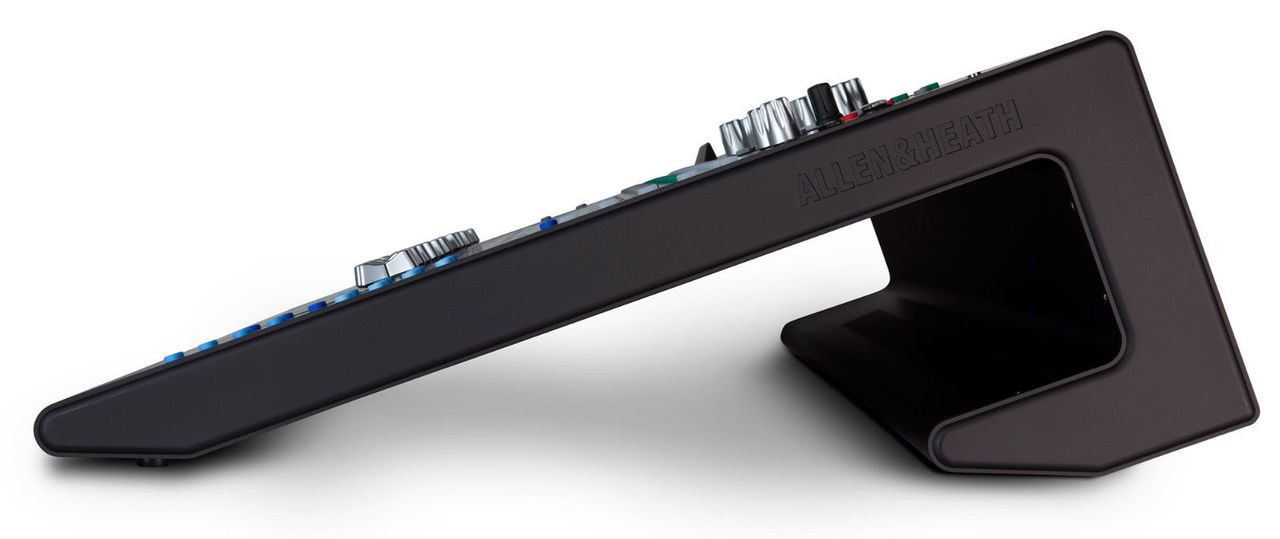
The Qu-32 sits at the top of Allen & Heath's Qu series, and for good reason. With 32 mono inputs, 3 stereo channels, and enough processing power to handle seriously complex mixes, this desk has become something of a workhorse across Australian venues, touring rigs, and installed systems. But here's the thing—a 32-channel digital console isn't for everyone, and understanding exactly where this mixer excels (and where it might be overkill) can save you thousands of dollars and countless headaches.
I've seen these desks running front-of-house at mid-sized festivals, tucked into broadcast trucks, and sitting pretty in corporate AV setups from Perth to the Gold Coast. What makes the Qu-32 interesting isn't just its channel count—it's how Allen & Heath has managed to pack professional-grade features into a console that doesn't require an engineering degree to operate.
Who Actually Uses the Qu-32? Primary Applications Explained
Before diving into specs and features, let's talk about who's actually buying these mixers and what they're doing with them. Understanding real-world applications helps you figure out whether this console fits your specific situation.
Live Sound Engineers Running Mid-to-Large Productions
The sweet spot for the Qu-32 is productions that genuinely need between 24-32 inputs. Think about it: a full band with individual drum mics (kick, snare top and bottom, hi-hat, three toms, two overheads), bass DI and amp, two guitar amps, keys stereo, three or four vocal mics, and maybe some horns or backing tracks. That's easily 20+ channels before you've even thought about effects returns or audience mics.
For these gigs—whether it's original bands at venues like The Gov in Adelaide or The Triffid in Brisbane, corporate events with live entertainment, or community festivals—the Qu-32 provides enough inputs without forcing you into the much more expensive SQ or dLive territory.
Practical insight: Australian sound engineers working regional touring circuits particularly appreciate the Qu-32's recall system. When you're doing three different venues in three nights with the same band, being able to recall your show file and have 90% of your mix ready to go is a genuine time-saver. The remaining 10%? That's room-specific tweaking, which you'd need to do with any console.
Houses of Worship with Expanding Audio Needs
Churches across Australia have become surprisingly sophisticated audio environments. Contemporary worship services often feature full bands, multiple vocal microphones, click tracks for musicians, media playback, and wireless systems for pastors who move around during services.
The Qu-32 fits this application brilliantly for several reasons:
- Volunteer-friendly operation: Not every church has a professional sound engineer. The Qu-32's touchscreen interface and logical layout mean trained volunteers can run services confidently
- Scene recall for different services: Sunday morning traditional service, evening contemporary worship, and Wednesday night youth group can each have their own saved scenes
- Recording capability: Built-in multitrack recording to USB means capturing services for podcasts or livestream archives without extra equipment
- Room for growth: Churches that start with 20 inputs often find themselves needing 28 or 30 within a few years as their production grows
Installed Systems in Venues and Conference Centres
Pubs, clubs, function centres, and conference venues throughout Australia have discovered that a permanently installed Qu-32 handles almost everything thrown at it. One week it's a wedding band, the next it's a corporate presentation with multiple wireless mics, and the weekend after that it's handling a DJ with backing tracks and a solo vocalist.
The fixed installation application works particularly well because:
- Visiting engineers can quickly adapt to the interface
- House scenes can be locked to prevent accidental changes to installed EQ and system processing
- Network connectivity allows remote monitoring and adjustment
- The console's reliability means less downtime and fewer service calls
Day-to-Day Performance: What to Actually Expect
Let's get into the practical reality of working with the Qu-32 on a daily basis. This isn't about marketing specs—it's about what you'll experience when you're standing behind this console at 9pm with a band about to hit the stage.
Sound Quality and Processing
Allen & Heath's preamps have always been a strong point, and the Qu series benefits from that heritage. The Qu-32's preamps are clean, quiet, and have enough gain for everything from ribbon mics on a quiet acoustic guitar to condenser overheads on a loud drum kit. You won't find yourself fighting noise floors or running out of headroom.
The onboard processing deserves special mention. Each channel gets:
- 4-band parametric EQ with high-pass filter—genuinely usable for corrective and creative work
- Compressor with optional de-esser—the compressor responds musically, not just mathematically
- Gate with ducking option—essential for drum mics and managing bleed
The effects engines include reverbs, delays, chorus, and flanger. The reverbs, particularly the modelled plate and hall, hold up well against dedicated outboard units. You won't need an external reverb unit for most gigs.
Real-world note: Some engineers find the EQ slightly different from what they're used to on analogue A&H desks. It's not worse—just different. Give yourself a few shows to adapt, and you'll find you can get excellent results.
Workflow and Speed
The Qu-32's workflow centres on the touchscreen and the SuperStrip. Here's how it actually works in practice:
When you touch a channel fader, that channel's processing appears on the SuperStrip—a dedicated panel with rotary encoders for preamp gain, EQ, dynamics, and routing. It's faster than menu-diving on many digital consoles because your most-used parameters are always one touch away.
The touchscreen handles:
- Routing and patching
- Effects selection and editing
- Scene management
- System configuration
- Metering displays
For engineers coming from analogue, the learning curve is surprisingly gentle. Most competent sound people can run a basic show within a few hours of first touching the console. Mastering all the features—custom layers, scene safes, MIDI integration—takes longer, but you can be productive immediately.
Remote Control and iPad Operation
The free Qu-Pad app transforms how you work with this console. Connect an iPad via the console's network port (you'll need a wireless router), and you've got full mixing capability from anywhere in the venue.
This isn't a gimmick—it's genuinely useful for:
- Soundchecks: Walk around the room adjusting the mix from the audience perspective
- Monitor mixing: Stand next to musicians on stage while adjusting their wedges or in-ears
- Installed systems: Make adjustments without running back to the FOH position
- Troubleshooting: Check settings while tracing a cable run or checking a speaker
A word of caution: don't rely solely on iPad mixing for complex shows. The physical console offers faster access to multiple channels simultaneously. Use the iPad as a complement, not a replacement.
Use-Case Deep Dive: Specific Scenarios and Performance
Scenario 1: Touring Band Production (Rock/Pop Context)
Imagine you're the FOH engineer for a touring Australian act doing theatre shows—800 to 1,500 capacity venues across the country. You're carrying your own console, flying in and out with it as checked luggage where possible.
How the Qu-32 performs:
The physical size (875mm wide, 140mm tall, 530mm deep) means it fits in a standard flight case that just squeaks under airline weight limits with careful packing. Many touring engineers use the Qu-32 for exactly this reason—it's portable enough for fly dates while powerful enough for serious shows.
Your show file contains everything: channel names, EQ settings, dynamics, effects, DCA assignments. Arriving at a venue, you patch into the house system, recall your file, and you're mixing—not programming.
The 32 inputs handle: full drum kit (12 channels), bass (2), guitars (4), keys (2), lead vocal, three backing vocals, tracks playback (stereo), and contingency channels for guest musicians. That's 26 channels with room to spare.
Where it excels: Consistency night after night, reasonable weight, excellent sound quality, straightforward patching.
Where it struggles: No built-in WiFi means carrying a router. The effects, while good, have fewer options than higher-tier consoles. Limited to 32 channels if the show grows.
Scenario 2: Regional Church Installation
A growing church in regional Queensland has outgrown their old analogue desk. They run contemporary services with a worship band, plus traditional services with choir and organ. They want recording capability and have a mix of experienced and novice operators.
How the Qu-32 performs:
Different scene memories for each service style mean volunteers load the appropriate settings without manually reconfiguring. The contemporary band uses channels 1-24 with scenes for rehearsal and performance. The traditional service uses different channel assignments for choir mics and organ, loaded from a separate scene bank.
USB multitrack recording captures every channel to a connected hard drive. The media team can later pull up individual channels for podcast production or archive purposes.
Training new operators focuses on a few key skills: loading scenes, basic gain staging, and making small adjustments. The touchscreen helps—pointing to "tap this, then turn this knob" is intuitive.
Where it excels: Scene recall for different services, USB recording, user-friendly for volunteers, reliable for permanent installation.
Where it struggles: The 32 channels might eventually feel limiting if the church grows significantly. No Dante connectivity without additional hardware.
Scenario 3: Corporate AV and Event Production
A Melbourne-based event production company handles corporate conferences, product launches, and gala dinners. They need a console that handles diverse requirements: sometimes it's just a few wireless mics for presenters, other times it's a full awards show with video playback, live band, and complex cue sequences.
How the Qu-32 performs:
Scene cues allow complex changes to happen at the press of a button. Between a keynote speech and the entertainment segment, one scene change adjusts gain staging, routing, and effects—no manual channel-by-channel adjustment during the changeover.
MIDI capability means the Qu-32 can integrate with show control systems. Scene changes can be triggered from QLab or similar software, keeping audio synchronised with video and lighting cues.
Matrix outputs (which the Qu-32 has plenty of) route different mixes to different zones: main PA for the room, delay speakers for the back section, a separate feed for the foyer, and isolated outputs for broadcast or recording.
Where it excels: Flexible routing, scene sequencing, MIDI integration, matrix outputs for zoned systems.
Where it struggles: Complex productions might want more than four effects engines running simultaneously. The console's metering, while functional, isn't as comprehensive as some broadcast-focused alternatives.
Practical Comparisons: Choosing Between Alternatives
Understanding how the Qu-32 stacks up against alternatives helps clarify whether it's right for your application.
Qu-32 vs. Yamaha TF3 (32 Inputs)
Both consoles target similar applications and price points. The TF3 uses Yamaha's touchscreen-centric workflow with fewer physical controls. Preference often comes down to:
- Choose Qu-32 if: You prefer dedicated physical controls (SuperStrip), want the A&H sound character, value the free iPad app, or have existing A&H experience
- Choose TF3 if: You prefer Yamaha's approach, need the TF's recall safe options, or are deeply invested in Yamaha's ecosystem
Sound-wise, both are excellent. The Qu-32's preamps have a character that some engineers prefer for live music; the TF3 is arguably more neutral. Neither is objectively better—it's preference.
Qu-32 vs. Allen & Heath SQ-6
Moving up to A&H's SQ series brings significant upgrades: XCVI 96kHz processing, more powerful effects, better connectivity options, and more flexible I/O. The SQ-6 costs more but offers:
- Native Dante connectivity option
- More simultaneous effects
- 96kHz processing throughout
- Deeper processing options
When to step up to SQ: If you need Dante, if 48kHz isn't sufficient (rare for live sound), if you're hitting the Qu-32's limitations, or if budget allows the upgrade.
When Qu-32 is fine: For most live sound applications, the Qu-32's 48kHz processing is perfectly adequate. The audible difference in typical live environments is minimal.
Qu-32 vs. Behringer X32
The X32 is significantly cheaper but targets the same applications. Reality check: the X32 is a capable console that has proven itself on countless gigs worldwide. However, the Qu-32 offers:
- Better build quality and reliability (important for touring)
- Superior preamp quality
- More intuitive workflow for many engineers
- Better long-term support and firmware updates
If budget is tight, the X32 does the job. If reliability, sound quality, and workflow matter more than price, the Qu-32 justifies its premium.
Getting the Most From Your Qu-32: Practical Tips
Assuming you're committed to the Qu-32, here's how to maximise your experience:
Initial Setup and Configuration
- Update firmware first: Allen & Heath continues improving the Qu series. Start with the latest firmware
- Build template scenes: Create starting points for your common applications—save time on every gig
- Learn scene safes: Understanding what transfers between scenes and what stays fixed prevents surprises
- Configure custom layers: The Qu-32's custom fader layers let you group channels logically for your workflow
USB Recording Best Practices
The multitrack USB recording is brilliant but needs some setup:
- Use USB 3.0 drives formatted correctly (FAT32 or exFAT)
- Always test record before the event—verify the drive works reliably
- Enable all channels you might want later, even if they seem unimportant during the show
- Name your channels properly—"Input 17" is useless when mixing later
Networking and Remote Control
For iPad control:
- Use a dedicated router for console networking—don't share with venue WiFi
- Position the router for line-of-sight coverage to where you'll be mixing
- Set static IPs rather than relying on DHCP
- Keep a backup plan for when wireless fails (and it sometimes will)
Realistic Expectations: What the Qu-32 Won't Do
Honest assessment helps avoid disappointment:
- It won't replace a premium large-format console—for major touring productions or broadcast work, you'll want dLive, DiGiCo, or similar
- Effects are good but not exceptional—they handle most situations well but lack the depth of dedicated outboard or higher-tier consoles
- 48kHz processing is fixed—you can't switch to 96kHz if a project demands it
- No native Dante—you need additional hardware for Dante integration
- 32 inputs is the limit—no expansion beyond what's built in
These aren't criticisms—they're boundaries. Knowing the boundaries helps you decide if the Qu-32 fits your needs.
Frequently Asked Questions
Can the Qu-32 handle monitor mixing as well as FOH?
Yes. The console has 12 mix outputs that can serve as monitor sends. For in-ear monitoring situations, you can run several stereo in-ear mixes plus wedge sends. The Qu-You app even lets performers adjust their own monitor mix from their phones—handy for stage-conscious setups.
Is the Qu-32 suitable for recording studio use?
It works, but it's optimised for live sound. If your primary use is studio recording, consider purpose-built interfaces or the SQ series with higher sample rate options. For capturing live performances or hybrid live/recording setups, it's perfectly capable.
How does Australian support work for Allen & Heath products?
Jands distributes Allen & Heath in Australia, with established service and support networks. Warranty support and spare parts are available locally—you're not shipping consoles overseas for repairs.
Can I expand the Qu-32 with stage boxes?
Yes. The AB168, AR84, and AR2412 stage boxes connect via the console's dSNAKE port. This extends your inputs to the stage over a single Cat5 cable, eliminating heavy multicore runs.
Final Recommendations: Matching the Qu-32 to Your Needs
The Allen & Heath Qu-32 earns its place in the Australian pro audio landscape through a combination of sound quality, practical features, and sensible design. It's not trying to be everything to everyone—it's a focused tool for specific applications.
Buy the Qu-32 if:
- You regularly need 24-32 channels
- You value sound quality and reliability over lowest price
- Scene recall and remote control matter to your workflow
- You want USB multitrack recording built in
- You're installing in a venue or house of worship
- You tour with mid-sized productions
Consider alternatives if:
- You need Dante connectivity (look at SQ series)
- You rarely exceed 24 channels (Qu-24 saves money)
- Budget is the primary concern (X32 exists)
- You need broadcast-grade features (different market segment)
For Australian engineers and venues looking for a capable, reliable 32-channel digital console that handles live sound duties with confidence, the Qu-32 remains a thoroughly sensible choice.
Check current pricing and availability for the Allen & Heath Qu-32 at MusiconStage
Questions about whether the Qu-32 fits your specific setup? The team at MusiconStage can talk through your requirements and help match the right console to your application.
View the Allen & Heath Qu-32 specifications and order online