
Allen & Heath CQ-20B: Practical Guide for Aussie Venues and Performers 2025
Allen & Heath CQ-20B: A Practical Guide for Australian Venues and Performers
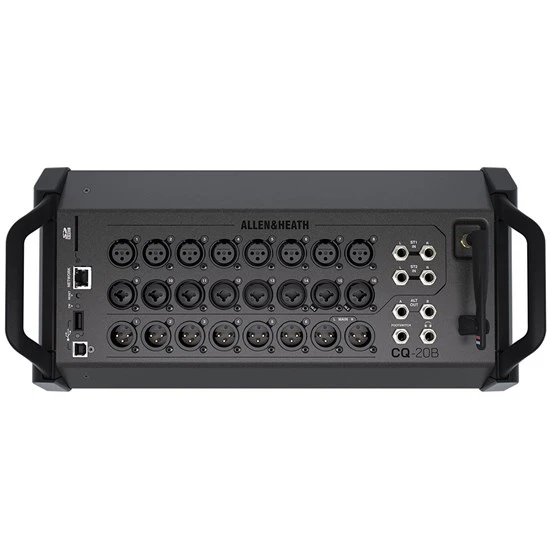
There's a particular moment every sound engineer knows well: you're halfway through setup, the venue's cramped, cables are everywhere, and someone asks if you can quickly adjust the monitor mix from across the room. With traditional analogue desks, that means a sprint back to front-of-house. With the Allen & Heath CQ-20B, you pull out your phone and sort it in seconds.
The CQ-20B sits in an interesting spot in Allen & Heath's lineup. It's not trying to be an SQ-series powerhouse for major productions, nor is it a stripped-back ZED for simple pub gigs. Instead, it's built for those middle-ground scenarios that make up the bulk of real-world Australian audio work: function bands, corporate presentations, worship services, and small venue installations where you need genuine digital mixing capability without the complexity or price tag of professional touring gear.
Let's dig into how this mixer actually performs when the speakers start thumping and the pressure's on.
Understanding What the CQ-20B Actually Offers
Before we get into use cases, let's be clear about what you're working with. The CQ-20B provides 20 inputs: 16 mono channels with recallable DEEP preamps, plus a stereo channel. You've got six mono aux sends, a stereo aux, and main LR outputs. The onboard effects include reverbs, delays, and channel dynamics processing.
What makes this unit genuinely useful in 2025 is the connectivity suite. Built-in Wi-Fi means you can control everything from Allen & Heath's CQ-MixPad app without any additional hardware. Bluetooth lets you stream walk-in music or backing tracks directly. The SD card slot handles multitrack recording and playback, while USB provides both audio interface functionality and additional storage options.
The form factor matters too. At just over 4kg and with a compact footprint, this isn't a mixer that dominates your setup space or breaks your back during load-in.
Real-World Application: Function Bands and Cover Acts
If you're running sound for a 4-6 piece cover band playing RSLs, clubs, and wedding receptions around Australia, the CQ-20B makes serious sense. Here's why.
A typical function band setup might include:
- Kick, snare, and two overhead mics for drums (4 channels)
- Bass guitar DI (1 channel)
- Two guitar amps or DIs (2 channels)
- Keyboards stereo (2 channels via the stereo input)
- Three to four vocal mics (3-4 channels)
- Backing tracks if needed (Bluetooth or SD card)
That's your 16 mono channels plus stereo input utilised effectively. The six aux sends cover your monitor mixes—drummer, bass player, guitarists, and vocalists can each get their own mix dialled in.
The Wi-Fi control genuinely changes your workflow here. During soundcheck, you can stand next to each musician, adjust their monitor mix in real-time, and actually hear what they're hearing. No more shouting "more vocals" across the room and hoping you've got it right. You're making adjustments while standing in their position, which leads to better mixes and happier performers.
The DEEP preamps deserve mention. Allen & Heath have included their processing algorithms that model different preamp characteristics. For vocals, the tube-style warmth can add presence without harshness. For drums, the transformer option adds punch. These aren't gimmicks—they're genuine mixing tools that reduce your reliance on outboard gear.
Corporate and Conference Applications
Corporate AV work across Australian capital cities keeps a lot of audio professionals fed, and the CQ-20B handles these gigs beautifully. The typical corporate scenario involves:
- Multiple lectern or lapel microphones
- Q&A roving mics
- Laptop audio for presentations
- Background music during breaks
- Possibly video playback audio
The CQ-20B's scene recall function is invaluable here. You can set up scenes for different segments: "Keynote" with lectern mic hot and music muted, "Panel Discussion" with multiple mics balanced, "Break" with music up and all mics muted. Transitioning between segments becomes a single button press rather than frantic fader movements.
The Bluetooth streaming might seem like a consumer feature, but in corporate environments, it's genuinely practical. The marketing coordinator can stream the approved playlist from their phone during networking sessions without you needing to manage USB sticks or deal with laptop audio gremlins.
One practical tip for corporate work: The CQ-20B's automatic mic mixing (AMM) function helps manage multiple open microphones in panel discussions. It intelligently manages gain sharing between active mics, reducing the feedback potential and comb filtering issues that plague multi-mic setups.
Worship and Community Venue Installations
Australian churches and community halls represent a significant market for mixers in this category, and the CQ-20B addresses their specific needs thoughtfully.
Worship environments typically feature rotating volunteer operators with varying experience levels. The CQ-20B's approach helps here in several ways:
Simplified operation mode: You can lock down certain parameters so volunteers can adjust what they need (fader levels, basic monitor sends) without accidentally changing channel routing or effects parameters that could derail the service.
Scene storage: Set up scenes for different service elements—contemporary worship, acoustic set, sermon, announcements—and volunteers simply recall the appropriate scene rather than mixing from scratch each week.
The tablet control approach: Many churches find that a tablet mounted at a small desk position works better than a traditional mixing location. The CQ-MixPad app provides full mixing capability, meaning the "sound desk" can be wherever makes sense for your room, not wherever the cable run ends.
For permanent installations, the CQ-20B's compact size means it can be rack-mounted (with optional ears) and controlled entirely via Wi-Fi. The physical unit can live in a tech cupboard while operators control everything from the room itself.
Small Venue Installations: Pubs, Cafes, and Performance Spaces
The Australian live music scene relies heavily on small venues—those 100-300 capacity rooms where local and touring acts cut their teeth. The CQ-20B works well as a house mixer in these environments.
Consider a typical small pub with a regular open mic night, occasional solo performers, and weekend bands. The CQ-20B can store scenes for each scenario:
- Open mic scene: Two vocal channels, acoustic guitar DI, basic effects, simple monitor mix
- Solo artist scene: Similar but with backing track input via Bluetooth or SD ready to go
- Full band scene: All channels active with appropriate starting points for a typical rock setup
When a touring act brings their own engineer, they'll appreciate having a proper digital mixer with familiar functionality. The A&H ecosystem means many engineers already know their way around the interface logic. Scene export/import via USB means visiting engineers can even bring their own show files if they're touring on CQ-series gear.
The Multitrack Recording Advantage
This is where the CQ-20B offers something genuinely valuable that's often overlooked. The SD card slot isn't just for stereo recording—it captures multitrack recordings of all input channels at 48kHz/24-bit.
Why does this matter? For bands, it means every gig becomes a potential live album recording without any additional gear. Pop in an SD card, hit record, and you've got separated tracks for post-production mixing later.
For venue operators, it provides documentation of performances for promotional use or dispute resolution. For engineers, it's a learning tool—you can take recordings home, import them into your DAW, and practice mixing without the time pressure of a live performance.
The multitrack playback function also enables virtual soundcheck capability. Record the band during soundcheck, send them off for dinner, and continue refining your mix using the recorded tracks. When they return, you're already dialled in.
Comparing the CQ-20B to Realistic Alternatives
Let's be honest about where the CQ-20B sits relative to other options you might consider.
Against the QU-16
Allen & Heath's own QU-16 offers more physical faders and a touchscreen interface. If you prefer hands-on control and don't mind the larger footprint, the QU-series remains excellent. The CQ-20B trades physical controls for portability and price—you're controlling via app rather than a motorised fader surface. For operators who've grown up with tablet mixing, this isn't a compromise. For old-school engineers who need faders under their fingers, the QU might still make more sense.
Against Behringer X32 Producer
The X32 Producer offers more channels and physical faders at a lower price point. Build quality and long-term reliability favour Allen & Heath in most professional assessments. The CQ-20B's preamps are noticeably cleaner, and the DEEP processing adds flexibility the X32 can't match. If budget is the primary concern and you need maximum channels, Behringer competes. If audio quality and brand reliability matter for your professional reputation, the CQ-20B justifies its premium.
Against Yamaha TF1
The TF1 is a different beast—more channels, TouchFlow interface, larger footprint, higher price. If you're stepping into proper touring production or larger venue installation, the TF series makes sense. For the applications we've discussed—function bands, small venues, corporate, worship—the CQ-20B provides what you actually need without the extra investment or space requirements.
Practical Considerations and Honest Limitations
No piece of gear is perfect for every situation. Here's where you should think carefully before committing to the CQ-20B:
Limited physical controls: Beyond the master fader, you're mixing via app. In high-pressure situations where you need to grab three faders simultaneously, app-based control has limitations. Experienced engineers who rely on muscle memory and simultaneous multi-fader moves might find this frustrating initially.
Wi-Fi dependency: In environments with heavy RF interference or competing networks, the built-in Wi-Fi can struggle. Major convention centres or buildings with aggressive corporate Wi-Fi may require you to use a wired connection via the Ethernet port instead. Always have a backup plan for control.
No expansion options: Unlike the SQ series with its stagebox ecosystem, the CQ-20B is what it is. You can't add remote stages or expansion cards. If you might need to grow beyond 20 inputs, factor this into your decision.
Effects routing: The onboard effects are good—Allen & Heath's reverbs in particular are excellent—but routing options are simpler than higher-end desks. Complex effects chains or parallel processing setups aren't really the CQ-20B's forte.
Making the CQ-20B Work: Practical Tips
After extensive use, here are some practical suggestions for getting the most from this mixer:
- Invest time in scene programming: The scene system is powerful but only useful if you build a library of starting points. Create scenes for your common scenarios, save them, and refine them over multiple gigs.
- Use the channel naming function: With app-based control, clear channel labels are essential. "CH 7" means nothing at 11pm when the singer's asking for more guitar. "GTR L" is instantly useful.
- Set up user permissions thoughtfully: If multiple people will access the mixer via app, configure permissions so helpers can adjust what they need without accidentally recalling scenes or changing outputs.
- Keep a dedicated tablet: While phone control works, a dedicated tablet mounted at your mixing position provides better workflow than constantly pulling out your phone. Consider a robust case with a mounting solution.
- Test Bluetooth range: In your specific venue, understand how far from the mixer you can reliably stream Bluetooth audio. Building materials, other wireless systems, and distance all affect performance.
Who Should Buy the CQ-20B?
Based on real-world applications, the CQ-20B makes the most sense for:
- Function bands and mobile performers who need professional mixing capability in a portable format
- Small venues looking for a permanent house mixer that visiting engineers can use effectively
- Worship spaces with volunteer operators who benefit from scene recall and simplified control
- Corporate AV providers needing reliable digital mixing for mid-size events
- Solo operators and singer-songwriters who want quality mixing with remote control capability
If you're already running larger productions with SQ-series or touring-grade gear, the CQ-20B makes an excellent B-rig or flyaway kit mixer. The familiar A&H workflow means minimal adjustment between systems.
Frequently Asked Questions
Can I use the CQ-20B as an audio interface for recording?
Yes, USB connectivity provides 20x20 audio interface functionality at 48kHz/24-bit. It works with major DAWs on both Mac and Windows, making it excellent for hybrid live/recording setups.
How many monitor mixes can I run?
You have six mono aux outputs and one stereo aux. Realistically, that's six separate monitor mixes plus a stereo mix (often used for in-ears or a broadcast feed). For most band scenarios, that's plenty.
Does the Wi-Fi work reliably in busy venues?
The built-in Wi-Fi handles typical small venue environments well. In RF-heavy environments, the Ethernet port provides a wired connection option. Running your own router connected via Ethernet gives the most reliable remote control.
Can I use multiple tablets simultaneously?
Yes, multiple devices can connect to the CQ-20B simultaneously. This is useful for giving musicians control over their personal monitor mix while you manage front-of-house from a separate device.
Is the learning curve steep for analogue mixer users?
Allen & Heath designed the CQ series specifically for users transitioning to digital. The app layout is logical, and the workflow will feel familiar if you understand basic mixing concepts. Most users become comfortable within a few sessions.
Final Thoughts
The Allen & Heath CQ-20B represents thoughtful engineering for real-world applications. It doesn't try to be everything—it tries to be excellent at serving the middle ground of Australian audio production, and it succeeds.
The combination of genuine A&H audio quality, practical connectivity options, and app-based control creates a mixer that adapts to how many of us actually work in 2025. Whether you're mixing a wedding band in Wollongong, running corporate presentations in Melbourne, or managing weekend services at a suburban church, the CQ-20B provides professional capability without professional complexity.
Ready to upgrade your mixing setup? Check out the Allen & Heath CQ-20B at Music on Stage and see if it fits your needs. For Aussie audio professionals looking for practical digital mixing capability, it's a seriously compelling option.