
Allen & Heath Qu-7d Explained: Beginner's Guide to 38-Channel Dante Mixing 2026
Allen & Heath Qu-7d Explained: A Beginner's Guide to 38-Channel Dante Mixing in 2026
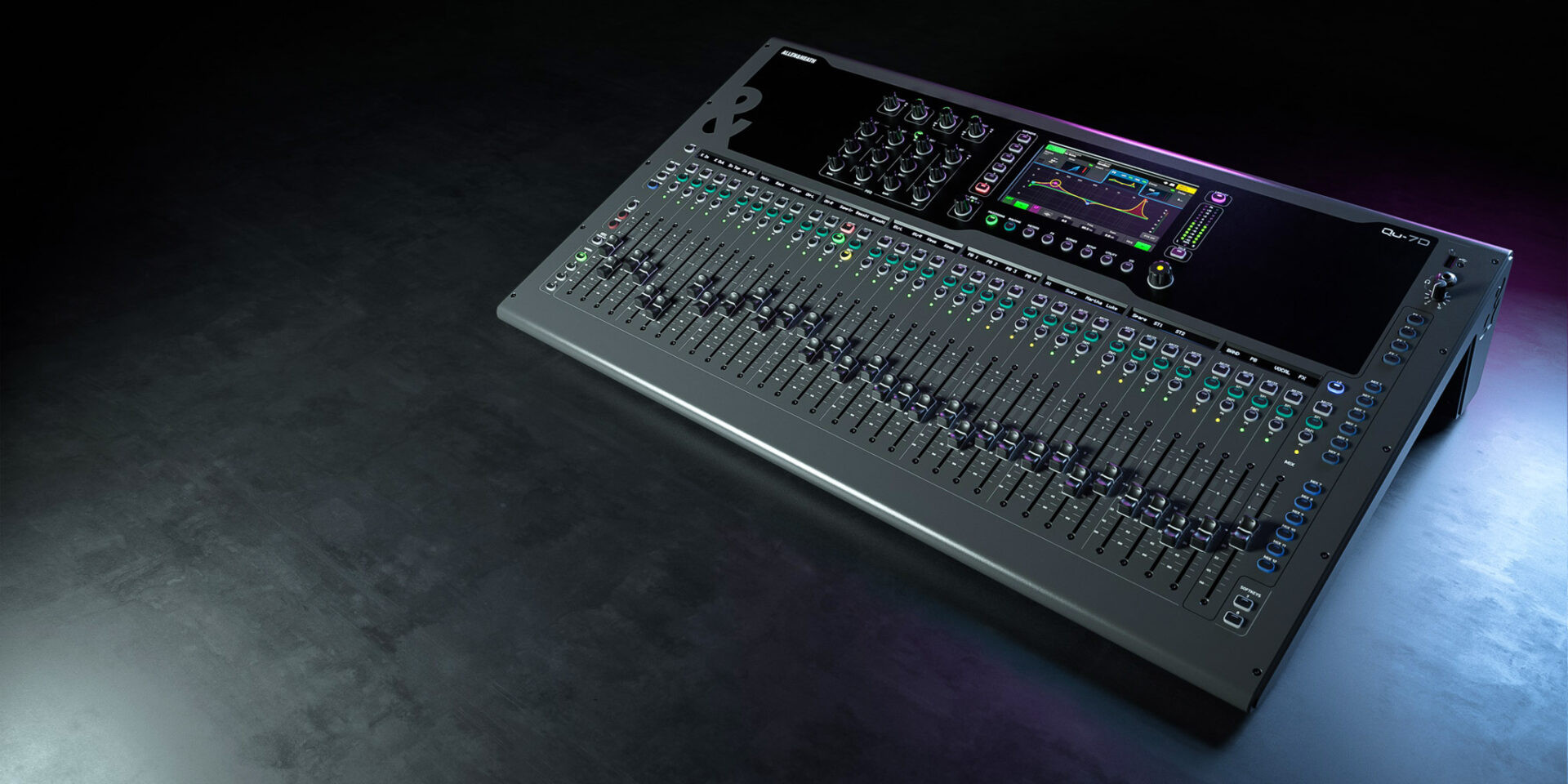
If you've been researching digital mixers and the Allen & Heath Qu-7d keeps popping up, you're probably wondering what all those specs actually mean. 38 inputs? 24 outputs? Dante? 96kHz? It can feel like a different language when you're just starting out.
Don't worry — this guide is written specifically for people who are new to digital mixing or stepping up from a simpler setup. We'll break down exactly what the Qu-7d does, why its features matter in real-world terms, and whether it's the right fit for where you are in your audio journey. By the end, you'll understand enough to have a confident conversation with any audio supplier in Australia.
What Is a Digital Mixer, and Why Does It Matter?
Before we dive into the Qu-7d specifically, let's make sure we're on the same page about what a digital mixer actually is.
Think of a mixer as the central brain of any sound system. Every microphone, instrument, and audio source plugs into it. The mixer lets you control the volume, tone, and effects for each source individually, then blends everything together into a polished output that goes to your speakers or recording device.
An analogue mixer does this with physical circuits — what you hear is directly shaped by the electronic components inside. A digital mixer converts all incoming audio into digital data first, processes it using powerful onboard computers, and then converts it back to audio for your speakers. This digital approach opens up capabilities that would be physically impossible (or absurdly expensive) in the analogue world.
Why Go Digital?
- Recall and save settings: Imagine spending an hour getting the perfect sound for a band, then being able to save that entire setup and reload it instantly next week. Digital mixers do this effortlessly.
- Built-in effects: Reverb, delay, compression — these are included at no extra cost, saving you thousands on outboard gear.
- Compact size: A digital mixer with 38 inputs would need an enormous analogue console. The Qu-7d fits on a standard desk.
- Remote control: Mix from your tablet while walking through the venue — something analogue simply can't offer.
Understanding the Allen & Heath Qu-7d: The Basics
The Qu-7d sits in Allen & Heath's popular Qu series, which has earned a strong reputation in Australia for reliability and sound quality. Let's translate its key specifications into plain English.
What Does "38 In / 24 Out" Mean?
38 inputs means you can plug in up to 38 different audio sources at the same time. That might sound like a lot, but here's how it adds up in a real scenario:
- Drum kit: 8-12 microphones
- Bass guitar: 1-2 channels
- Electric guitars: 2-4 channels
- Keyboards/synths: 2-4 channels (stereo)
- Vocals: 4-6 microphones
- Acoustic instruments: 1-3 channels
- Backing tracks or click: 2 channels (stereo)
That's already 20-33 channels for a medium-sized band. Add a few spares for last-minute additions, and 38 inputs gives you proper breathing room rather than constantly running out of channels.
24 outputs refers to how many separate audio feeds you can send out from the mixer. These go to things like:
- Main speakers (left and right)
- Stage monitors (so musicians can hear themselves)
- Subwoofers
- Recording devices
- In-ear monitoring systems
- Delay speakers further back in a venue
Having 24 outputs means every musician on stage can get their own personalised monitor mix — a massive quality-of-life improvement over sharing a single mix that nobody's truly happy with.
What Does "96kHz" Mean?
This refers to the sample rate — essentially how many times per second the mixer takes a snapshot of the incoming audio to create its digital version. Think of it like video frame rate: more frames per second means smoother motion. More samples per second means more detailed, accurate audio.
The standard for professional audio is 48kHz. The Qu-7d's 96kHz option means it captures audio at double that resolution. In practical terms, this translates to slightly smoother high frequencies and lower latency (the tiny delay between sound going in and coming out). For most live sound work, you'll run at 48kHz to maximise your channel count, but having 96kHz available is brilliant for studio recording sessions where every detail counts.
What Are "33 Faders"?
Faders are the sliding controls on the mixer surface — the long strips you push up and down to adjust volume. Having 33 faders means you can see and physically control a large number of channels without constantly switching between "layers" or pages on a screen.
Why this matters for beginners: Some digital mixers save cost by giving you fewer faders and making you switch between banks to access all your channels. This can be confusing and slow, especially during a live show when a vocalist suddenly needs more volume right now. With 33 faders, most of your channels are right there in front of you at all times. It's a more intuitive, less stressful workflow — particularly when you're still building confidence.
Dante Networking: What It Is and Why Beginners Should Care
This is where the "d" in Qu-7d comes from, and it's one of the mixer's most significant features. Let's break it down without the jargon.
What Is Dante?
Dante (Digital Audio Network Through Ethernet) is a technology that sends audio over standard network cables — the same type of cables you'd use to connect a computer to the internet. Instead of running dozens of heavy, expensive analogue audio cables from the stage to the mixer, you run a single network cable.
Imagine this: traditionally, if you have 32 microphones on stage and your mixer is 30 metres away at the back of the venue, you'd need 32 individual cables running that entire distance. That's heavy, expensive, time-consuming to set up, and a nightmare to troubleshoot if something goes wrong.
With Dante, all 32 channels travel down one lightweight network cable. It's genuinely that simple in concept.
Why Dante Matters Even If You're Starting Out
- Future-proofing: Dante is rapidly becoming the industry standard worldwide, including across Australia. Investing in Dante-capable gear now means you won't need to replace your mixer when venues and hire companies inevitably go fully networked.
- Simpler setups: Fewer cables means faster setup and pack-down — something you'll deeply appreciate at 6am bump-in on a Sunday morning.
- Expandability: As your needs grow, Dante lets you add stageboxes, personal monitor mixers, and recording systems that all talk to each other seamlessly over your network.
- Reliability: Dante supports redundant connections. Run two network cables instead of one, and if one fails, audio switches to the other instantly — no dropouts during a show.
Beginner tip: You don't have to use Dante straight away. The Qu-7d works perfectly well with traditional analogue connections. Think of Dante as a door you can walk through when you're ready — it's there waiting, not forcing you through it on day one.
Key Features That Actually Matter (Not Just Marketing)
Digital mixer spec sheets can be overwhelming. Here are the Qu-7d features that make a genuine, practical difference, explained honestly.
Onboard Processing and Effects
The Qu-7d includes a full suite of dynamics processing (compressors, gates, de-essers) and effects (reverb, delay, chorus) on every channel. In plain terms: you won't need to buy any additional equipment to get a polished, professional sound.
For beginners, the built-in presets are genuinely useful. Start with a "Male Vocal" or "Snare Drum" preset, and you're already 80% of the way to a good sound. Tweak from there as your ears develop.
Touchscreen Interface
The Qu-7d features a built-in touchscreen that gives you visual feedback and control over your mix. For newcomers to digital mixing, this is significantly more intuitive than navigating tiny LCD screens with rotary encoders — you can see your EQ curves, effects settings, and routing at a glance, and adjust them by touch.
iPad and Remote Control
Using Allen & Heath's free Qu-You and Qu-Pad apps, you (or your musicians) can control the mix wirelessly from a tablet. This is genuinely transformative for live sound:
- Walk around the venue while adjusting the mix, hearing exactly what the audience hears in different positions
- Let musicians adjust their own monitor mixes from stage, without needing to shout instructions to the sound desk
- Make subtle adjustments from the middle of the room instead of the back corner where the mixer often ends up
USB Recording
The Qu-7d can record multitrack audio directly to a USB drive or computer. This means you can capture every channel of a live performance separately, then mix it properly in a studio later. It's an incredibly valuable feature for:
- Churches wanting to record services
- Bands wanting live recordings without hiring a separate recording setup
- Venues archiving performances
- Sound engineers practising their mixing skills by re-mixing real recordings
Scene Recall
Remember the "save and recall" benefit of digital we mentioned earlier? The Qu-7d lets you store complete mixer setups as "scenes." If you mix for different bands or events each week, you simply recall that act's scene and you're ready to go — fader positions, EQ settings, effects, routing, everything.
Beginner tip: Create a scene called "Starting Point" with your basic default settings. If you ever get lost making changes during a show, you can recall it and get back to a known good position instantly. It's your safety net while learning.
Is the Qu-7d Right for You? Honest Assessment
Let's be straightforward about who this mixer is and isn't for.
The Qu-7d Is a Great Fit If:
- You're mixing medium to large events — bands with more than 6-8 members, multi-act festivals, corporate events with multiple microphone sources, or mid-sized houses of worship
- You want room to grow — the 38 inputs and Dante networking mean you won't outgrow this mixer quickly
- You value hands-on control — the 33 faders make mixing more tactile and immediate than screen-only alternatives
- You're investing in Dante infrastructure — or plan to in the near future
- You need reliable multitrack recording — for archiving or virtual soundchecks
You Might Want Something Smaller If:
- You're mixing small gigs — solo acts, duos, or small acoustic sets. A 16 or 24-channel mixer like the Qu-16 would be more practical and portable
- Budget is very tight — the Qu-7d is a professional-grade investment. If you're just starting your very first sound gig, consider an entry point like the CQ series to learn the fundamentals first
- Portability is your top priority — with 33 faders, it's a substantial desk. If you're constantly carrying gear up flights of stairs, factor in the size and weight
Common Beginner Mistakes to Avoid
- Buying more mixer than you need right now: If you're genuinely only mixing 8 channels, a 38-input mixer means paying for capability you may never use. Be honest about your actual requirements.
- Ignoring the ecosystem: The Qu-7d's full potential unlocks with compatible stageboxes (like the AB168 or AR2412) and Dante-enabled devices. Factor these into your budget planning.
- Skipping the learning curve: Don't buy this on Friday and expect to mix a flawless show on Saturday. Spend time with the offline editor software (free from Allen & Heath) before your first gig.
- Forgetting about training: Allen & Heath offers excellent free tutorial content. Use it. There's no prize for figuring everything out the hard way.
What You'll Need Alongside the Qu-7d
No mixer works in isolation. Here's what beginners often forget to budget for:
- A quality router (if using iPad remote control) — don't rely on a $30 home router for live sound. A dedicated dual-band router makes wireless mixing reliable.
- A network switch (if using Dante) — a managed gigabit switch is recommended for Dante networks.
- Cat5e or Cat6 cables — for Dante connections. Much cheaper than analogue snake cables, which is one of the benefits.
- A dust cover — if the mixer lives in a fixed installation. Faders and touchscreens don't love dust.
- A flight case — if you're touring or transporting it regularly. Protect your investment.
Getting Started: What to Expect in Your First Week
If you do go ahead with the Qu-7d, here's a realistic picture of the learning journey:
Day 1-2: Unbox, connect a couple of microphones, and simply get audio flowing through the mixer to your speakers. Don't try to learn everything at once. Just get comfortable with the physical layout and basic signal flow.
Day 3-4: Explore the touchscreen interface. Learn how to adjust EQ (tone shaping) and apply basic effects like reverb to a vocal channel. Try the built-in presets.
Day 5-7: Set up the iPad app. Learn how to save and recall scenes. Try recording a channel via USB. Start exploring the mix outputs and monitor sends.
Week 2 onwards: Begin working with multiple input sources. Practice building a mix from scratch. Experiment with compression and gating. This is where things start clicking and becoming genuinely enjoyable.
Dante exploration: Once you're comfortable with the mixer's core functions (give it a few weeks), then start exploring Dante connectivity. One step at a time.
Frequently Asked Questions from Beginners
Do I need to understand networking to use Dante?
Basic networking knowledge helps, but you don't need to be an IT professional. Dante is designed to be largely plug-and-play. Allen & Heath and Audinate (the company behind Dante) both offer free introductory courses that cover everything you need to know.
Can I use this mixer for recording as well as live sound?
Absolutely. The Qu-7d's multitrack USB recording and Dante connectivity make it a capable recording interface. Many small studios and churches in Australia use Qu series mixers for exactly this dual purpose.
How does it compare to competitors at this price point?
The Qu-7d competes primarily with mixers from Yamaha (TF series), Behringer (Wing), and Midas. Allen & Heath is generally regarded for superior preamp quality and more intuitive workflow. The addition of built-in Dante (rather than requiring an expensive add-on card) is a significant advantage at this price point.
Is Allen & Heath well-supported in Australia?
Yes. Technical Audio Group (TAG) is the Australian distributor, and they provide solid warranty support and service. Allen & Heath also has an active user community and responsive technical support team. You won't be left on your own.
Ready to Take the Next Step?
The Allen & Heath Qu-7d represents a serious but sensible investment for anyone ready to step into professional-grade digital mixing with future-proof Dante networking. It's not an impulse purchase — it's a tool that will grow with you as your skills and requirements develop.
If you're based in Australia and ready to explore the Qu-7d further, check the current pricing and availability at MusiconStage. They're an authorised Australian dealer, so you'll get full local warranty and support.
If you're not quite sure the Qu-7d is the right size for your needs, it's worth comparing it against the smaller Qu-5d or Qu-6d models in the same Dante-equipped range. Getting the right size mixer from the start saves money and frustration down the track.
Whatever you choose, remember: every professional sound engineer started exactly where you are now. The fact that you're doing your research puts you ahead of most. Trust the process, take it one feature at a time, and enjoy the journey.