
Allen & Heath Qu-5d vs Qu-32 vs SQ-5: Which Mixer Wins in 2026?
Allen & Heath Qu-5d vs Qu-32 vs SQ-5: Which Mixer Wins for Your Setup in 2026?
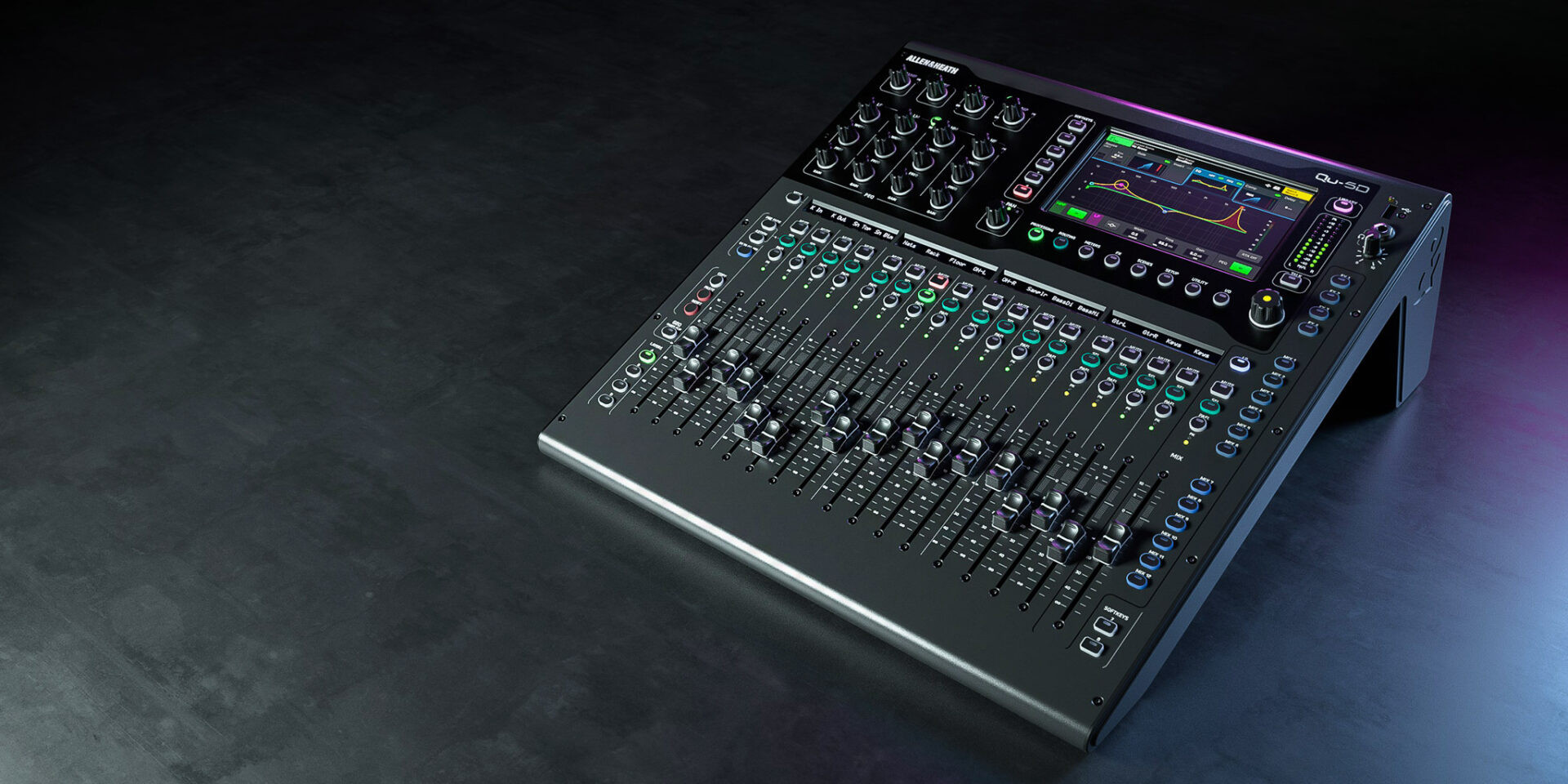
If you're shopping for a serious digital mixer in Australia right now, there's a good chance you've landed on the Allen & Heath Qu-5d — the 32-channel, 96kHz powerhouse with built-in Dante networking. But here's the thing: Allen & Heath's own lineup is packed with capable desks, and picking the right one can feel like navigating a maze. Is the Qu-5d genuinely the best fit, or would you be better served by the Qu-32 or the step-up SQ-5?
This guide breaks down the real differences — not just spec-sheet numbers, but what actually matters when you're behind the desk at a venue, church, theatre, or touring rig. We'll compare features, workflows, networking, and value so you can buy with confidence.
Why These Three Mixers? Understanding the Lineup
Allen & Heath's digital range can be broadly split into two families that matter here: the Qu series (proven, accessible, professional) and the SQ series (flagship XCVI processing, deeper feature set). The Qu-5d sits in a fascinating position — it's the Qu-32's channel count married to Dante connectivity, all in a more compact frame. Let's set the scene.
- Qu-5d — 32 channels at 96kHz, 17 faders, 16 mic/12 line local I/O, 6 FX engines, 16×16 Dante. The "d" denotes Dante-native networking.
- Qu-32 — 32 channels at 48kHz, 33 faders (plus master), 32 mic/3 line local I/O, no native Dante (requires optional card or external converter).
- SQ-5 — 48 channels, 96kHz XCVI core, 17 faders, 16 mic/12 line local I/O, onboard Dante ready via SLink, deeper processing engine.
Each targets a slightly different user, and the price gaps between them are meaningful for Australian buyers. Let's dig in.
Head-to-Head Feature Comparison
| Feature | Qu-5d | Qu-32 | SQ-5 |
|---|---|---|---|
| Input Channels | 32 | 32 | 48 |
| Sample Rate | 96kHz | 48kHz | 96kHz |
| Physical Faders | 17 | 33 + Master | 17 |
| Local Mic Inputs | 16 | 32 | 16 |
| Local Line Inputs | 12 | 3 | 12 |
| Dante Networking | Built-in 16×16 | Not included (optional) | Via SLink / dSNAKE |
| FX Engines | 6 | 4 | 8 (DEEP processing) |
| Processing Core | Qu DSP (enhanced) | Qu DSP | XCVI (96-bit) |
| Touchscreen | 7" colour | 5" colour | 7" colour |
| USB Recording | 32×32 USB | 32×32 USB | 32×32 USB |
| Remote Control App | Qu-You, Qu-Pad | Qu-You, Qu-Pad | SQ MixPad |
| Form Factor | Compact desktop | Large-format console | Compact desktop |
| Approx. AUD Price Range | $5,500–$6,500 | $6,000–$7,500 | $7,500–$9,000 |
Audio Quality: 96kHz Actually Matters Here
The most immediate technical difference between the Qu-5d and the older Qu-32 is sample rate. The Qu-5d runs at 96kHz, which translates to audibly smoother high-frequency response and lower latency through the signal chain. If you've mixed on both 48kHz and 96kHz desks, you'll know the difference isn't night and day — but it's real, particularly on transient-rich sources like cymbals, acoustic guitars, and vocal sibilance.
The SQ-5 also runs at 96kHz but goes further with its XCVI core — Allen & Heath's flagship processing engine with 96-bit accumulation in the mix bus. In practice, the SQ-5 has more headroom in its summing and dynamics processing, which you'll notice most when you're pushing dense mixes with heavy parallel compression or lots of FX returns. For straightforward live mixing, the Qu-5d's processing is more than adequate. The SQ-5's advantage reveals itself in complex, high-channel-count scenarios.
Dante Networking: The Qu-5d's Killer Feature
This is where the Qu-5d genuinely separates itself from the standard Qu-32. Built-in 16×16 Dante means you can integrate directly into networked audio systems without buying additional hardware. For Australian venues and hire companies moving toward AV-over-IP infrastructure, this is a significant deal.
What Dante on the Qu-5d Actually Gets You
- 16 channels in, 16 channels out over standard Ethernet — connect to Dante-enabled stageboxes, speakers, recording interfaces, or other consoles
- Redundant network ports for failover in mission-critical applications
- Integration with Dante Virtual Soundcard for direct multitrack recording to a DAW over the network
- Interoperability with Shure wireless, Focusrite RedNet, Yamaha, and hundreds of other Dante-compatible devices
The Qu-32 can achieve Dante connectivity, but it requires an external Dante-to-analogue or Dante-to-dSNAKE converter — adding cost, complexity, and another potential failure point. The SQ-5 handles networking through its SLink port, which connects to Allen & Heath's DX and GX stageboxes; Dante integration typically requires a GX4816 or similar, which is a significant additional investment.
If Dante compatibility is a core requirement for your setup, the Qu-5d is the most cost-effective path in the Allen & Heath range.
Physical Layout and Workflow
Here's where personal preference and use case really come into play. The Qu-32 gives you 33 physical faders — one for every input channel plus a master. During a live show, having every channel at your fingertips without layer-flipping is genuinely faster. If you're mixing a full band with multiple monitor sends, that physical real estate matters.
The Qu-5d and SQ-5 both use a 17-fader layout with layer switching. You'll be flipping between fader layers to access all 32 (or 48) channels. It's a perfectly workable system once you learn it — Allen & Heath's custom layer assignment helps — but it's inherently a different workflow from a one-fader-per-channel desk.
The trade-off? The Qu-5d is dramatically more compact and lighter than the Qu-32. If you're a mobile engineer, a hire company loading trucks, or a venue with limited FOH space, the smaller footprint is a genuine operational advantage.
Touchscreen Experience
Both the Qu-5d and SQ-5 feature 7-inch colour touchscreens, which are a noticeable step up from the Qu-32's smaller 5-inch display. For EQ adjustments, routing configuration, and FX editing, the larger screen makes a real difference in speed and accuracy — especially in dim lighting at FOH.
FX and Processing: More Than Just Numbers
The Qu-5d ships with 6 built-in FX engines — two more than the Qu-32's four. That might sound minor, but in practice, having two extra FX slots means you can run dedicated reverbs for vocals and drums while still having delay, chorus, and room effects available without juggling assignments mid-show.
The SQ-5 takes this further with 8 FX engines and DEEP processing — Allen & Heath's emulations of classic analogue hardware including Neve, dbx, and Drawmer-inspired dynamics. If you're the kind of engineer who reaches for specific compressor characters on different sources, the SQ-5's processing depth is genuinely compelling.
For most live applications, the Qu-5d's six engines with quality reverbs, delays, and modulation effects will cover everything you need. The SQ-5's DEEP processing is a luxury that becomes a necessity only when you're mixing at a level where those tonal choices matter to the final product.
Who Should Buy Which? Honest Recommendations
Choose the Allen & Heath Qu-5d If:
- Dante networking is essential — you're integrating into an existing Dante infrastructure, or planning to build one
- You want 96kHz audio quality without jumping to the SQ price bracket
- Portability matters — you need 32 channels in a compact, road-friendly format
- You're a hire company building versatile, network-ready kits
- Budget is around $5,500–$6,500 AUD and you want the best feature-to-dollar ratio with networking included
- You mix in venues that use Shure or other Dante-enabled wireless systems
Choose the Qu-32 If:
- One-fader-per-channel is non-negotiable — you refuse to layer-flip during a live mix
- You don't need Dante and your setup runs entirely on analogue or dSNAKE connections
- You have a permanent install where size and weight don't matter
- You want maximum local I/O — 32 onboard mic preamps without needing a stagebox
- 48kHz is fine for your application (and honestly, for many live scenarios, it is)
Choose the SQ-5 If:
- You need 48 channels or expect to grow beyond 32
- DEEP processing and XCVI sound quality are worth the premium to you
- You're mixing high-profile events where processing depth makes an audible difference
- You want the most future-proof option in Allen & Heath's current range
- Budget stretches to $7,500+ AUD and you want to buy once, buy right
Value Analysis: What You're Actually Paying For
Let's be blunt about value, because Australian prices for pro audio gear aren't getting cheaper.
The Qu-5d represents the sweet spot in this comparison. You're getting 96kHz processing and built-in Dante — two features that would cost you significant money to add to a Qu-32 after the fact — in a package that's actually cheaper than the larger console. The 16×16 Dante card alone, if purchased separately for another platform, would run you $800–$1,500 AUD. The Qu-5d essentially bundles it in.
The Qu-32's value proposition is all about that full fader surface. If you price out a Qu-5d plus a control surface to compensate for fewer faders, you'll quickly see why the Qu-32 still makes sense for engineers who prioritise tactile control.
The SQ-5 is a different conversation entirely. You're paying a 30–50% premium over the Qu-5d for XCVI processing, more channels, DEEP effects, and a more refined software ecosystem. Whether that premium is justified depends entirely on whether you'll use those features. For a community theatre or small venue, probably not. For a touring engineer or high-end install, absolutely.
Common Mistakes When Choosing Between These Mixers
- Buying Dante capability you won't use. If your entire rig is analogue and you have no plans to network, the Qu-5d's Dante is wasted money. Get the Qu-32 and enjoy the faders.
- Underestimating the value of 96kHz. The jump from 48kHz to 96kHz isn't just about frequency response — it's lower latency, better summing, and smoother processing. Don't dismiss it as marketing.
- Choosing the SQ-5 "just in case." If you're mixing 16-channel bands and don't use outboard-style processing, the SQ-5's extra headroom goes to waste. Buy for today's needs with a reasonable buffer, not for scenarios that may never happen.
- Forgetting about the ecosystem. The Qu-5d uses dSNAKE for its stagebox connections — make sure your existing stageboxes (AB168, AR84, etc.) are compatible. The SQ range uses a different connection system.
- Ignoring software updates. Allen & Heath has a strong track record of firmware updates for the Qu range. Check the latest firmware features before buying, as capabilities evolve.
Real-World Scenarios: Australian Use Cases
Pub and Club Circuit
The Qu-5d is arguably the best pick here. Compact enough for tight FOH positions, Dante-ready for venues upgrading their infrastructure, and 32 channels handles everything from solo acts to full bands. The 6 FX engines mean you won't be rationing reverbs on a busy Saturday night.
Church and House of Worship
Dante capability shines in church installs where you might be sending audio to a livestream encoder, a cry room, a foyer, and a recording system simultaneously. The 16×16 Dante on the Qu-5d handles this elegantly without running analogue snakes everywhere.
Theatre and Performing Arts
If your productions regularly exceed 32 inputs (lavs for a large cast, plus band, plus playback), the SQ-5 is the safer choice. For smaller productions, the Qu-5d's scene recall and 32 channels will serve you well.
Touring and Hire
Hire companies should seriously consider the Qu-5d as a fleet standard. Its compact size, Dante networking, and 96kHz quality make it versatile across the widest range of gigs. Pair it with an AB168 stagebox and you've got a professional rig that fits in a standard rack case.
The Verdict: Our Honest Take
For most Australian buyers comparing these three desks in 2026, the Allen & Heath Qu-5d offers the best balance of modern features, audio quality, and value. Built-in Dante, 96kHz processing, six FX engines, and a compact form factor make it the most versatile option in its price range. It's the desk that makes the fewest compromises for the broadest range of applications.
The Qu-32 remains relevant if you genuinely need a fader-per-channel workflow and don't require networking. The SQ-5 is the right call when your productions demand more channels, deeper processing, or you simply want Allen & Heath's best technology.
But if we had to recommend one desk to a sound engineer walking into a shop today with a $6,000 budget and varied gig requirements? It'd be the Qu-5d. No hesitation.
Check the latest price on the Allen & Heath Qu-5d at MusiconStage
Questions to Ask Yourself Before Buying
- Do I need Dante networking now, or within the next two years? If yes, the Qu-5d saves you money long-term.
- Will I regularly exceed 32 input channels? If yes, look at the SQ-5.
- Is one-fader-per-channel critical to my mixing speed? If yes, the Qu-32 is your desk.
- Am I buying for a permanent install or mobile use? Compact desks win on the road; large-format desks win in fixed positions.
- What does my existing infrastructure look like? Match your desk to your stageboxes, networking, and venue wiring.
Whatever you choose, you're buying into one of pro audio's most respected ecosystems. Allen & Heath's build quality, support, and firmware commitment mean any of these desks will serve you for years.
Buy the Allen & Heath Qu-5d from MusiconStage — Australia's trusted pro audio retailer