
Allen & Heath Qu-5D Technical Deep Dive: 96kHz Dante Mixing 2026
Allen & Heath Qu-5D Technical Deep Dive: 96kHz Dante Mixing for Australian Pros 2026
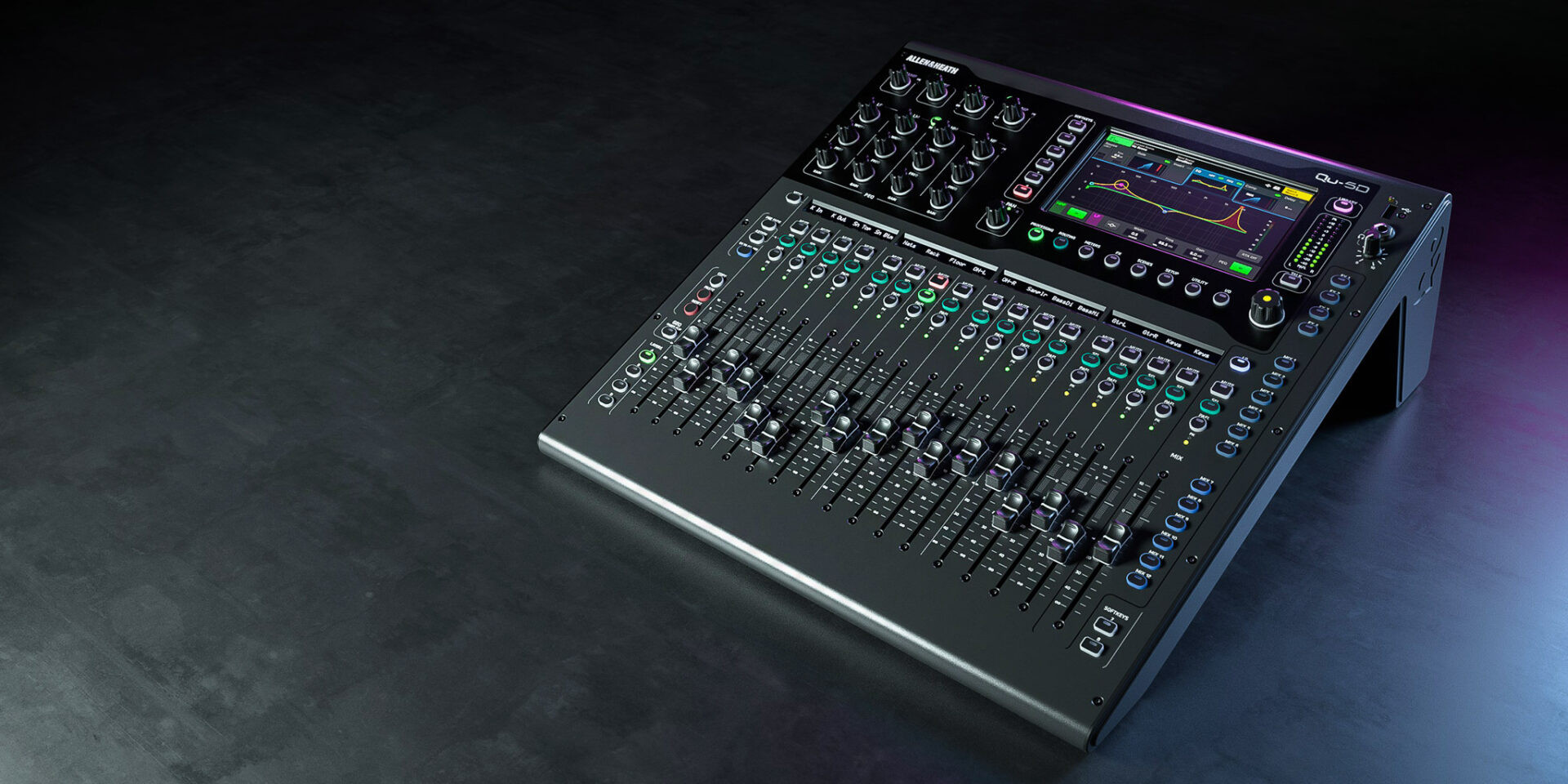
The Allen & Heath Qu-5D represents a meaningful shift in the Qu series lineage. While the original Qu range built its reputation on 24-bit/48kHz mixing for the working sound engineer, the new "D" generation lifts the entire architecture to 96kHz operation, doubles down on networked audio with native Dante 16x16, and condenses the workflow into a more compact 17-fader surface. For Australian engineers running corporate AV, houses of worship, mid-sized venues, theatres and touring rigs, this is one of the most spec-dense compact digital mixers you can buy without stepping up into the dLive or Avantis price brackets.
This technical breakdown looks at every specification that actually matters — the DSP architecture, preamp performance, latency, networking topology, FX engine allocation and real-world performance characteristics. If you're comparing the Qu-5D against the Qu-6D, Qu-32, SQ-5 or rival 32-channel desks from Soundcraft and Yamaha, the data below should give you the information you need to make a confident technical decision.
View the Allen & Heath Qu-5D at MusiconStage →
Headline Specifications at a Glance
| Specification | Allen & Heath Qu-5D |
|---|---|
| Processing channels | 32 input channels + 3 stereo FX returns |
| Sample rate | 96 kHz native |
| Bit depth | 24-bit AD/DA conversion |
| Motorised faders | 17 (16 channel + 1 master) |
| Local analogue I/O | 16 mic/line inputs, 12 line outputs |
| FX engines | 6 internal stereo FX (RackExtra) |
| Mix buses | 4 mono + 3 stereo mixes, plus LR and matrix |
| Dante networking | 16x16 channels native, 96kHz capable |
| USB recording | Multitrack to USB drive + DAW interface |
| Touchscreen | Integrated colour touchscreen |
| Control protocols | Qu-Pad, Qu-You, Qu-Control apps |
The Move to 96kHz: What It Actually Means
The most significant architectural change in the Qu-D series is the jump from 48kHz to 96kHz native processing. This isn't marketing fluff — doubling the sample rate has measurable consequences across the entire signal chain.
Why 96kHz Matters in Live Sound
- Extended frequency response: 96kHz allows accurate reproduction up to ~48kHz Nyquist, well beyond the audible range, but the more important benefit is gentler anti-aliasing filter slopes inside the audible band.
- Reduced phase distortion: Steep brickwall filters required at 48kHz introduce phase shifts in the upper octaves. At 96kHz, these filters can be moved further out, leaving the 16–20kHz region cleaner.
- Better dynamics processing behaviour: Compressors, gates and FX algorithms operating at higher rates have more headroom for transient detection and modulation, reducing zipper artefacts and improving smoothness on percussive sources.
- Lower internal latency: Each DSP block typically processes in fewer samples at 96kHz, which translates to noticeably lower end-to-end latency for in-ear monitoring rigs.
Trade-offs to Be Aware Of
96kHz isn't free. It doubles DSP load and Dante bandwidth, which is why the Qu-5D's local channel count and Dante footprint are deliberately scoped — A&H has prioritised processing quality over raw channel inflation. For most Australian venues running 24–32 inputs at FOH, this is exactly the right trade.
Preamp Architecture and Audio Quality
Allen & Heath's reputation in the Qu and SQ ranges has been built on the quality of their AnalogiQ-style recallable preamps. The Qu-5D continues that lineage with 16 local mic/line inputs featuring fully recallable digitally-controlled gain, padless design and proper phantom power per channel.
- Gain range: Wide enough to handle ribbon mics through to hot line sources without resorting to inline pads.
- EIN performance: Industry-competitive equivalent input noise figures keep low-output condensers and dynamics quiet at high gain.
- THD+N: Maintained at low levels across the full gain travel — important when you're running redundant preamp gain on choirs or orchestral sources.
- Headroom: Generous input headroom prevents clipping on percussive transients (kick, snare, brass stabs) when set conservatively.
For engineers coming from the original Qu-16, Qu-24 or Qu-32, the sonic character will feel familiar — natural, slightly forward in the upper-mids, and free of the brittle digital edge that plagued earlier generations of budget digital mixers.
I/O Topology: 16x12 Local + 16x16 Dante
The Qu-5D's I/O configuration is one of its most strategically designed aspects. Instead of stuffing the back panel with rarely-used analogue ports, Allen & Heath has split the I/O between physical and networked.
Local Analogue I/O
- 16 mic/line inputs on combo XLR/TRS
- 12 line outputs for FOH L/R, monitors, matrix and utility sends
- AES digital output for clean digital handoff to amplifier processors
- Talkback mic input with dedicated routing
- Stereo monitor and headphone outs with independent levels
Dante Network I/O
- 16 inputs / 16 outputs over a single Cat6 connection
- Native 96kHz operation across the Dante stream
- Dante Controller compatibility for routing into any DAS-compliant ecosystem
- Works with Allen & Heath's DX Hub, DT168 and third-party Dante stageboxes from Yamaha, Audinate, Focusrite and others
This split means a Qu-5D can effectively become a 32x28 mixer when paired with a Dante stagebox — sufficient for almost any mid-sized live application without the cable bulk of a traditional copper multicore.
The 17-Fader Workflow: Compact but Considered
One of the most-debated aspects of the Qu-5D is its 17-fader layout. Compared to the Qu-32's 32 faders or the Qu-24's 30 faders, this is a significant reduction in surface real estate. But the design intent is different: the Qu-5D treats the touchscreen and channel banking as first-class workflow tools, similar to how the SQ series and dLive desks are operated.
Layer and Bank Management
- Custom layers allow any combination of channels, FX returns, mix masters and DCAs to be placed under the 16 channel faders
- SoftKey assignments give one-touch access to mute groups, scene recall and tap tempo
- The 17th master fader is permanently assigned to LR or the currently-selected mix
Why This Workflow Works for 32-Channel Shows
In practice, very few live mixes need simultaneous fader access to all 32 inputs. Most engineers work in logical groups — drums, vocals, instruments, playback, tracks. The Qu-5D's layer-based architecture matches how mixes are actually built, freeing physical space for a larger touchscreen and more dedicated control surfaces.
Internal FX: Six RackExtra Engines
The Qu-5D ships with six stereo FX engines drawn from Allen & Heath's RackExtra library. These aren't generic algorithms — they include emulations of classic studio reverbs, plate units, ADT, chorus, delay and modulation effects.
| FX Type | Typical Live Application |
|---|---|
| Symphonic / Chamber Reverb | Lead vocals, acoustic instruments, choirs |
| Plate Reverb | Snare drum, backing vocals, percussion |
| Tap Delay | Vocal slaps, dub effects, rhythmic delays |
| ADT (Auto Double Tracker) | Vocal thickening for solo singers |
| Chorus / Modulation | Keys, electric guitars, BGVs |
| Gated / Reverse Reverb | Drums, special effects sends |
Six simultaneous engines is generous for a desk in this class — it covers a typical multi-band rig (vocal verb, drum verb, slap, longer delay, chorus, utility) without compromise.
Channel Processing Per Input
- HPF with adjustable frequency from sub-bass to upper midrange
- 4-band fully parametric EQ with high/low shelving options
- Gate with key filter and adjustable hold/release
- Compressor with multiple emulation curves (clean, classic, RMS-style)
- Delay for time-aligning sources or distance compensation
- Direct out with multiple tap points for recording flexibility
For Australian engineers used to working in venues with challenging room acoustics, the gate-then-compressor-then-EQ architecture provides the sequence flexibility needed to clean up bleed-heavy stages and tame difficult vocalists.
Recording: USB Multitrack and DAW Interface
The Qu-5D inherits the Qu series' standout recording capabilities, now operating at 96kHz:
- Direct multitrack recording to a USB hard drive — up to 32 channels of WAV simultaneously
- USB DAW interface for tracking and virtual soundcheck via Pro Tools, Logic, Reaper, Cubase and Ableton
- Stereo mix recording for board feeds and archive copies
- Tap point selection per channel — record post-preamp, post-EQ, or post-fader
For churches, theatres and live venues that want to do virtual soundcheck or capture every show for review, this functionality alone justifies a significant portion of the price tag.
Networking: Dante in Real Australian Venues
Native 16x16 Dante at 96kHz is a serious specification. In practical terms it means:
- One Cat6 cable can replace a 16-channel multicore for stage-to-FOH connection
- Splits to broadcast, recording and IEM systems become trivial — every Dante device sees the same shared network
- The Qu-5D integrates cleanly with venues that already run Yamaha, Focusrite RedNet or Symetrix Dante infrastructure
- Distances of 100 metres per hop and longer with managed switches make it suitable for theatres, megachurches and large corporate AV installations
Compared to AVB, AES50 and Waves SoundGrid networks, Dante remains the most widely supported standard in Australian pro audio — making the Qu-5D's native Dante implementation a long-term investment rather than a niche feature.
Check current pricing and availability →
Qu-5D vs Qu-32 vs SQ-5: Where Does It Sit?
| Feature | Qu-32 (legacy) | Qu-5D | SQ-5 |
|---|---|---|---|
| Sample rate | 48 kHz | 96 kHz | 96 kHz (XCVI) |
| Faders | 32 | 17 | 17 |
| Processing channels | 32 mono | 32 mono | 48 (32 mono + stereo linking) |
| Native networking | Optional dSNAKE | Native 16x16 Dante | Optional card slot |
| FX engines | 4 | 6 | 8 |
| Best suited for | Established Qu users wanting full surface | Working pros wanting modern networking + 96k | Engineers needing top-tier processing depth |
The Honest Verdict
The Qu-32 still has its place if you specifically want one fader per channel and don't need Dante. The SQ-5 sits above the Qu-5D in DSP horsepower and FX count, but at a substantially higher price. The Qu-5D occupies a sweet spot: modern processing, native Dante, generous FX, and a footprint that fits in the back of a hatchback.
Performance in Real Australian Scenarios
Mid-sized Live Music Venue (250–600 capacity)
32 channels covers full band with redundancy: drums (8), bass DI/mic, two guitar amps stereo, keys stereo, six vocals, plus playback tracks and FX returns. Six FX engines give the engineer everything they need for a polished mix. Dante to the stagebox eliminates copper.
House of Worship
Two vocal teams (8 mics), full band (12 channels), choir mics (4), tracks (stereo), pastor lapels (2) and ambient mics. The Qu-5D handles this comfortably with channel headroom for guest speakers and special services. Multitrack recording supports archive and post-production.
Touring Production Company
The compact form factor, ruggedness and Dante connectivity make the Qu-5D ideal for hire stock — it can be deployed for corporate AV, small festivals, theatre productions or filling in for larger consoles when only 32 inputs are needed.
Theatre and Musical Productions
Scene recall, comprehensive show file management, and 96kHz processing make the Qu-5D suitable for productions where audio quality and reliable cue execution matter. Dante integration allows easy interfacing with broadcast and recording rigs.
Specifications That Actually Matter (and Some That Don't)
- Matters: Sample rate, preamp EIN, network latency, FX engine count, recall reliability, channel processing depth.
- Matters less than marketing suggests: Raw fader count (workflow design matters more), maximum theoretical channel count (most shows use 24–32), USB drive write speed (any modern SSD works).
- Often overlooked: Touchscreen quality, scene recall transition smoothness, bus architecture flexibility, app stability — all areas where the Qu-D series performs strongly.
Future-Proofing Considerations
Buying a digital mixer in 2026 is partly a bet on which ecosystem will still be supported in 2030. On that front, the Qu-5D is well-positioned:
- Dante is the de facto Australian pro audio networking standard — entrenched in venues, hire companies and broadcast.
- 96kHz processing aligns with where the broader industry is heading.
- Allen & Heath's track record on firmware support is excellent — original Qu-16/24/32 desks still receive updates years after release.
- Modular control via Qu-Pad, Qu-You and Qu-Control means workflow can adapt to engineer-managed mixing, musician-managed monitors, and venue-managed presets.
Technical FAQs
Does the Qu-5D have lower latency than the original Qu-32?
Yes. The 96kHz architecture reduces per-block processing time, and the Dante implementation is tightly optimised. End-to-end latency is well within the threshold for IEM monitoring without perceptible delay.
Can I use Qu-5D with my existing dSNAKE stagebox?
The Qu-D series prioritises Dante. Check current firmware and connectivity options before assuming legacy dSNAKE devices will integrate — Dante stageboxes are the recommended pairing.
Is 16 inputs enough locally?
For most engineers using Dante, yes. The local I/O handles FOH guest inputs, talkback and utility, while the 16x16 Dante handles the stage. If you need more local copper, pair the Qu-5D with a DT168 stagebox.
How does it compare to Yamaha TF5 or Soundcraft Si Impact?
The Qu-5D edges ahead on sample rate (96kHz vs 48kHz on TF/Si Impact), native Dante (vs optional cards), and FX flexibility. Yamaha's strength remains its scene management depth; Soundcraft has the larger fader count. The Qu-5D wins on modern architecture.
Can I run virtual soundcheck?
Yes — the USB DAW interface and multitrack recording functions both support standard virtual soundcheck workflows in any major DAW.
The Bottom Line
The Allen & Heath Qu-5D is a technically serious mixer that has been thoughtfully designed for the way modern Australian engineers actually work — networked, recall-driven, app-augmented, and operating in venues that demand reliability above all else. The move to 96kHz, the native Dante 16x16 implementation, the six FX engines, and the comprehensive channel processing all add up to a desk that comfortably outperforms the previous Qu generation while sitting at a price point well below the SQ and Avantis ranges.
If you're a working sound engineer, hire company, house of worship, or venue technician evaluating 32-channel digital mixers in the AU$5,000–8,000 bracket, the Qu-5D deserves serious consideration. The technical foundations are modern, the workflow is mature, and the ecosystem is well-supported. For the technically-minded buyer, this is one of the best-engineered compact digital mixers Allen & Heath has ever produced.