
Allen & Heath Qu-32 Specs Deep Dive: 32-Channel Digital Mixing in 2026
Allen & Heath Qu-32 Specs Deep Dive: 32-Channel Digital Mixing in 2026
The Allen & Heath Qu-32 sits at the top of the Qu series lineup, and for good reason. With 32 mono mic/line inputs, a full 800x480 touchscreen interface, and onboard multitrack recording over USB, it's built for engineers who need serious channel count without jumping to the SQ or dLive platforms. But raw channel numbers only tell part of the story.
In this technical breakdown, we're pulling apart every specification that matters — from the AnalogiQ preamp architecture through to the DSP allocation, latency figures, and I/O routing flexibility. Whether you're spec'ing out a permanent install for an Australian venue or weighing this against competitors for touring work, this is everything you need to know before committing.
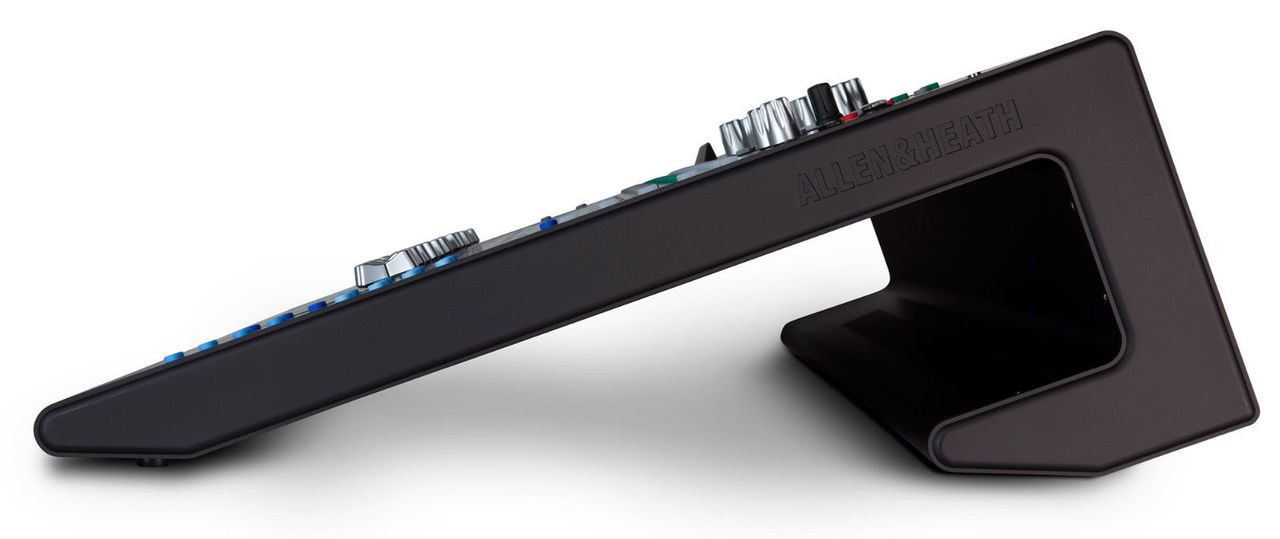
Core Technical Specifications at a Glance
| Specification | Qu-32 Detail |
|---|---|
| Mono Input Channels | 32 (TRS + XLR combo) |
| Stereo Input Channels | 3 (ST1–ST3, TRS) |
| Total Mix Inputs | 38 inputs to mix (32 mono + 3 stereo) |
| Mix Outputs | LR + 10 mix buses (configurable as groups/aux) |
| Matrix Outputs | 2 stereo matrices |
| FX Engines | 4 stereo FX engines (send/return) |
| Faders | 33 motorised (32 channel + 1 master) |
| A/D – D/A Conversion | 24-bit / 96kHz |
| Sampling Rate | 48kHz (fixed internal) |
| Latency (input to output) | < 0.7ms |
| USB Multitrack | 32×32 (Qu-Drive) / 32×30 (USB-B DAW) |
| Dynamic EQ per Channel | Yes (firmware V1.9+) |
| Dimensions (W×D×H) | 830 × 509 × 197 mm |
| Weight | ~19 kg |
AnalogiQ Preamp Architecture: What's Actually Under the Hood
Allen & Heath's AnalogiQ preamp design is the analogue front-end that gives the Qu series its character. Each of the 32 mic/line inputs runs through a recallable preamp with a gain range of +6dB to +60dB for mic inputs — remotely controllable and fully recallable with scene changes. That last point matters enormously for venues running different acts nightly.
The preamp topology itself uses a low-noise differential design with a published EIN (Equivalent Input Noise) of -128dBu (150Ω, direct input, max gain). That figure is competitive with standalone preamps costing several hundred dollars each. For context, most digital consoles in this price range sit between -125dBu and -128dBu, so the Qu-32 is genuinely at the better end of the spectrum.
There's no pad switch — the gain structure is designed to handle everything from condenser mics through to line-level keyboards without one. The input accepts balanced signals from -46dBu to +30dBu depending on gain setting, which gives you comfortable headroom for hot signals from active DI boxes or electronic instruments. Phantom power (+48V) is switchable per channel, not in groups, which is a detail that matters when you're mixing condenser mics alongside ribbon mics or dynamic sources on adjacent channels.
DSP Processing: Channel Strip and Bus Architecture
Every input channel on the Qu-32 gets a full processing chain, and it's worth understanding exactly what that includes because it's more comprehensive than many engineers expect at this price point.
Per-Channel Processing
- High-pass filter: Variable from 20Hz to 2kHz (12dB/octave slope)
- Gate/Ducker: Full gate with threshold, depth, attack, hold, and release controls — plus a sidechain filter
- Parametric EQ: 4-band fully parametric with variable Q on all bands. LF and HF bands switchable between bell and shelf curves
- Dynamic EQ: Added via firmware update, this provides frequency-dependent compression — useful for de-essing and taming resonant instruments without static EQ cuts
- Compressor: Full dynamics with threshold, ratio, attack, release, and knee controls. Sidechain filter included
- Delay: Per-channel delay for time-alignment (0–85ms)
- Direct output: Configurable tap point (pre/post processing)
That per-channel delay is a feature often overlooked. If you're running a venue with speakers at different distances, or you need to time-align a close mic with an overhead, having 85ms of delay on every single channel — not just the outputs — is genuinely useful. Many competing consoles restrict per-channel delay to output buses only.
Bus Processing
Each of the 10 mix buses, the LR bus, and the stereo matrices get their own processing chain as well: 4-band PEQ, graphic EQ (1/3 octave, 28-band), compressor, and delay. The graphic EQ on outputs is particularly handy for monitor engineers doing quick room corrections or feedback suppression without needing an external processor.
FX Engines
The four stereo FX engines are modelled on classic hardware — including reverbs, delays, chorus, and flanger. They operate on a send/return architecture, with dedicated FX send buses and stereo returns that appear as mixable channels. The reverb algorithms have been refined across firmware updates and sit comfortably in the "usable in professional settings" category, though engineers working in high-end studio environments may still prefer external processing. For live sound, they're more than adequate.
I/O Configuration and Routing Flexibility
The Qu-32's physical I/O is straightforward but well-considered:
- 32 mic/line inputs: Combo XLR/TRS on rear panel
- 3 stereo line inputs: TRS pairs (ST1–ST3)
- 12 XLR outputs: Assignable to mixes, groups, matrices, or direct outs
- LR and Monitor outputs: Dedicated XLR pairs
- AES digital output: For digital speaker processors or recording chains
- 2-track USB playback: Type A connector for walk-in music
- Talkback input: XLR with dedicated routing
Where it gets interesting is the dSNAKE port. This proprietary digital snake connection lets you add an Allen & Heath AB168 or AR2412 AudioRack stagebox, extending your I/O to the stage over a single Cat5e cable (up to 120 metres). The dSNAKE carries 38 channels of audio each way at 48kHz/24-bit with automatic gain compensation. For Australian venues and touring setups, this means a single network cable replaces an entire analogue multicore — a massive reduction in setup time and potential failure points.
The Qu-32 also supports ME personal monitoring. Connect an ME-1 personal mixer hub, and up to 40 individual ME-1 units can be daisy-chained, giving each musician on stage independent control of their monitor mix without touching the console. For churches, large-format live bands, or theatre productions, this is a genuine workflow game-changer.
Multitrack Recording: USB-B and Qu-Drive
Two independent multitrack recording paths are available, and they can operate simultaneously:
USB-B (DAW recording): 32 channels in, 30 channels out at 48kHz/24-bit. Connects directly to a Mac or Windows laptop running any ASIO/Core Audio DAW. The 30 return channels can be routed back into the console for virtual soundcheck — meaning you can record a live performance, then play it back through the desk the next day and refine your mix without the band present. This is an enormously powerful workflow for refining mixes and training junior engineers.
Qu-Drive: Records up to 32 tracks simultaneously to a USB hard drive or memory stick plugged into the console's Type A port. No laptop required. The recordings are standard WAV files organised in folders — plug the drive into any computer and import directly into your DAW. For regional Australian venues or touring acts who want a multitrack archive of every show without the hassle of managing a recording laptop, Qu-Drive is a standout feature.
Both systems support configurable source selection, so you can record pre-fade, post-fade, or direct-out signals depending on your workflow needs.
Check current pricing on the Allen & Heath Qu-32 at MusiconStage
Touchscreen Interface and Workflow
The 800×480 colour touchscreen is the primary interaction point for deeper configuration. Channel processing, routing assignments, scene management, and FX editing all happen here. The interface is logical — tap a channel's "Processing" button and you get the full strip laid out visually — but it's not the fastest touch interface you'll ever use. Engineers accustomed to the responsiveness of an iPad Pro or the SQ series' capacitive touchscreen will notice the Qu-32's resistive screen feels a touch more deliberate.
That said, the physical layout compensates. Having all 32 faders visible and motorised on a single layer (no bank switching for channels 1–32) is a genuine advantage. You never lose track of where a channel is. The master section includes dedicated buttons for mix selection, mute groups, and DCA assignment, keeping the most time-critical operations at your fingertips.
Scene management is comprehensive: 100 full scenes with per-parameter recall filtering. You can choose exactly which parameters get recalled per scene — so you can recall EQ and dynamics settings without overwriting fader positions, for instance. For venues running different configurations throughout the week, this is essential functionality.
Network Control: Qu-You and Qu-Pad
The Qu-32 includes a built-in network port for wireless control via Allen & Heath's apps:
- Qu-Pad (iPad): Full mixing control including channel processing, routing, scene management, and FX editing. Essentially replicates the console's full feature set remotely.
- Qu-You (iOS/Android): Simplified personal monitor mixing app. Each musician connects and adjusts their own monitor mix from stage — no dedicated monitor console needed.
For Australian pubs, clubs, and function venues where the engineer might need to walk the room during soundcheck, wireless control isn't a luxury — it's a practical necessity. Being able to stand at front-of-house, in the middle of the audience, and adjust EQ while listening to the PA in context saves enormous time compared to running back and forth to a console tucked in a corner.
How the Qu-32 Compares: Technical Alternatives
| Feature | Allen & Heath Qu-32 | Yamaha TF3 | Behringer X32 |
|---|---|---|---|
| Mic/Line Inputs | 32 | 24 + 16 (Tio rack) | 32 |
| Physical Faders | 33 motorised | 25 motorised | 25 motorised |
| Multitrack Recording | 32×32 Qu-Drive + 32×30 USB-B | 34-track via Dante | 32×32 USB |
| EIN (dBu) | -128 | -128 | -127 (Midas preamps) |
| Latency | < 0.7ms | < 1ms | < 0.8ms |
| Digital Snake | dSNAKE (Cat5e, 120m) | Dante (Ethernet) | AES50 (Cat5e, 100m) |
| Dynamic EQ | Yes (every channel) | No | No (without plug-ins) |
| Weight | ~19 kg | ~19.9 kg | ~18.3 kg |
The Qu-32's standout advantage in this comparison is its 33 physical faders. Both the TF3 and X32 require bank switching to access all channels, which slows down workflow during high-pressure live situations. If you've ever had a vocalist suddenly go hot mid-set, you want that fader visible and grabbable immediately — not buried on layer two.
Against the Yamaha TF3: The TF3 offers Dante networking natively, which is a significant advantage for larger installed systems. However, the TF series' simplified "one-knob" processing philosophy trades away the granular control that experienced engineers want. The Qu-32 gives you full parametric control over every parameter, which more experienced operators will appreciate.
Against the Behringer X32: The X32 is significantly cheaper and offers a broadly similar feature set on paper. In practice, the Qu-32's preamp quality, build construction, and processing algorithms are a step above. The X32 is excellent value, but the Qu-32 represents a more refined mixing experience. Allen & Heath's firmware support and long-term product commitment also inspire more confidence for venues making a long-term investment.
Build Quality and Practical Considerations
At roughly 19 kilograms, the Qu-32 is a serious piece of gear, but it's still manageable for one person to lift into a road case. The chassis is steel with an aluminium fader panel — solid enough for touring without being excessively heavy. The faders themselves are 100mm motorised Alps units with a smooth, professional feel that's noticeably better than budget alternatives.
The rear panel connections are all positioned logically, with enough spacing between XLR sockets that you won't struggle with tightly packed cables. The power supply is internal (no external brick to lose), accepting 100–240V AC — so it'll work perfectly with Australian 240V mains without any adapters.
One practical consideration for Australian touring: the Qu-32's operating temperature range is rated to 35°C. If you're running outdoor festivals in Queensland or Western Australia during summer, ensure adequate ventilation or shade for the console. The internal fan is relatively quiet, but sustained operation above the rated temperature will trigger thermal protection.
Firmware and Future-Proofing
Allen & Heath has a strong track record of extending the Qu series' capabilities through firmware updates — dynamic EQ was a free addition that would be a paid upgrade on some competing platforms. The Qu-32 has received continuous firmware development since its launch, adding features like channel delay, improved scene management, and enhanced app functionality.
However, it's worth being transparent: the Qu series uses Allen & Heath's older DSP platform. It doesn't have the XCVI FPGA processing found in the SQ series, which means there's a ceiling on what future firmware updates can add. The current feature set is comprehensive and stable, but if you're planning for a 10+ year installation and want guaranteed ongoing feature development, the SQ-5 or SQ-6 would be the more future-oriented choice. For most applications, though, the Qu-32's feature set is complete and mature — which is arguably a benefit, not a limitation.
Who Should Buy the Qu-32
The Qu-32 makes the most sense for:
- Venues running 20+ input channels regularly — pubs with large live bands, churches with full worship teams, theatres with complex audio requirements
- Engineers who want all channels visible — the 33-fader surface eliminates layer switching and speeds up workflow
- Operations needing multitrack recording — Qu-Drive recording without a laptop is uniquely practical for archiving
- Setups expanding to digital snakes — dSNAKE compatibility with AudioRack stageboxes simplifies infrastructure
- Teams with varying skill levels — scene recall means a less experienced operator can load a tuned show file and maintain consistency
If you rarely exceed 24 channels, the Qu-24 offers identical processing in a smaller, lighter format. If you need Dante networking or higher mix bus count, step up to the SQ series.
View the Allen & Heath Qu-32 at MusiconStage — available for Australian delivery
Technical FAQs
Can the Qu-32 run at 96kHz?
No. While the converters are 96kHz-capable, the internal processing runs at a fixed 48kHz. This is standard for live sound consoles — 96kHz would halve the available DSP processing power and channel count for negligible audible benefit in live applications.
How many monitor mixes can I run simultaneously?
You have 10 configurable mix buses. Each can be set as an auxiliary send (monitor mix) or a subgroup. Most engineers run 8–10 independent monitor mixes on the Qu-32 with buses to spare for subgrouping.
Does it support Dante?
Not natively. The Qu-32 uses Allen & Heath's proprietary dSNAKE protocol for digital snake functionality. For Dante networking, look at the Qu-5d, Qu-6d, Qu-7d, or the SQ series.
Can I use the Qu-Drive and USB-B recording at the same time?
Yes. Both recording paths operate independently and simultaneously. You can record a full multitrack to a USB drive via Qu-Drive while also streaming audio to a DAW via USB-B — useful for having a backup recording or for live-mixing the broadcast feed separately.
What USB drives work with Qu-Drive?
USB 2.0 or 3.0 drives formatted to FAT32 or HFS+. Allen & Heath recommends drives with sustained write speeds above 30MB/s for reliable 32-track recording. SSDs or quality USB 3.0 thumb drives are the safest bet — avoid cheap no-name drives that may have inconsistent write speeds.
The Bottom Line
The Allen & Heath Qu-32 is a mature, fully-featured 32-channel digital console that does exactly what it promises. The 33-fader surface is its most immediately compelling feature — no other console in this class gives you this many physical faders on a single layer. Combine that with comprehensive per-channel processing (including dynamic EQ), dual multitrack recording paths, digital snake capability, and wireless remote control, and you have a console that handles everything from a 30-input rock show to a corporate conference with equal competence.
It's not the newest platform in Allen & Heath's range, and that's actually part of the appeal. The firmware is stable, the feature set is complete, and the global community of Qu-series users means there's extensive real-world knowledge and support available. For Australian venues, touring companies, and houses of worship needing a reliable, capable, and well-supported 32-channel digital mixer, the Qu-32 remains a genuinely excellent choice.
Get the Allen & Heath Qu-32 from MusiconStage — Australia's trusted pro audio retailer