
Allen & Heath Qu-32 in Action: Real-World Mixing Scenarios 2026
Allen & Heath Qu-32 in Action: Real-World Mixing Scenarios 2026
Specs tell you what a mixer can do. They rarely tell you how it actually feels at 11pm on a Saturday when the band's running hot, the singer wants more of themselves in the wedge, and you've got one hand on a fader and one eye on the clock. That's the gap this guide tries to close. Rather than rattling off channel counts, we're going to walk through how the Allen & Heath Qu-32 performs in the situations Australian sound techs genuinely deal with — pubs, churches, theatres, corporate gigs and small touring rigs — and where it shines versus where you'll feel its limits.
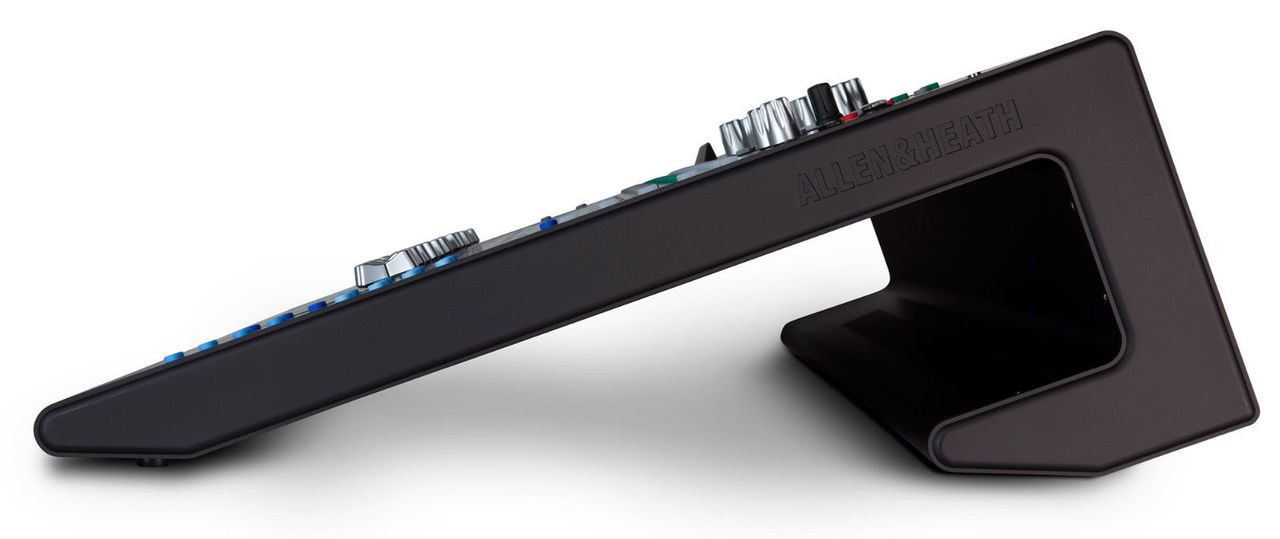
If you've already decided you want 32 channels of motorised, recallable mixing and you just need to know whether this is the right box for your kind of work, you're in the right place.
What the Qu-32 Actually Is — In Plain Terms
The Qu-32 is a full-size digital mixing console with 32 mono mic/line inputs, 3 stereo inputs, motorised faders, a colour touchscreen, and a built-in 32x32 USB interface for multitrack recording straight to a hard drive or computer. It carries Allen & Heath's reputation for natural-sounding preamps and genuinely usable processing on every channel — gate, compressor, EQ and more — without you needing to dig through menus to find them.
But here's the practical takeaway: it's a console built for people who mix the same kinds of shows repeatedly and want to walk in, recall a scene, and be 80% of the way to a great mix before soundcheck even starts. That single capability — fast, reliable scene recall — is what reshapes how it fits into real venues.
Scenario 1: The Live Music Venue or Pub
This is the Qu-32's natural home. Picture a 200-to-500 capacity room with a rotating roster of bands — a five-piece on Friday, a solo singer-songwriter on Sunday arvo, a function band the following weekend.
With 32 mic inputs you've got headroom to mic a full kit, multiple guitars, keys, horns and a handful of vocals without ever running out of channels. In practice, most pub bands won't get near 32, which means you've got room to leave channels patched and ready rather than re-patching between acts.
Where it genuinely helps: the motorised faders and scene recall. House engineers love being able to save a "house default" scene with sensible gain structure, your room EQ dialled in, and your monitor sends roughed out. New band loads in, you recall, tweak, done. That turns a stressful 20-minute changeover into something manageable.
- Foldback that doesn't fight you: with multiple aux sends available for monitors, you can give the drummer, two front-line vocalists and a guitarist their own mixes. The Qu app lets musicians tweak their own wedge from a phone or tablet on stage — a genuine sanity-saver when you're solo-mixing.
- Feedback control: A&H's built-in graphic EQ on outputs and the channel processing make ringing out monitors straightforward, even for techs who aren't full-time pros.
- Honest preamps: vocals sit naturally without you having to fight harshness, which matters a lot in untreated rooms with hard surfaces.
Where you'll feel a limit: if your venue regularly runs genuinely large productions — think 40+ input festival-style line-ups — you'll be channel-juggling. For most pubs and clubs, though, this is comfortably more than enough.
Scenario 2: Houses of Worship
Churches are one of the biggest real-world use cases for the Qu range across Australia, and for good reason. The typical setup involves a worship band, multiple speaking mics, lapel mics for pastors, playback for video, and — crucially — volunteers running the desk who aren't professional engineers.
The Qu-32 fits this beautifully because the layout is logical and the scene recall removes a huge amount of week-to-week risk. You can lock down settings so a Sunday volunteer can't accidentally destroy a carefully built mix, and recall a known-good starting point every service.
- Consistency week to week: the same vocalists, same instruments, same room — recall a scene and you're 90% there. This is where digital recall pays for itself versus an analogue desk where someone has to redial everything.
- Channel headroom for growth: 32 inputs means you can mic the full band, the choir, multiple speakers and have room spare as the ministry grows.
- Recording the service: the onboard 32x32 USB recording means capturing every service for podcast or archive use is built in — no extra interface, no separate rig.
Practical tip: spend time setting up user permissions and a clean default scene before handing it to volunteers. The investment up front turns the Qu-32 into a near foolproof Sunday tool.
Scenario 3: Theatre and Performing Arts
Community theatre, school productions and small professional companies have a particular need: lots of radio mics, precise cue-to-cue changes, and absolute reliability mid-show. The Qu-32 handles the input count and the scene-based workflow well, and the motorised faders give you visual confidence about where everything sits during a fast scene change.
You can build a scene per musical number or per act, recall on cue, and trust the faders to physically move to position. For a stage manager calling cues to an operator, that tactile feedback matters.
Honest limitation: for very mic-heavy musicals with intricate, fast, overlapping cue automation, dedicated theatre consoles (or A&H's own dLive/SQ with deeper scene automation) offer more granular control over exactly what each scene recalls. The Qu-32's scene system is capable but comparatively broad-brush. For most community and educational theatre, that's a non-issue; for West End-style automation depth, it's worth knowing.
Scenario 4: Corporate Events and AV Production
Conferences, gala dinners, award nights and product launches share a pattern: a mix of speech mics, lectern inputs, panel discussions, playback from laptops and the occasional live act. Reliability and clean, intelligible speech are everything — nobody remembers a great corporate mix, but everyone remembers feedback during the CEO's address.
- Fast setup, fast recall: build a scene for the plenary, another for the panel, another for the band at the after-party. Recall between segments keeps a tight schedule on track.
- Clean speech: the preamps and per-channel processing make lapels and lecterns sit clearly without harshness, and gating helps in noisy rooms.
- Stereo inputs for playback: the dedicated stereo channels make laptop and video playback tidy rather than burning two mono channels.
For AV companies running multiple jobs, the ability to save and reload show files per client is a real time-saver across a busy events calendar.
Scenario 5: Small Touring and Hire Rigs
Hire companies and small touring acts value two things: durability and a workflow that travelling engineers already know. The Qu range is widely used across Australia, so a guest engineer turning up to your gig will very likely already understand the desk — which cuts soundcheck friction dramatically.
Paired with an Allen & Heath digital stagebox over a single Cat5e cable, the Qu-32 becomes a tidy stage-to-FOH solution that's quick to load in and out. It's not a featherweight, but it's a manageable full-size console for van-based touring.
Consider the trade-off: if your touring needs are genuinely compact, the smaller Qu-16 or a rack-mount Qu-Pac may pack down better. The Qu-32 earns its space when you regularly need the full input count and the tactile control surface.
Matching the Qu-32 to Your Skill Level
One of the under-appreciated strengths here is how the same console serves very different users.
- Beginners and volunteers: the one-knob-per-function-ish layout, the touchscreen and the ability to lock down a safe scene make it approachable. You can grow into the deeper features over time without being overwhelmed on day one.
- Working freelancers: fast recall, reliable preamps and a familiar workflow mean you can show up to an unfamiliar room and feel at home quickly.
- Enthusiasts and home-studio hybrids: the 32x32 USB recording turns it into a capable multitrack capture device for rehearsals, demos and live albums — a genuinely useful dual purpose.
Check current Qu-32 pricing and availability at MusiconStage to see how it lines up against your budget.
How It Compares in the Same Scenarios
It's worth being honest about where alternatives might suit your application better.
- vs. compact rack mixers (controlled by tablet): tablet-only mixers pack down smaller and cost less, but the moment you're solo-mixing a live band you'll wish for physical faders. For hands-on live work, the Qu-32's control surface wins.
- vs. Allen & Heath SQ series: the SQ offers a faster 96kHz core, deeper processing and more I/O flexibility — the better pick if you're doing complex, high-input-count shows regularly and want future headroom. The Qu-32 is the more affordable, proven workhorse for everyday venue and worship use.
- vs. other brands in this class: rival consoles compete hard on features, but A&H's reputation for natural-sounding preamps and a logical workflow keeps the Qu-32 a favourite for techs who value sounding good with less fuss.
The practical decision usually comes down to this: choose the Qu-32 when you mix similar shows repeatedly, want recall, and value a hands-on surface over the absolute latest processing.
Common Application Mistakes to Avoid
- Skipping the default scene: the single biggest mistake is not building a solid base scene. Spend the time once and every future gig gets easier.
- Ignoring the Qu app: wireless control for ringing out monitors or mixing from the room is a major workflow upgrade that many owners never set up.
- Over-processing: the channel tools are good, but the preamps are good enough that less is usually more. Don't reach for heavy EQ to fix problems that better gain staging solves.
- Under-buying on cabling: if you plan to use a digital stagebox, factor in good-quality Cat5e/network cabling from day one.
Frequently Asked Questions
Is the Qu-32 suitable for a complete beginner?
Yes, with a caveat. The layout is logical and scene recall makes day-to-day operation forgiving, which is why it's popular in volunteer-run churches. A beginner won't use everything on day one, but they can grow into it — and the locked-scene approach keeps mistakes low-risk.
Can I record a full show with it?
Absolutely. The built-in 32x32 USB interface lets you capture every channel to a computer or hard drive for multitrack recording, mixing later, or virtual soundchecks. For many venues this replaces a separate recording rig entirely.
Will 32 channels be enough?
For pubs, clubs, churches, corporate work and most theatre, yes — comfortably. You'd only outgrow it on genuinely large productions with very high input counts, at which point you're likely looking at the SQ or dLive range anyway.
Can musicians control their own monitor mixes?
Yes. Using the Qu mixing app on a phone or tablet, performers can adjust their own foldback within limits you set — a huge help when you're the only engineer on the gig.
Is it durable enough for hire and touring?
The Qu range is widely used in Australian hire and touring contexts and has a strong reliability track record. Treat it like any pro console — proper case, careful transport — and it'll serve for years.
The Verdict: Who Should Buy It
The Allen & Heath Qu-32 is at its best in the hands of people who mix the same kinds of shows again and again and want a reliable, hands-on console that sounds natural and recalls fast. Live music venues, houses of worship, community theatre, corporate AV and small touring rigs are its sweet spot — and within those worlds, it earns its keep day after day.
It's less ideal if you need the absolute deepest processing, cutting-edge sample rates, or the most compact possible footprint. For nearly everyone else weighing a full-size digital console in 2026, it remains one of the most sensible, gig-proven choices on the Australian market.
If your work matches the scenarios above, it's well worth a serious look. View the Allen & Heath Qu-32 at MusiconStage and match it to the mixing you actually do.