
Allen & Heath Qu-24 Review: Is This 24-Channel Digital Mixer Right for Your Setup?
Allen & Heath Qu-24 Review: Is This 24-Channel Digital Mixer Right for Your Setup?
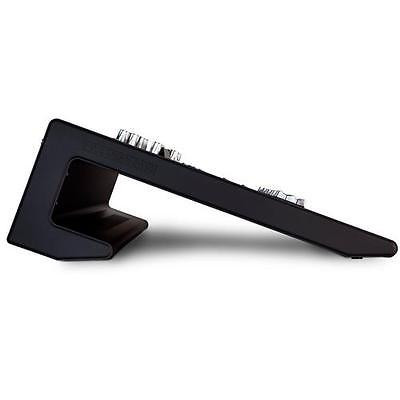
If you've been running live sound for any length of time, there's a good chance the Allen & Heath Qu-24 has crossed your radar. It sits in that sweet spot where serious capability meets practical affordability — a 24-channel digital mixer with the kind of processing, routing, and recording features that used to require consoles costing three or four times the price.
But is it actually the right desk for your venue, church, touring rig, or production setup? That's the question worth answering properly, because the Qu-24 isn't for everyone, and pretending otherwise wouldn't help you make a smart decision.
This guide breaks down everything that matters about the Qu-24 — from its core architecture and processing to the practical realities of using it week after week. Whether you're upgrading from analogue, comparing it against competitors, or just trying to figure out if 24 channels is enough headroom for your needs, you'll find what you need here.
Want to jump straight to pricing? View the Allen & Heath Qu-24 at MusiconStage with delivery across Australia.
What Exactly Is the Allen & Heath Qu-24?
The Qu-24 is a rack-mountable, chrome-plated digital mixing console from Allen & Heath's Qu series. It was designed from the ground up as a digital desk — not an analogue board with digital features bolted on. That distinction matters more than you'd think, because every aspect of the Qu-24's workflow was built around the idea that a digital mixer should make your life easier, not harder.
At its core, you're looking at 24 mono mic/line inputs (with TRS and XLR connections), 3 stereo line inputs, a dedicated stereo input for playback, and a total of 30 mixing faders spread across two layers. The processing runs on Allen & Heath's AnalogiQ preamp technology, which provides 0.5 dB stepping across a wide gain range — precise enough for critical work, smooth enough for quick adjustments during a live set.
The desk handles its internal processing at 24-bit/48kHz, which is the standard for live sound work. Some engineers wish for 96kHz capability, but in practice, 48kHz delivers excellent audio quality for virtually every live and installed sound application without the processing overhead that higher sample rates demand.
Channel Count and I/O: Is 24 Channels Enough?
This is the first question most people ask, and it's worth addressing honestly. The Qu-24 provides:
- 24 mono mic/line inputs — each with a dedicated AnalogiQ preamp, phantom power (switchable per channel), insert point, and full processing
- 3 stereo line inputs (ST1–ST3) — ideal for keyboards, laptops, media players, or click tracks
- 1 dedicated stereo input — for USB playback directly into the mix
- Main LR output — balanced XLR
- 10 mix outputs — configurable as mono or stereo, for monitors, fills, or external processing
- 2 matrix outputs — for delays, broadcasts, or zone feeds
- AES digital output — for direct digital connection to recording systems or powered speakers with AES inputs
For a mid-sized venue, church, theatre, or corporate event, 24 mono channels plus the stereo inputs will cover the vast majority of your needs. A typical 5-piece band with vocals might use 16–20 channels, leaving headroom for walk-in music, presentation audio, or additional instruments. If you're regularly running events that consistently exceed 24 channels, you'd want to step up to the Qu-32 or look at the SQ series.
One thing worth noting: the Qu-24 supports dSNAKE, Allen & Heath's proprietary digital snake protocol. By connecting an AB168, AR2412, or AR84 AudioRack stagebox, you can run all your stage inputs over a single Cat5 cable, dramatically simplifying your cable runs and improving audio quality by keeping analogue cable lengths short. This is a genuine game-changer for venues and touring setups alike.
The 30-Fader Layout: Two Layers Done Right
The Qu-24 uses a two-layer fader system to give you physical control over all your channels without an impossibly wide chassis. The first layer covers channels 1–24, and the second layer maps to your mix outputs, matrix sends, and other routing. A dedicated master section remains accessible regardless of which layer you're on.
Some engineers are wary of layered fader systems — and with good reason, since poorly implemented layers can slow you down mid-show. But Allen & Heath got this right. The layer switching is instant, the fader positions update accurately, and the channel strip display always shows you exactly what you're controlling. After a few sessions, the two-layer workflow becomes second nature.
Each fader is a 100mm motorised fader, which means your scene recalls are precise and immediate. When you load a saved scene, the faders physically move to their stored positions. This isn't just a nice visual touch — it means you always know exactly where your levels sit, which is critical when you're mixing in a dimly lit venue or switching between acts quickly.
Processing and Effects: What's Under the Hood
This is where the Qu-24 really earns its keep. Every single input channel gets its own complete processing chain:
- High-pass filter — variable from 20Hz to 400Hz, essential for cleaning up rumble and handling noise
- 4-band parametric EQ — fully parametric with adjustable frequency, gain, and Q on all four bands. The outer bands can switch between parametric, shelving, and band-pass modes
- Compressor — full-featured dynamics with threshold, ratio, attack, release, and knee controls. Not a simplified "one-knob" compressor — this is proper dynamics processing
- Gate/Ducker — with threshold, depth, attack, hold, and release. The ducker function is particularly useful for presentation and broadcast applications
- Delay — per-channel delay for time-alignment
The mix outputs each get their own graphic EQ (1/3 octave, 28-band), compressor, and delay. Having a dedicated GEQ on every mix bus is a feature that some competing desks at this price point skip entirely, and it's invaluable for ringing out monitor wedges or tuning zone feeds.
Built-In Effects Engine
The Qu-24 includes four stereo effects engines (FX1–FX4), drawing from a library that includes reverbs, delays, chorus, flanger, ADT, and more. The reverb algorithms are genuinely usable — modelled on classic studio hardware — and the quality is good enough that most engineers won't feel the need to carry external effects processors.
Each FX engine can be configured as either a send/return effect (the traditional approach) or an insert effect on a specific channel. This flexibility means you can use your four engines for a mix of vocal reverb, snare room, delay throws, and a chorus on guitars, for example, without any routing gymnastics.
Are they as good as a dedicated Lexicon or TC Electronic rack unit? Honestly, they're about 85–90% of the way there, which is more than sufficient for live sound. For critical studio recording applications, you might still want external processing, but for live work, the built-in effects are a genuine time-saver.
The Touchscreen: Better Than You'd Expect
The Qu-24 features a 5-inch full-colour touchscreen that serves as your primary interface for deeper editing. You can view and adjust EQ curves, compressor settings, routing, effects parameters, and scene management directly from the screen.
Now, a 5-inch screen doesn't sound like much in 2026 — and compared to the larger touchscreens on more recent desks like the SQ series, it is on the smaller side. But Allen & Heath designed the interface intelligently. The most common adjustments (gain, EQ, aux sends) can be made using the physical encoders and faders without touching the screen at all. The touchscreen is there for deeper editing, not for basic mixing operations.
That said, if touchscreen size and responsiveness are high priorities for you, it's worth noting that the newer CQ and SQ series from Allen & Heath offer larger, more modern touch interfaces. The Qu-24's screen is functional and clear, but it's not going to win any awards for visual real estate.
USB Recording and Playback: A Hidden Strength
One of the Qu-24's most practical features is its built-in multitrack recording capability. The desk can record all 24 input channels plus the main stereo mix directly to a USB hard drive — 18 channels at a time via the Qu-Drive feature, or all channels simultaneously when connected to a DAW via USB.
Qu-Drive (USB Recording to Hard Drive)
Qu-Drive lets you plug a USB hard drive directly into the desk and record up to 18 channels of multitrack audio (plus a stereo mixdown) without a computer. This is incredibly useful for:
- Live recording — capture the full multitrack of a gig for later mixing
- Virtual soundcheck — record a rehearsal, then play it back through the desk to fine-tune your mix without the band present
- Archiving — keep recordings of services, performances, or corporate events
- Training — let junior engineers practice mixing with real multitrack content
Virtual soundcheck alone is worth its weight in gold. Being able to replay last week's performance through the console, tweak your mix, adjust monitor sends, and experiment with effects processing — all without needing the performers present — is the kind of workflow improvement that saves hours every week.
USB DAW Integration
Connect the Qu-24 to a Mac or PC via USB, and it functions as a 32-in/32-out audio interface for your DAW. This turns the desk into a powerful front-end for studio recording, with all the benefits of the AnalogiQ preamps and onboard processing available as part of your recording chain. You can also use the DAW connection for playback, sending tracks from your computer back through the Qu-24's channels for live backing tracks or virtual soundcheck.
Remote Control: Mixing From the Room
The Qu-24 supports remote control via the Qu-You and Qu-Pad apps (iOS and Android). This is where the desk transforms from a conventional mixing console into something significantly more flexible.
Qu-Pad gives the front-of-house engineer full control over the mixer from a tablet. Walk the room during soundcheck, adjust levels from the audience position, tweak EQ while standing next to a speaker — this is the kind of mobility that fundamentally changes how you approach a mix.
Qu-You is designed for performers to control their own monitor mixes from their smartphones. Instead of the classic "more me" requests shouted across a loud stage, each musician can dial in exactly what they need. In practice, this feature alone can cut your soundcheck time dramatically and keep performers happier throughout the show.
For these apps to work, you'll need a wireless router connected to the Qu-24's network port. Allen & Heath doesn't include a router, so budget for a decent dual-band unit — and please, don't use a consumer-grade router in a professional setting. A reliable wireless connection is essential for smooth remote control.
Scene Management and Recall
The Qu-24 stores up to 100 full scenes, each capturing every parameter of the console — fader positions, EQ settings, routing, effects, and preamp gains. Scene recall is fast and comprehensive, with per-channel and per-parameter recall filters that let you protect specific settings from being overwritten.
This is essential for venues running multiple events, churches switching between worship styles, or production companies moving between different acts on a festival stage. Load a scene, and the entire desk reconfigures in seconds. The recall filters mean you can, for example, recall a scene for a new band while keeping the FOH graphic EQ and matrix routing locked to the PA system.
You can also save and load scenes via USB, which means you can build your show files at home and load them at the venue, or back up your carefully crafted settings for safekeeping.
Build Quality and Reliability
Allen & Heath has a well-earned reputation for building gear that survives real-world use, and the Qu-24 continues that tradition. The chassis is solid steel and aluminium, the faders are smooth and precise, and the connectors are properly mounted and reinforced. This isn't a desk that's going to develop loose connections or rattling knobs after a year of regular use.
The Qu-24 fits a standard 19-inch rack (with optional rack ears), though at roughly 750mm wide and weighing around 16kg, it's not exactly lightweight. For installed applications, the weight is irrelevant. For touring, it's manageable with a proper flight case, but you'll want a case with good wheels if you're loading in regularly.
Reliability in the field has been excellent. The Qu series has been in service for several years now, and the track record across churches, venues, theatres, and touring companies worldwide is strong. Firmware updates have been consistent, and Allen & Heath's support for the platform has been commendable.
Who Is the Qu-24 Actually For?
This is where honest advice matters more than sales pitch. The Qu-24 is an excellent choice for:
- Houses of worship — the combination of scene recall, personal monitoring, USB recording, and intuitive operation makes it ideal for volunteer-operated church sound systems
- Small to mid-sized venues — pubs, clubs, theatres, and function centres that host regular live events with up to 24 input sources
- Production and hire companies — as a reliable, feature-rich workhorse for corporate events, conferences, and smaller festivals
- Schools and community organisations — where multiple operators of varying skill levels need to get good results consistently
- Home studios and project studios — the USB audio interface capability makes it a surprisingly capable recording front-end
Who Might Want to Look Elsewhere
It's equally important to be upfront about the Qu-24's limitations:
- Large-scale touring and festival FOH — if you regularly need more than 32 channels, or you need the advanced processing and networking of the dLive or SQ platforms, the Qu-24 is undersized for your needs
- Dante or AVB networking requirements — the Qu-24 uses dSNAKE (proprietary) rather than open networking protocols. If your infrastructure requires Dante, look at the Qu-5d/6d/7d variants or the SQ series
- Engineers who need extensive plugin support — the onboard processing is very good, but there's no Waves integration or third-party plugin support like some competing platforms offer
- Anyone needing a very large touchscreen interface — the 5-inch screen gets the job done but isn't going to impress engineers coming from consoles with 10-inch or larger displays
How Does It Compare to the Competition?
The Qu-24 competes in a crowded market segment. Here's how it stacks up against the most common alternatives Australian buyers consider:
| Feature | Allen & Heath Qu-24 | Yamaha TF3 | Behringer X32 | PreSonus StudioLive 32SC |
|---|---|---|---|---|
| Mic Inputs | 24 | 24 | 32 | 16 (expandable) |
| Faders | 30 (2 layers) | 25 (2 layers) | 25 (4 layers) | 33 |
| Built-in Effects | 4 stereo FX | 8 premium FX | 8 stereo FX | 4 stereo FX |
| Touchscreen | 5 inch | 9 inch | 7 inch | 7 inch |
| USB Multitrack | 18 tracks (Qu-Drive) | 34 tracks | 32 tracks | 34 tracks |
| Digital Snake | dSNAKE (Cat5) | Dante (optional) | AES50 | AVB |
| Personal Monitoring App | Qu-You | MonitorMix | X32-Mix / Mixing Station | QMix-UC |
| Build Quality | Excellent | Excellent | Good | Very Good |
| Price Point | Mid-range | Higher | Budget-friendly | Mid-range |
The Behringer X32 offers more channels and features at a lower price point, and it's a genuinely capable desk. But the Qu-24's build quality, preamp character, and overall sonic refinement are in a different league. Many Australian engineers who've used both will tell you the Allen & Heath simply sounds and feels better — the preamps are cleaner, the EQ is more musical, and the compressors respond more naturally. Whether that difference justifies the price premium depends entirely on your priorities and budget.
The Yamaha TF3 is a strong competitor with a more modern touchscreen interface and Yamaha's excellent processing, but it comes at a higher price and some engineers find its "simplified" workflow limiting compared to the Qu-24's more traditional channel-strip approach.
Practical Tips for Getting the Most From Your Qu-24
If you're planning to invest in the Qu-24, here are some genuinely useful tips based on real-world experience with the platform:
- Invest in a quality router — the remote mixing apps are transformative, but they're only as reliable as your wireless network. A dedicated dual-band router (not shared with general Wi-Fi) makes a significant difference.
- Use virtual soundcheck religiously — record every performance, then use the playback for training, mix refinement, and troubleshooting. This single feature will improve your mixes faster than anything else.
- Build a scene library — create template scenes for your most common setups (Sunday service, 4-piece band, corporate presentation, etc.) and refine them over time. Use recall filters to protect your system-level settings.
- Consider a dSNAKE stagebox — even in a small venue, the audio quality improvement from short analogue runs to a stagebox and a single Cat5 to FOH is noticeable. The AB168 is the most popular choice for smaller setups.
- Update your firmware — Allen & Heath continues to release firmware updates that add features and fix bugs. Keep your desk current.
- Use the channel library — save your favourite channel settings (vocal EQ, kick drum compression, etc.) to the channel library so you can recall them instantly on any show.
What's in the Box?
When you purchase the Qu-24, you'll receive:
- Allen & Heath Qu-24 digital mixer console
- IEC power cable
- Dust cover
- Quick start guide
- USB cable for DAW connection
You'll need to supply separately: a wireless router (for app control), a USB hard drive (for Qu-Drive recording, formatted to the desk's specifications), a Cat5 cable and stagebox (if using dSNAKE), and a flight case if you're touring.
Warranty and Support in Australia
Allen & Heath products purchased through authorised Australian dealers come with a manufacturer's warranty. Purchasing from an authorised retailer like MusiconStage ensures your warranty is valid and you have access to local support if anything goes wrong. Grey-market imports may save a few dollars upfront but can leave you without warranty coverage — not a risk worth taking on a desk at this investment level.
Frequently Asked Questions
Can the Qu-24 be rack-mounted?
Yes. With the optional rack mount kit, the Qu-24 fits a standard 19-inch rack. This is popular for installed applications in venues, churches, and broadcast facilities where the desk needs to be secured in a permanent position.
Does the Qu-24 support Dante?
No. The standard Qu-24 uses dSNAKE for digital audio networking. If you need Dante connectivity, look at the Qu-5d, Qu-6d, or Qu-7d models, which include built-in Dante. Alternatively, the SQ series offers both dSNAKE and optional Dante cards.
How many monitor mixes can I run?
The Qu-24 has 10 configurable mix outputs that can be set up as mono or stereo. In a typical monitor setup, you could run 10 individual mono monitor mixes, or a combination of stereo in-ear mixes and mono wedge mixes. This is more than enough for most mid-sized applications.
Can I use it as a recording interface?
Absolutely. The USB connection provides 32-in/32-out audio to your DAW at 24-bit/48kHz. The AnalogiQ preamps are good enough for professional recording work, and the onboard processing means you can track with EQ and compression if desired. It's a legitimate recording front-end.
Is the Qu-24 suitable for beginners?
It's more approachable than many digital desks, thanks to its traditional channel-strip layout and intuitive workflow. Someone with basic analogue mixing experience can be up and running relatively quickly. That said, it's still a professional digital console with significant depth — expect a learning curve as you explore scene management, routing, and effects configuration.
What sample rate does it run at?
The Qu-24 operates at 24-bit/48kHz. This is the industry standard for live sound and delivers excellent audio quality. It does not offer 96kHz operation.
The Bottom Line: Should You Buy the Allen & Heath Qu-24?
The Qu-24 has earned its place as one of the most respected mid-range digital mixers on the market, and for good reason. The combination of Allen & Heath's preamp quality, comprehensive onboard processing, USB recording, remote control, and rock-solid build quality makes it a genuinely compelling package for venues, churches, production companies, and serious home studios across Australia.
It's not the cheapest option in its class, and it doesn't have the channel count of some competitors. The touchscreen is functional rather than flashy, and the lack of Dante on the standard model is a limitation for some installations. These are genuine trade-offs worth considering.
But if you value audio quality, reliability, and a workflow that doesn't fight you, the Qu-24 delivers where it counts. It sounds excellent, it's built to last, and it has the depth of features to grow with your needs over years of service. For the majority of Australian buyers in this market segment, it represents outstanding value for money.
Ready to make your decision? View the Allen & Heath Qu-24 at MusiconStage — authorised Australian dealer with genuine products and shipping across the country.