
Allen & Heath Qu-24 Performance Analysis: Pro Specs Decoded 2026
Allen & Heath Qu-24 Performance Analysis: Pro Specs Decoded 2026
The Allen & Heath Qu-24 sits in a peculiar sweet spot of the digital mixing market. It's been around long enough to be considered a mature platform, yet its DSP architecture, preamp design and routing flexibility still hold up against newer entrants in 2026. For Australian sound engineers weighing up a 24-channel desk for theatres, houses of worship, function venues and mid-sized touring rigs, the Qu-24 deserves a properly technical look — not just a feature checklist.
This breakdown goes beyond marketing specs. We'll examine the AnalogiQ preamp topology, the 32x32 USB streaming architecture, the gain structure realities, and how this mixer actually performs in the situations Australian engineers face every weekend. If you're comparing it to an SQ-5, a CQ-20B, or considering a leap from analogue, the technical detail below should help you make a confident call.
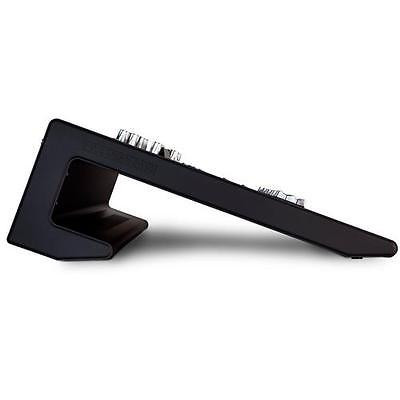
Technical Overview: What the Qu-24 Actually Is
The Qu-24 is a 32-input, 24-fader digital mixing console built around Allen & Heath's proprietary FPGA-based DSP engine. Unlike scaled-down designs that share processing across channels, the Qu series allocates fixed DSP resources per input and output. That matters because it means consistent latency and full processing on every channel — no compromises when you load up a busy theatre show.
Here's the high-level technical specification breakdown:
| Specification | Qu-24 Detail |
|---|---|
| Mic/Line Inputs | 24 (with AnalogiQ recallable preamps) + 3 stereo line inputs |
| Total Input Channels (DSP) | 32 input processing channels |
| Mix Outputs | 4 mono mixes + 3 stereo mixes + LR + 4 FX sends |
| Group Buses | 4 stereo groups (assignable as additional mixes) |
| Matrix Outputs | 4 stereo matrix outs |
| Faders | 25 motorised 100mm faders (24 channel + master) |
| Touchscreen | 800x480 colour TFT |
| Internal FX Engines | 4 dedicated stereo iLive-derived FX |
| USB Recording | Direct multitrack to USB drive (18-track) |
| USB Streaming | 32 in / 32 out via USB-B to Mac/PC |
| Sample Rate | 48 kHz |
| Processing Resolution | 24-bit, 96-bit accumulator |
| System Latency (input to output) | ~2.2 ms |
| dSNAKE Port | Cat5e for AR2412/AR84/AB168 stageboxes |
| Talkback | Dedicated XLR with phantom and HPF |
AnalogiQ Preamps: The Foundation Spec That Matters
The single most underappreciated technical feature on the Qu-24 is its AnalogiQ recallable preamp design. Allen & Heath developed this as a direct descendant of the iLive series preamps, and the topology is genuinely different to the typical THAT or InGenius chips you'll find in entry-level digital desks.
Key technical characteristics worth understanding:
- Gain range: +5 dB to +60 dB on mic inputs, with a -20 dB pad option giving an effective range from -15 dB upward — useful when miking loud guitar cabs or close-miked kick drums.
- EIN (Equivalent Input Noise): -127 dBu (150Ω source, max gain). That's a benchmark figure typically reserved for outboard preamps, and it's audible when you're pulling up a quiet ribbon mic on a string section.
- THD+N: Below 0.0015% at +4 dBu input. Effectively transparent across the audible band.
- Frequency response: -1 dB at 4 Hz to 40 kHz. The extended high-frequency response is what gives Qu-series preamps their characteristic openness on overheads and acoustic sources.
- Padless gain steps: Continuously variable rather than relay-stepped, which avoids the audible click some recallable preamps suffer from during automation.
The practical impact: when you're recording a live multitrack via USB while mixing FOH, you're getting capture-grade signal. That alone closes the budget gap with separate interface plus mixer setups.
DSP Architecture and Processing Per Channel
Each of the 32 input channels on the Qu-24 carries an identical processing chain. This is not always the case on competing digital desks, where some channels may have reduced features. On the Qu-24, every channel gets:
- Trim and polarity — digital trim with phase invert
- HPF — 12 dB/octave, sweepable from 20 Hz to 2 kHz
- Gate — full-featured with threshold, depth, attack, hold, release and sidechain HPF
- 4-band parametric PEQ — fully parametric across all bands, with shelving options on bands 1 and 4
- Compressor — selectable curves (peak/RMS, hard/soft knee), with sidechain access
- Delay — up to 170 ms per channel for time-aligning sources
- Direct out — pre/post fader switchable, with USB routing
The dynamics models are derived directly from the iLive flagship range. That's not marketing — the actual algorithms are shared, just running on a smaller FPGA. You can hear it on a vocal compressor pulled hard into the limit zone: smooth, musical, no pumping artefacts.
Performance Benchmarks and Real-World Latency
Latency is one of those specs that gets quoted without context. The Qu-24's roughly 2.2 ms input-to-output latency is measured at the analogue jacks with a single channel's full processing chain engaged. For comparison:
| Mixer | Typical I/O Latency | Architecture |
|---|---|---|
| Allen & Heath Qu-24 | ~2.2 ms | FPGA fixed-function |
| Allen & Heath SQ-5 | ~0.7 ms | 96 kHz XCVI FPGA |
| Yamaha TF series | ~2.5 ms | SHARC DSP |
| Behringer X32 | ~0.8 ms | FPGA |
| Midas M32 | ~0.8 ms | FPGA |
Is 2.2 ms a problem? In practice, no. That's equivalent to about 75 cm of air travel — less than the difference between a singer's mouth and their monitor wedge. For in-ear monitoring with extremely picky drummers or wind players, you'll want to be aware of it, but it's not a deal-breaker for the vast majority of applications.
Routing Flexibility: 32x32 USB and dSNAKE
The Qu-24 has two digital expansion paths that determine how it integrates with the rest of your rig:
USB-B Streaming (32x32)
The rear-panel USB-B port carries 32 channels in and 32 channels out simultaneously to a connected Mac or PC, with class-compliant drivers on macOS and ASIO drivers on Windows. This means you can:
- Multitrack record every input pre or post processing
- Run virtual soundcheck through your DAW back into the desk
- Insert plugin chains from your DAW into specific channels
- Use the desk as a 32-channel front-end for studio sessions
Round-trip latency through the USB port is around 5 ms at 64-sample buffers — perfectly usable for plugin insertion in a live context.
dSNAKE (Cat5e Digital Stagebox)
The dSNAKE port carries up to 38 channels of 24-bit audio over a single Cat5e cable up to 120 metres, using A&H's proprietary protocol. Compatible stageboxes include the AR2412 (24 in / 12 out), AR84 (8 in / 4 out for monitor positions) and AB168 (16 in / 8 out for compact tours). The protocol runs at 48 kHz with sub-millisecond network latency.
For Australian touring engineers, this means a single Cat5e run from FOH to stage replaces a multicore — and the AB168 in particular has become a workhorse stagebox for pub, club and festival rigs. Check current Qu-24 pricing and availability at MusiconStage if you're sizing up a complete digital deployment.
Real-World Performance Scenarios
Scenario 1: Mid-Sized Theatre Production
For a 24-channel theatre show — say, a community musical with 8 wireless mics, full band and SFX playback — the Qu-24 handles it without breaking a sweat. The four stereo FX engines cover plate, hall, room and tap-delay simultaneously without robbing CPU from anywhere else. Channel safes during scene changes and the soft-takeover mode for moving faders prevent the audio jumps that plague some competing desks.
Scenario 2: Mid-Sized Pub or Function Venue
For a 200-400 capacity venue running corporate functions, weekend bands and DJ sets, the routing flexibility is the standout. Four mono mixes for floor wedges, three stereo mixes for IEM packs, and matrix outs for delay zones or foldback to green rooms — all configurable per show via Scenes recall. The 100 scene memory locations cover even the most preset-heavy production.
Scenario 3: Live Recording and Broadcast
The 32x32 USB streaming combined with the AnalogiQ preamps makes the Qu-24 a genuinely capable live recording front end. We've seen Australian engineers use a single Qu-24 for live album recordings, simultaneously running FOH and capturing pristine multitrack to Logic or Reaper — no separate interface needed.
Comparison: Qu-24 vs Modern Alternatives
| Feature | Qu-24 | Allen & Heath SQ-5 | Behringer X32 Compact | Yamaha TF3 |
|---|---|---|---|---|
| Mic Inputs | 24 | 16 (expandable to 48) | 16 | 24 |
| Faders | 25 motorised | 17 motorised | 17 motorised | 25 motorised |
| Sample Rate | 48 kHz | 96 kHz | 48 kHz | 48 kHz |
| DSP Resolution | 24-bit FPGA | 96 kHz XCVI | 40-bit float FPGA | 32-bit DSP |
| USB Multitrack | 32x32 | 32x32 (96k native) | 32x32 | 34x34 |
| Networked I/O | dSNAKE | SLink + optional Dante | AES50 | Tio expansion |
| Ecosystem Maturity | Mature, stable | Current flagship line | Mature | Current |
When the Qu-24 Wins
- You need 24 physical faders without going to a larger frame
- You want a mature, debugged platform with predictable behaviour
- AnalogiQ preamp quality matters for your application
- Budget is a real constraint and the SQ-5 sits out of reach
- Your venue or rig already runs on dSNAKE infrastructure
When You Should Look Elsewhere
- You need 96 kHz native processing — go SQ-5 or higher
- You require Dante natively — the Qu series doesn't offer it
- You want extensive third-party plugin integration
- Your rig is built around a non-A&H ecosystem
Build Quality and Mechanical Specifications
The Qu-24 chassis is a steel-framed top surface with reinforced fader rails. After a decade in the field, the platform has earned a reputation for mechanical reliability that's particularly relevant for hire stock. Physical specs:
- Dimensions: 656mm (W) x 195mm (H) x 500mm (D)
- Weight: Approximately 13 kg
- Power consumption: 100W maximum
- Power supply: Internal universal mains (90-264V AC), no external brick
- Operating temperature: 5°C to 35°C
The 100mm motorised faders are spec'd for 100,000+ operations and use the same Alps fader hardware found in Allen & Heath's higher-tier consoles. The encoders feel solid with no detent slop, even on units with significant gig hours.
The Qu-Drive: Multitrack Recording Without a Computer
One spec that doesn't get enough attention: the Qu-24's ability to record 18 tracks of 24-bit/48 kHz audio directly to a USB drive, with no computer required. The format is broadcast WAV, importable directly into any DAW.
Technical considerations for Qu-Drive use:
- USB drive must be formatted FAT32 and pre-prepared from the Qu surface
- Sustained write speed of at least 30 MB/s required (most modern USB 3.0 sticks easily exceed this)
- Maximum recording length is limited by file system, not the desk — practical limit is roughly 4 hours per session
- Tracks 1-18 are routable from any input or output, giving flexibility beyond the channel-direct default
For Australian function bands and house engineers, this is genuinely useful. Recording every show for review and stem prep without dragging a laptop into the booth simplifies the workflow significantly.
Specification Red Flags to Watch For
When comparing the Qu-24 against specs sheets from competitors, here's what an experienced engineer should actually scrutinise:
- EIN figures: Specified at -127 dBu, which is genuinely good. Watch for competitors who quote EIN without specifying source impedance or measurement bandwidth.
- Dynamic range: 112 dB on the Qu-24's converter chain. Anything below 110 dB at this price point is suspect.
- Crosstalk: Better than -100 dB between adjacent channels — important for high-channel-count theatre work.
- FX engine count: Four dedicated stereo engines. Many competing desks share a smaller FX pool across the desk, leading to compromises during busy shows.
- Per-channel processing: Verify that EQ, dynamics and delay are available on every channel — not just the first eight or sixteen.
Future-Proofing Considerations
As of 2026, the Qu-24 is a mature product. Allen & Heath's current flagship attention is on the SQ and CQ series, but firmware support for Qu has been remarkably consistent. The platform still receives stability updates, the apps (Qu-Pad, Qu-You, Qu-Control) are maintained for current iOS and Android versions, and replacement parts remain available through A&H's Australian distribution.
If you're buying new in 2026, the question worth asking is whether to stretch to an SQ-5 instead. For pure 24-channel work without 96 kHz requirements, the Qu-24 still represents better cost-per-channel value. Compare current pricing on the Allen & Heath Qu-24 here to see how it lines up against the SQ tier.
Technical FAQs
Does the Qu-24 support Dante?
No. The Qu series uses A&H's proprietary dSNAKE protocol over Cat5e. If you need Dante integration, look at the SQ series with the optional M-Dante card, or at the Qu-Pac/Qu-SB rack units which support Dante via a specific card slot.
Can I use the Qu-24 at 96 kHz?
No. The Qu architecture is fixed at 48 kHz throughout. For native 96 kHz processing, the SQ series is the entry point.
What's the maximum cable run on dSNAKE?
120 metres on a single Cat5e run between the Qu-24 and a stagebox like the AR2412 or AB168. For longer runs, fibre converters are available but they push the cost upward significantly.
How many simultaneous remote app connections?
The Qu-24 supports up to seven simultaneous Qu-Pad, Qu-You and Qu-Control connections via Wi-Fi. You'll need a dedicated wireless router connected to the rear network port — the desk has no built-in Wi-Fi.
Can I expand beyond 24 mic inputs?
The DSP supports 32 input channels but only 24 are physical mic preamps. The remaining inputs come from stereo line ins, USB streaming, dSNAKE returns, and the digital ST3 input. With an AR2412 stagebox connected, you effectively gain another 24 remote preamps but they share DSP with the local inputs.
Expert Recommendation: Who Should Buy the Qu-24 in 2026
The Qu-24 makes the most technical sense for:
- Hire and rental companies needing reliable, well-understood inventory
- House engineers at venues with stable channel counts in the 20-32 range
- Theatre productions where 24 physical faders ease cue-by-cue mixing
- Function bands wanting integrated multitrack capture with FOH mixing
- Houses of worship needing the iLive-derived sound quality at a mid-tier budget
It's less suited to engineers chasing the latest 96 kHz workflows, those committed to Dante-only infrastructure, or operations that need extensive third-party plugin integration on the desk surface itself.
From a pure technical-value perspective, the Qu-24 in 2026 represents a mature platform whose specifications still hold up well against newer entrants. The AnalogiQ preamps remain genuinely class-leading at this price tier, the routing flexibility covers serious professional scenarios, and the build quality has proven itself across years of touring use across Australia. If your application matches its specifications, it's still one of the most cost-effective ways to put 24 channels of professional digital mixing under your hands.